










































Community based Vulnerability and Capacity Assessment (VCA)
Organisers explain that IFRC's disaster management activities are concentrated on the development and sharing of common tools to be used by all practitioners and community educators to help communities prepare better and reduce their exposure to disaster risk. The IFRC Community Based Disaster Preparedness (CBDP) training programme, which currently consists of 8 modules, includes basic training on risk mapping at the community level along with the sharing of know-how on prevention, reduction, and mitigation measures at the local level. Risk mapping through the use of VCA tools is designed to enhance the existing CBDP educational modules and to complement work at the community level as it standardises the methodology to be used by emergency managers, planners, and elected officials.
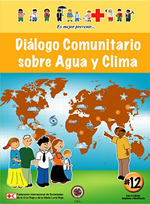
Specifically, by creating a network of organisations in the Latin American region, this initiative has centred around the use of printed materials and information and communication technologies (ICTs) to educate children and adults about how to prevent disasters of various kinds. A set of six manuals - which, as of this writing, are available in Spanish, but are expected to be translated into English and Portugese - is a collaborative effort between IFRC, OAS, the Pan American Health Organization (PAHO), and the United Nations Children's Fund (UNICEF), supported by ProVention. These manuals are designed to promote community-based disaster risk reduction activities, and include such titles as "Community Dialogue on Water and Climate", "Disaster Mitigation of Rural Water Supplies and Sewerage Systems", and "Natural Hazards and School Shelter". The RC Regional Delegation has developed a new module design and printed 8 of the 12 modules. (Click here for access to these resources.) Efforts are underway to adapt several modules to the Caribbean and translate them into English. An interactive VCA Toolkit/CD-ROM has also been developed by the IFRC in collaboration with the Regional Disaster Information Centre (CRID). The project web-page on the Panama Zonal Delegation website also includes links to all the modules of the VCA community education toolkit as well as an overview of 16 VCA studies in the countries concerned. Results and findings from the VCAs are shared with other partners such as the Inter American Development Bank, the Caribbean Development Bank, the Central American Bank for Economic Integration, and bilateral aid agencies.
Environment, Natural Resource Management, Risk Management, Water and Sanitation.
The ProVention Consortium is a global coalition of international organisations, governments, the private sector, civil society organisations, and academic institutions working to advance disaster risk management in developing countries by forging partnerships and linkages; advocating among leaders and decision makers for increased policy attention and commitment to reducing natural hazard risks; developing approaches to the practical applications of disaster risk management; and sharing knowledge and resources for organisations, practitioners, and communities active in disaster reduction.
IFRC/Regional Delegation in Panama; OAS/OSDE; RC national societies in Belize, Brazil, Chile, Costa Rica, Guatemala, and Honduras; PAHO; UNICEF; and CRID.
Comments

- Log in to post comments