










































Crowdsourcing Crisis Information in Disaster-Affected Haiti
Fletcher School of Law and Diplomacy at Tufts University
This report from the United States Institute of Peace (USIP)’s Center of Innovation for Science, Technology, and Peacebuilding and Haiti Working Group discusses the function of crowdsourcing in the aftermath of Haiti's January 12, 2010, earthquake. [crowdsourcing: using an open call to an undefined, large group of people to assist in a task, e.g. leveraging mass collaboration to aggregate information.] Ushahidi, an open-source crisis-mapping software, provided a way to capture, organise, and share critical information coming directly from Haitians. Information was gathered through social media (e.g., blogs, Twitter, and Facebook) and text messages sent via mobile phones and placed on maps available online.
According to this report, the traditional disaster-response system in Haiti concentrated on enabling information-sharing among teams of responders from the international community, but the effort lacked the ability to aggregate and prioritise data that came from outside sources, including the Haitian community. The Ushahidi-Haiti Project demonstrated the potential of crowdsourced maps for targeted disaster response, providing, as stated here, "a foundational model for the international community to leverage and improve upon in advance of future emergencies." This report "outlines the challenges of obtaining information from local sources and how this affected aid delivery. Second, it provides background on Ushahidi and an overview of its role during the emergency phase and in gathering information for decision making. Lastly, the report offers lessons for crisis mapping in disaster response and conflict management and recommendations for the future."
Developed in 2007-08 in post-election Kenya, the Ushahidi platform (meaning “testimony” in Swahili) draws on mobile phone communications and social media to map "crowdsourced" information. Reports of situations on the ground - trapped persons, medical emergencies, and specific needs, such as food, water, and shelter - were received and plotted on maps that were updated in real time by an international group of volunteers online. These reports, and associated geographic information, were available to anyone with an internet connection. Responders on the ground began to use them in determining how, when, and where to direct resources.
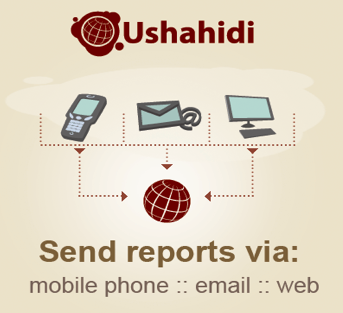
Volunteers searched the internet and social media sources to identify actionable pieces of information that could be of use to responders on the ground. If a piece of information was deemed useful and had a location attached to it, volunteers would find the global positioning system (GPS) coordinates through Google Earth and OpenStreetMap (OSM) and map it on the haiti.ushahidi website for anyone to view and utilise to identify clusters of incidents and urgent needs. The Ushahidi deployment was also publicised throughout social networks, including the Crisis Mappers Group, encouraging people to submit reports via email or through a form on the Ushahidi website. Many people posted information that they had received by phone from relatives in Haiti.
As stated here, "[t]he most significant challenges arose in verifying and triaging the large volume of reports received. Ad hoc but sufficient solutions were found that involved the manual monitoring and sorting of information....However, in order for crowdsourced reports to be permanently integrated as legitimate and actionable sources of information, a system must be created to rapidly identify inaccurate information, whether intentional, exaggerated, or accidental." Two types of solutions suggested here include: 1) developing a hybrid model of citizen-based networks of trusted reporters against which to triangulate reporting from diverse networks, and 2) a complementary verification system, e.g. the Swift River system, "a tool that organizes incoming reports on a platform where users rate the accuracy of information. Specific report sources are tracked through unique IDs (phone numbers or e-mail addresses) and thus can be ranked according to their record of veracity. The ranking system can be opened to the public or limited to a select group who maintain control over how veracity is judged."
Technical upgrades to the OSM map were needed due to damage: blocked roads, emerging internally displaced person (IDP) camps, etc. "The collaborative model used by OSM enabled individual volunteers, mapping experts, and international actors to update the map of Haiti rapidly and accurately to assist responders on the ground. The key was pulling as many sources and partners into the mapping process as possible. Organizations such as the World Bank, GeoEye, and the U.S. government were critical in providing base geographic information..."
Some of the recommendations for crisis mapping include the following:
- "...Disaster response professionals must work with the crisis-mapping community to develop standardized practices for data collection, categorization, and dissemination that meet the needs of field operators.
- Crisis-mapping deployments should leverage local knowledge and response capacity by working with in-country community-based organizations as both providers and consumers of crowdsourced data.
- Disaster preparedness programs and emergency disaster response organizations should integrate mobile-phone enabled crowdsourcing into information-gathering and communication systems and proactively build trusted networks of verified reporters in the case of emergency.
- ...Governments, international organizations, NGOs [non-governmental organisations], and mapping enthusiasts should combine efforts to consolidate information within OSM, to keep geographic information current, and to lay the foundation for key disaster-related services that will be useful in case of emergency.
- Analytic tools should be developed and integrated into crisis-mapping platforms to automatically identify and detect early warning signs of conflict.
- Additional research needs to be conducted to understand how best to communicate mobile-reporting instructions to populations. Effective messaging will include information on how to submit information that is actionable and locatable as well as instill confidence in individuals that reports of sensitive issues will be kept confidential."
Email from Sheldon Himelfarb to The Communication Initiative on October 8 2010.
- Log in to post comments