











































It Gets Better
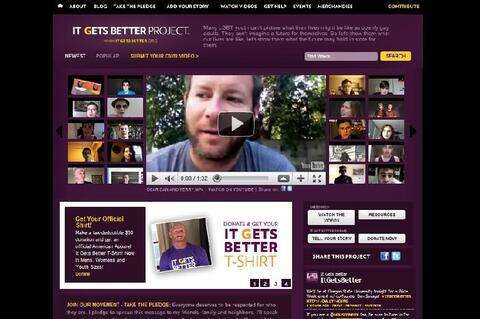
"Many LGBT youth can't picture what their lives might be like as openly gay adults. They can't imagine a future for themselves. So let's show them what our lives are like, let's show them what the future may hold in store for them." This is the inspiration for the It Gets Better project, which was created to show young lesbian, gay, bisexual, and transgender (LGBT) people in the United States the levels of happiness, potential, and positivity their lives can reach - if they can just get through their teen years. In September 2010, syndicated columnist and author Dan Savage created a YouTube video with his partner Terry Miller to inspire hope for young people facing harassment. In response to a number of students committing suicide after being bullied in school, they wanted to create a personal way for supporters everywhere to tell LGBT youth: yes, it does indeed get better. The project has turned into a worldwide movement, inspiring more than 50,000 user-created videos viewed more than 50 million times.
This advocacy project revolves around the use of video, the internet, and social networking to spark communication on the part of anyone seeking to stand up for the rights of - and stand by - LGBT youth. Visitors to the It Gets Better website sign a pledge that reads: "Everyone deserves to be respected for who they are. I pledge to spread this message to my friends, family and neighbors. I'll speak up against hate and intolerance whenever I see it, at school and at work. I'll provide hope for lesbian, gay, bi, trans and other bullied teens by letting them know that 'It Gets Better'." They can also submit and watch videos. To date, the project has received submissions from celebrities, organisations, activists, politicians, and media personalities. Organisers say: "For us, every video changes a life. It doesn't matter who makes it."
The It Gets Better website also features links to various resources and places where young people who are lesbian, gay, bisexual, or transgender can seek help, such as through: (i) the Trevor Project, which works to end suicide among LGBT youth by providing resources including a nationwide, 24/7 crisis intervention lifeline, digital community, and advocacy/educational programmes; and (ii) GLSEN (The Gay, Lesbian and Straight Education Network), a national education organisation working to: convince education leaders and policymakers of the need to address anti-LGBT behaviour and bias in schools; protect students by advancing safe schools law and policies; empower principals to make their schools safe places to learn; and build the skills of educators to teach respect for all people.
On March 22 2011, It Gets Better released a book, It Gets Better: Coming Out, Overcoming Bullying, and Creating a Life Worth Living. It includes essays and new material from more than 100 contributors; all proceeds from the book will be donated to LGBT youth charities.
Rights, Youth.
The failure to address and prevent bullying and harassment against LGBT violates Title IX of the Civil Rights Act of 1964, which prohibits discrimination in schools on the basis of a student's sex, including his or her failure to conform to stereotypical notions about gender.
It Gets Better can also be accessed on: YouTube, Facebook, and via the Twitter hashtag @itgetsbetter
It Gets Better website, January 25 2012 and June 19 2012; and "The Civil Rights Division Releases Anti-Bullying Video as Part of National 'It Gets Better' Project", by Tracy Russo, December 9 2010, The United States Department of Justice website, accessed January 25 2012.
- Log in to post comments