











































The OneMinutesJr.
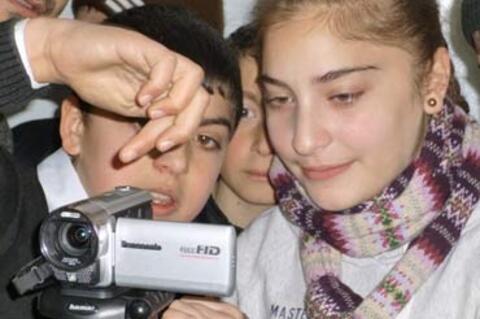
The OneMinutesJr. is a video initiative that highlights and celebrates the diversity among youth around the world. Workshop participants produce videos of 60 seconds in length that are meant to be positive and powerful examples of the way visual arts works as a communication tool across cultural, geographic, and national borders. The purpose of OneMinutesJr. is to give 12-20-year-old youth, especially those who are underprivileged or marginalised, the opportunity to have their voices heard and to share their ideas, dreams, fascinations, anxieties, and viewpoints with the world. OneMinutesJr. was initiated in 2002 by The One Minutes Foundation, the United Nations Children's Fund (UNICEF), and The European Cultural Foundation.
This initiative uses video to develop new tools for youth empowerment and social change. The training process is designed to equip young filmmakers with knowledge about video production as well as the skill of self-expression that is needed to participate fully in society. In 2012, UNICEF sponsored workshops in 14 countries, including Azerbaijan, Montenegro, Armenia, Kyrgyzstan, Romania, Kiribati, the United States, Tajikistan, Moldova, Kazakhstan, Ukraine, Cambodia, Pakistan, and Madagascar. In addition to individual workshops, longer-term, locally-sustained OneMinutesJr. projects exist in countries such as Argentina, Bangladesh, and Madagascar.
Here is a specific country example that illustrates OneMinutesJr.'s communication strategies and activities. From the UNICEF website:
"The first OneMinutesJr. workshop in Madagascar was held in Antananarivo in March 2011, when a group of international artists trained local artists and filmmakers how to conduct OneMinutesJr. workshops. The 2012 OneMinutesJr. workshop was led by two local filmmakers; 19 young people from various associations attended the workshop, which centred on the theme of life in a large city. The group learned how to write a script, operate a camera, and produce a short video. The youth - all of whom live in poverty and lack access to basic social services - each took turns playing the role of actor, director, and cameraman. One of the participants, Lantoniaina, "is hearing impaired and partially mute. Despite her disability, she is determined to use her film to show that she is like other children, dreaming of a better future. Lantoniaina has a passion for dance, but her father didn't allow her to practice out of fear that she would fall. When she invited her father to a performance, he was surprised that she did not fall and was proud of her talents. Her film promotes the right of young people with disabilities to express themselves, supporting their right to not be excluded, even from activities that might be deemed 'dangerous' or beyond their abilities." Daniel Timme, Chief of Media and External Relations for UNICEF Madagascar, said that films like this one provide an 'opportunity for viewers to better understand the realities of everyday life for children growing up in urban areas. Most importantly, it is a call for attention to the issues surrounding poverty and inequality in cities, and the increased need to improve the lives of the most marginalized'."
Read the full story here.
Click here to watch the videos on YouTube.
Youth
As of July 2013, more than 3,000 young people from 95 countries have taken part in the programme. UNICEF believes the strength of this initiative is two-fold: 1. The workshops provide a platform for young people to be empowered by having their views listened to and translated to a medium that can be shared globally and by learning how to communicate, be creative, and open to free expression; 2. The workshops provide the opportunity to share youth views with the world through a visual medium and to create an archive of high-quality, easily-shareable media on issues important to youth.
The One Minutes Foundation and the United Nations Children's Fund (UNICEF).
UNICEF Madagascar website and OneMinutesJr. page on the UNICEF website - both accessed on July 11 2013; and email from Karen Cirillo to The Communication Initiative on July 25 2013.
- Log in to post comments