










































What's Your Story? Jamaica SBCC Materials for Men Who Have Sex With Men
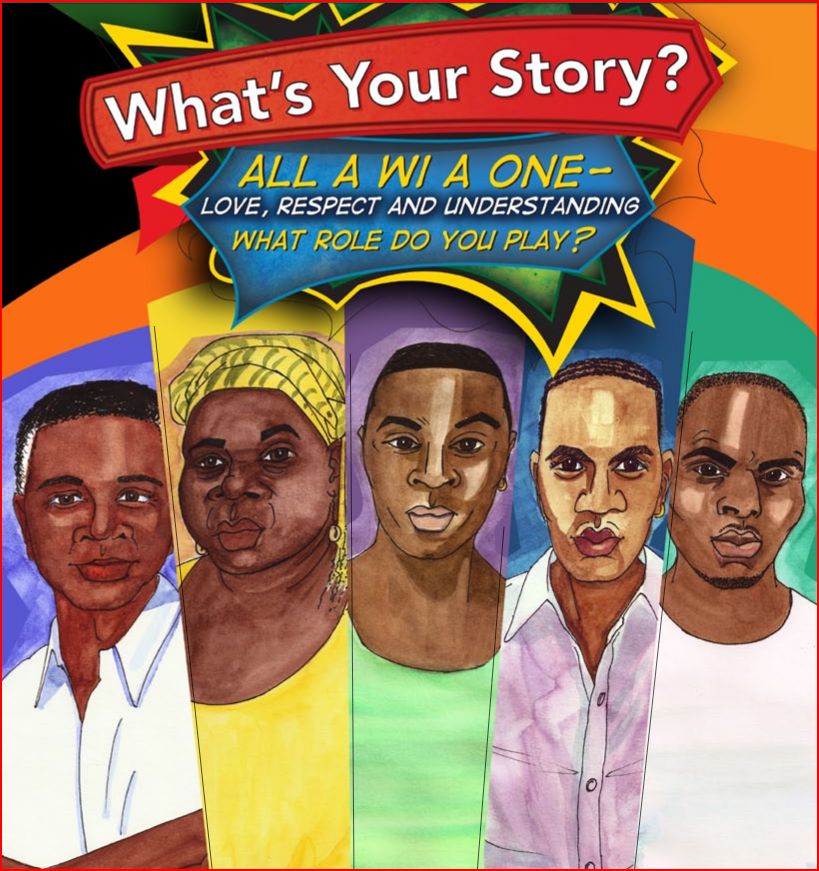
Produced by Communication for Change (C-Change), a United States Agency for International Development (USAID)-funded project now managed by the Health Communication Capacity Collaborative (HC3), these social and behaviour change communication (SBCC) materials for use by men who have sex with men (MSM) in Jamaica aim to support the adoption of individual and collective HIV risk reduction strategies by:
- Providing MSM with information they need to make informed choices related to sexually transmitted infection (STI) and HIV prevention;
- Increasing perceptions of risk and severity around the consequences of certain HIV-related risk behaviours; and
- Creating dialogue with and among MSM around the complex set of issues, including stigma and discrimination, that MSM face toward a more supportive enabling environment.
HIV prevention with MSM is a strong focus in Jamaica, where the estimated prevalence among these men is much higher than that of the general population (32% and 1.7%, respectively) (Jamaica National HIV/STI Programme 2010). When faced with adverse laws, stigmatised attitudes, and discriminatory practices, it becomes a challenge for MSM to come forward and identify their sexuality and their sexual experiences. As a result, many of them do not access the support that they need. MSM groups identified a need for communication materials on men's health and other issues for use by community educators serving MSM, their friends, and their family, and for themselves to access independently. In response, C-Change conducted a series of workshops with MSM in Jamaica and in the Bahamas in September 2011. The overall objectives of these workshops were to develop SBCC resources that contribute to the reduction of HIV among MSM and that could be integrated into existing programming with this priority audience. Within the workshops, contextual challenges, gaps, and needs related to health were also explored. A review of the literature in addition to the findings from several research studies conducted by C-Change also informed the content for these materials, which include:
- A comic book with several character stories that deal with HIV prevention, monogamy, psychosocial support needs, and stigma and discrimination. Five storylines:
- Andrew - a college student who is conflicted about his sexuality and the stigma and discrimination he witnesses and feels toward MSM.
- Prince - a good friend of Andrew's who must come to terms with Andrew's secrets and faces a decision as to whether or not to stand by his side.
- Dean - an older man who is in a long-term, committed homosexual relationship.
- Mikey - a young MSM who is trying his best to get by with a limited support network.
- Andrea - a mother who finds out about her son's homosexuality.
- Several posters, which are tied to the characters in the comic book. With the goal of raising community awareness, they present real life stories of stigma, discrimination, and caring.
- Several factsheets on health and psychosocial-related topics raised in the comic book that can be used as job aids for interpersonal or group discussion purposes or for self-reflection for independent users of the materials.
- Scripts of the comic book.
- A 32-page manual [PDF] which describes how to use the above materials in different settings and with different groups.
Publishers
C-Hub, November 4 2013.
- Log in to post comments