










































Communicating with Communities: A Case Study and Guide from Pakistan and Elsewhere
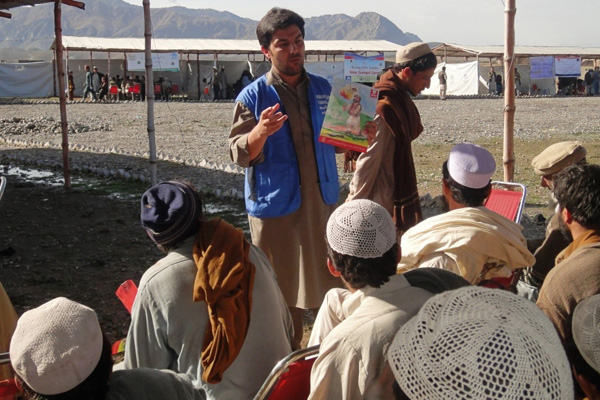
"While there now are standard specifications for frequently used commodities and significant advances in information-sharing have been made, there is still a struggle to achieve a certain level of uniformity in the delivery of messages to affected communities and incorporate their feedback into the shaping of policy and the delivery of assistance."
This guide explores how timely, accurate, and appropriately contextualised information reaches communities affected by disaster, as well as how feedback on such information can equip other stakeholders involved in a humanitarian response to move from relief to recovery. While drawing upon lessons learned from a number of natural disasters, it is primarily based on the experience and work of the Humanitarian Communications Unit of the International Organization for Migration (IOM) in Pakistan, featuring tools and lessons shaped from experiences gathered during the roll-out and expansion of the response to the complex emergencies and floods that occurred in that country. Lessons learned from the response to later crises, particularly those in Haiti and the Philippines, have also been integrated into the handbook. The guide, published by IOM and Humanitarian Accountability Partnership (HAP) International, aims to:
- showcase good practices through case studies;
- provide guidance to agencies, staff, and other humanitarian stakeholders working in emergencies on how to strengthen communication with crisis-affected communities; and
- highlight the importance of ensuring that an appropriate beneficiary communications strategy is created during the design of an overall humanitarian response or the individual activities within it.
Topics explored in the guide, which is divided into 4 chapters with a number of annexes, include: what humanitarian communications is; who implements humanitarian communications; how to run humanitarian communications; who the intended audience(s) is/are; how to develop messages for affected and beneficiary populations; and how to monitor and evaluate a campaign by measuring its impact on affected communities. Other components include, within the annexes, for instance, content such as: "IOM Humanitarian Communications Six Months after the 2010 Floods", "Media Development Agencies", "Terms of Reference for Humanitarian Call Centre Attendants", "Humanitarian SMS [text message] Service in Pakistan", "Assessment of IOM's Voice Broadcast Message Pilot Project in Pakistan", "Public Service Announcements", "FAQ [frequently asked questions] document examples", etc.
Throughout the resource, strategic communication tips are highlighted. For example: "An effective humanitarian communications strategy requires an understanding of how information currently flows between the disaster management authorities, other local and national government bodies, civil society and the affected communities. Each country has a certain mechanism(s) in place. Understand how they work." As explained here, the various sources and channels of information that flood-affected populations in Pakistan turned to included: friends and family, mobile phone, television and radio, the army, lady health visitors and workers, newspapers, religious leaders/institutions, aid workers, community leaders, district government (government officials, district coordination officers, etc.), the humanitarian call centre, print materials (banners, posters, notice boards, etc.), the police, and shops (barber, grocer, tea, etc.).
134
ReliefWeb, accessed December 15 2014. Image credit: HAP International