










































1 minute
Confronting Global Gender Justice: Women's Lives, Human Rights
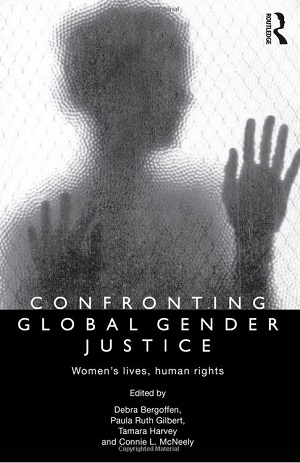
Confronting Global Gender Justice contains a unique, interdisciplinary collection of essays that address some of the most complex and demanding challenges facing theorists, activists, analysts, and educators engaged in the tasks of defining and researching women’s rights as human rights and fighting to make these rights realities in women’s lives.
With thematic sections on Complicating Discourses of Victimhood, Interrogating Practices of Representation, Mobilizing Strategies of Engagement, and Crossing Legal Landscapes, this volume offers both specific case studies and more general theoretical interventions. Contributors examine and assess current understandings of gender justice, and offer new paradigms and strategies for dealing with the complexities of gender and human rights as they arise across local and international contexts. In addition, it offers a particularly timely assessment of the effectiveness and limits of international rights instruments, governmental and nongovernmental organization activities, grassroots and customary practices, and narrative and photographic representations.
This book is a valuable resource for both undergraduate and graduate students in fields such as Gender or Women’s Studies, Human Rights, Cultural Studies, Anthropology, and Sociology, as well as researchers and professionals working in related areas.