










































Rugiatu Neneh Turay, Amazonian Initiative Movement (AIM) - DFID Girl Summit 2014
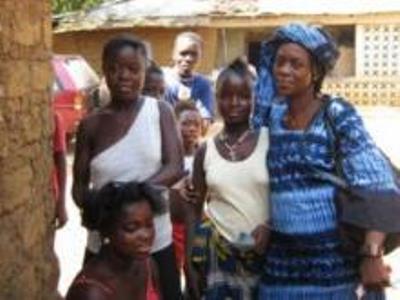
"My organisation stands for strong and fearless women....The change we are looking for is for the next generation. Women are becoming empowered and education is the best way to make a change." Rugiatu Neneh Turay
Panel Discussion: Spotlight on Progress - "All Aboard: Strategies to Engage Girls, Boys, Men, Women and Whole Communities for Change"
Context: This presentation is from one of the 14 "Spotlights on Progress" video-recorded sessions from the Girl Summit 2014, London, United Kingdom (UK). The sessions were organised to share best practice between practitioners, grassroots activists, and ministers of governments across the issues of female genital mutilation (FGM) and child, early, and forced marriage (CEFM). Girl Summit is a project of the Department for International Development, UK.
A featured panelist of this Spotlight session was Rugiatu Neneh Turay, Founder of the Amazonian Initiative Movement (AIM), working with communities, schools, and religious places in Sierra Leone. (See video below, which starts with this featured speaker.)
Profile of speaker: Rugiatu Neneh Turay has been leading AIM’s efforts in Sierra Leone since 2003, where their community-based action has so far resulted in "convincing over 400 soweis (cutters) in 111 villages 'to put down their knives', ... by offering alternative employment." Turay underwent FGM as a child, then, after fleeing civil war in Sierra Leone, met women in a refugee camp in Guinea who also opposed the practice of FGM. Empowered by working together, they founded AIM. Returning to Sierra Leone, she began her work in communities,
Strategy overview: AIM's mission is to promote and protect the rights of girls and women against FGM, forced marriage, and domestic violence through education, advocacy, and capacity building, as well as empowerment. It uses tactics such as providing employment for soweis, urging delay of the initiation ritual that involves FGM until the age of 18, when a girl can make a more informed decision, and providing information on FGM-associated problems such as infertility and pregnancy and childbirth complications. "Turay and her fellow campaigners in Sierra Leone believe the best way to raise public awareness about the risks of female genital mutilation is to teach the women designated to perform the procedure to read and write - in Sierra Leone these are often illiterate older women - and provide them with an alternative source of income."AIM runs a shelter that offers accommodation, meals, and education to girls. It works to inform children of their human rights through school seminars and implements sensitising projects on the rights of girls and income generating activities. In addition, AIM advocates for women’s rights on the local, regional, and international levels.
Through the following strategies and tools - safe houses, schools with manuals on FGM, girls and women trained in public speaking to empower women, teaching girls and women "to read, write their names, and talk in public", and engaging traditional leaders - AIM is working with individuals and with leadership, especially religious, health, education, and governmental leaders. AIM is advocating to engage the Ministries of Education, Health, Justice and local government to make change. Because there is no law against FGM in Sierra Leone, and there can be danger in talking about it, AIM has convened a national forum comprising national and international organisations to engage traditional leaders to address the silence so that people will speak out.
Overview of this Summit Session: From the Girl Summit summary document: "This session recognises the importance and power of community members and the structures to drive social change for girls - including the importance of engaging men and boys. Here we explore a range of different strategies for working with whole communities to promote abandonment of FGM and child, early and forced marriage. We learn more about the role of championing from within, bringing men and boys into the picture, the power of working through pre-existing structures to promote conversation and commitment to change and exploring the role of the disparate communities in the form of diaspora groups.
The session is opened by Ziauddin Yousafzai Honorary Chairman, The Malala Fund.
The speakers, in order of appearance, are:
Rugiatu Neneh Turay Founder of the Amazonian Initiative Movement
Nasheima Sheikh Assistant CEO, Birmingham & Solihull Women’s Aid
Sana Uqba Campaigns and Publicity Manager, Middle East and North Africa Regional Consulting
Sabitra Dhakal Project Manager, CARE International
Agnes Pareyio Founder of the Tasaru Ntomonok Initiative
The session is moderated by Eric Levine, CEO, Stars Foundation."
Footage of this (available below) and other "Spotlights" are available on DFID’s YouTube channel.
The Girl Summit is a project of DFID. Click here and scroll down to see the full list of committed individuals and organisations working on girls' issues, as well as a list of Girl Summit Charter signatories.
DFID Girls Summit Outcomes website, the Go Campaign website, netzkraft.net website, and the Bulletin of the World Health Organization website, July 29 2015.