










































Ser refugiado es como ser tico [Being a Refugee Is like Being a Costa Rican]
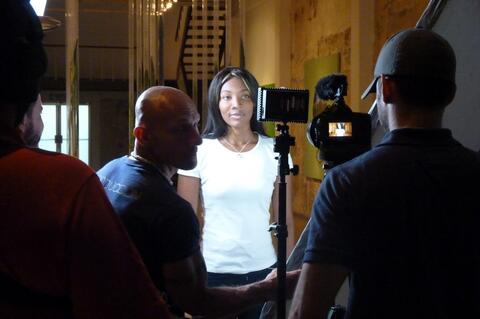
"All the messages and materials of the strategy were created and validated with the refugee community..."
Launched in 2015 as one of the activities commemorating World Refugee Day (June 20), the Office of United Nations High Commissioner for Refugees (UNHCR), the Directorate General of Immigration (DGME), and the communications agency McCann San Jose, "Ser refugiado es como ser tico" ["Being a Refugee Is like Being a Costa Rican"] is an awareness campaign on the rights and duties of refugees and asylum with two main objectives: (i) introduce to Costa Ricans who is a refugee and what unites us as human beings with dreams, desires, and potential; and (ii) empower the refugee population with knowledge on their rights and duties in Costa Rica to facilitate their integration into the country. "Through this project we wish to promote dignity and self-reliance of refugees, and mutual respect between this population and the Costa Rican community," said Roberto Mignone, UNHCR representative.
The main objective of this project is to foster the legal and economic integration of the refugee community in Costa Rica through a comprehensive communication strategy that increases their access to accurate and practical information, mainly focusing on messages about the procedures required to change refugees' migratory status as well as employment opportunities. The campaign consists of several elements, which were designed and developed with the cooperation of Costa Rican volunteers and refugees. Their participation, willingness, and interest was paramount, as they reflect the importance of making their equality visible to society. To accomplish this, organisers drew on the human-centred design (HCD) methodology, an approach that begins by listening and understanding the needs and desires of the people through three main phases: Hear, Create, and Deliver. In summary, it is a collaborative approach in which refugees are involved at all stages of project design and implementation, from the identification of the challenge to be tackled to iteration and creation of a solution.
In phase one, three separate meetings were held with UNHCR colleagues, with team members of the main partner non-governmental organisation (NGO), and with the refugee community. In each gathering, group activities informed a brainstorming session to identify the challenge to solve, based on a very broad question: "What do you think is the main barrier that hinders refugees’ self-reliance in Costa Rica?" There was a common aspect connecting all the identified needs, which was how the lack of access to information was jeopardising refugees' integration in the country. The refugee community is usually unaware of the rights and services to which they are entitled. Furthermore, outreach and ensuring access to information in a dispersed urban context represents a big challenge for UNHCR. To continue working on a possible solution for this challenge, organisers held several interviews with colleagues and conducted a survey with 45 refugees and asylum seekers. These interviews revealed that there is a perception that they are being informed about UNHCR's services and programmes, but not about the services provided by the government. They would like to receive more information to support their efforts to increase their self-reliance and livelihoods. In particular, they would like to receive more information about their labour rights, employment and educational opportunities, and procedures for business creation. As traveling across the city is not easy (and UNHCR only has one branch office in San José), refugees pointed out the need for using new communication mechanisms, such as SMS, a website, a hotline, and others. Refugees suggested thinking about options to strengthen the outreach of the population. Another series of brainstorming sessions led to identification of possible solutions through sharing with refugees an example of a website wireframe, a video, printed materials, and audio messages. They wanted refugees to transmit the messages to other refugees. Instead of thinking only about one unique solution to inform refugees, they proposed the idea of creating a strategy that could include different information tools. This would also ensure a more inclusive approach that could suit the different profiles among the refugee population (for example, different educational levels or access to technology). They recommended providing very practical information in a very friendly way.
This collaborative design process led to:
- A social media campaign based on seven videos (which were shot with the participation of 23 volunteers: 8 refugees and 15 Costa Rican nationals). The main message centres around how refugees and citizens enjoy the same rights and duties.
- Booklets, posters, and other traditional printed materials linked to the social media campaign.
- A website dedicated to refugees, where they can find detailed information about asylum, rights and duties, information about the country, governmental services and programmes, UNHCR services, and so on in Costa Rica and other countries. "Discover everything you need to know about the available services in your area. Learn more about your rights and responsibilities. Find out how you can seek help and support others. Stay informed and updated about the latest news." The online solution, supported by UNHCR Innovation, is being piloted in several countries.
- SMS messages through Ascend. This is a two-way communication system via SMS that was piloted in Costa Rica in April 2014 supported by UNHCR Innovation.
Migration, Rights
An active participant in the project, Veruuzka Daniela Rodriguez, is a 22-year-old refugee from Venezuela who had been in Costa Rica for 2 years and 5 months when she said: "I think the project website informative answers a need we have the population both refugee and refugee application. Likewise, the campaign also responds to the misinformation that exists in the country, including public and private institutions, which often is a major constraint. Thus, I believe that the benefits that this project will contribute directly to the integration of the population in the country. Personally, I am deeply grateful for the invitation I received to participate in this project because I feel that somehow I can contribute to the integration of refugees, through the experiences that I have had to come to this country in search peace, requesting a condition of refuge."
The initiative is a joint effort between UNHCR Costa Rica, DGME, UNHCR Innovation, McCann San Jose, and the refugee community. Other companies have joined the initiative supporting the dissemination of the campaign, including GPO Vallas, EUCOR, and CCM Cinemas.
"Integrated Communications Strategy: A Collaborative Experience in Costa Rica", by Valentina Duque, December 16 2014, and Costa Rica: lanzamiento de la campaña "Ser refugiado es como ser tico", May 27 2015 - both accessed on June 13 2016.