










































The Effectiveness of Social Marketing in Global Health: A Systematic Review
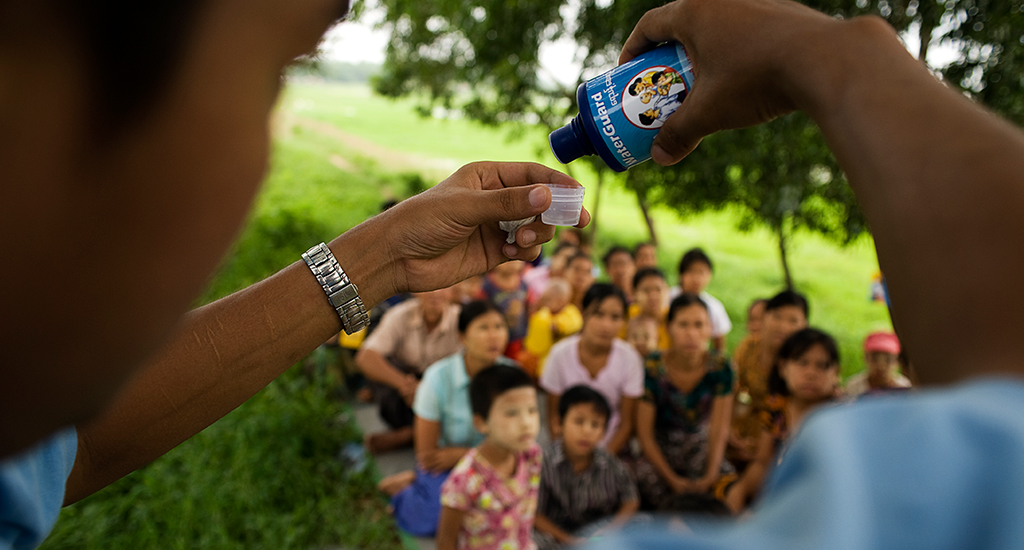
Population Services International (Firestone, Sievers); North Carolina Coalition Against Domestic Violence (Rowe); The QED Group LLC (Modi)
"Evidence exists that social marketing can influence health behaviours and health outcomes. Better documentation of social marketing interventions is needed when evaluating these programs."
This article reviews evidence of the effectiveness of social marketing in low- and middle-income countries, focusing on major areas of investment in global health: HIV, reproductive health, child survival, malaria, and tuberculosis. According to Cheng, Kotler, and Lee (2011), social marketing uses marketing concepts - product design, appropriate pricing, sales and distribution, and communications - to influence behaviours that benefit individuals and communities. These interventions aim to ensure that the intended audience adopts the behaviour being promoted, often by making health products and services appealing and affordable to support the practice of the behaviour. In short, "[s]ocial marketing programmes sell behaviours."
As the researchers explain, a key issue in assessing the effectiveness of social marketing is whether social marketing programmes actually achieve consistent behaviour change. Programmes may raise the target audience's awareness or improve their attitudes or intentions. While these factors may mediate the process of behaviour change, they are not sufficient evidence that social marketing interventions have achieved their intended purpose.
The researchers used a logic model to demonstrate a pathway for the effects of social marketing. "This model posits that a social marketing programme, which may include many components of the marketing mix (product, price, promotion, place) and may involve both supply- and demand-side strategies, should lead to individual-level programme exposure by the target audience. Individual-level exposure should influence a change in mediating behavioural factors - access and availability to health products and services, knowledge, attitudes, social norms, intentions, etc. - that will ultimately lead to adoption of a health-promoting behaviour. Healthy behaviour change (i.e., taking preventative and/or treatment action) should then lead to improvements in health status, as assessed through measures of morbidity, mortality, or fertility status."
The researchers identified six earlier systematic reviews that examine the effectiveness of social marketing in low- and middle-income countries. While these reviews found improvements in behaviours and their mediating factors, none concluded whether social marketing programmes can achieve improvements in health status as a result of improved behaviour.
In their review, the researchers examined the available evidence on the effectiveness of social marketing to achieve improvements in three types of outcomes: health outcomes, health behaviour change, and mediating behavioural factors. The researchers searched PubMed, PsycInfo and ProQuest, using search terms linking social marketing and health outcomes for studies published from 1995 to 2013. Eligible studies were set in low- and middle-income countries, used experimental or quasi-experimental designs, and measured at least one of the three outcome types in the five health areas of interest. Studies were analysed by effect estimates and scored against the Social Marketing Benchmark Criteria developed by the National Social Marketing Centre.
After reviewing 18,974 records, 125 studies met inclusion criteria. Across health areas, 81 studies reported on changes in behavioural factors, 97 studies reported on changes in behaviour, and 42 studies reported on health outcomes. The greatest number of studies focused on HIV outcomes (n=45) and took place in sub-Saharan Africa (n=67). Most studies used quasi-experimental designs and reported mixed results. Given the range of outcomes considered, the researchers did not attempt meta-analysis. Rather, this review was designed to report on the breadth of the literature and indication of social marketing's effectiveness based on the direction and significance of results.
Most studies evaluated HIV interventions (n=45) and took place in sub-Saharan Africa. Across health areas, 97 studies reported on changes in behaviour, 81 studies reported on changes in behavioural factors, and 42 studies reported on health outcomes. Most studies used quasi-experimental designs and reported mixed results. Compared to other health areas, child survival had the greatest proportion of studies using experimental designs, measuring health outcomes, and reporting positive, statistically significant results. Many of those studies focused on educating caregivers on child health care or nutritional practices.
When the researchers stratified studies by their categorisation as having positive versus mixed results, those that met more of the social marketing benchmark criteria were more likely to have achieved behaviour change. In particular, the principles of audience insight and exchange, i.e., addressing the costs and benefits of behaviour change, were more frequent in studies with exclusively statistically significant and positive effects than in those studies with mixed effects. The characteristics of competition, method mix, and audience segmentation were also found in higher frequencies. Few studies were coded as applying theories of behaviour change, suggesting some social marketing interventions included in this review did not have clear pathways to change.
The researchers identified several evidence gaps in this review. There is a need to expand the evidence base on the effects of social marketing for improving health outcomes: Less than half of the included studies addressed measures of morbidity, mortality, or fertility. Certain interventions had no evidence of social marketing effectiveness - namely, treatment for pneumonia, vaccination for childhood illnesses, voluntary medical male circumcision, safe abortion, post-abortion care, and emergency contraception.
In exploring policy implications of this investigation, the researchers point out that only a few studies used experimental designs. Strengthening the quality of evidence will require greater investment for rigorous evaluation designs and documentation of intervention strategies used. To contribute to the body of knowledge on social marketing effectiveness, evaluators should state explicitly how interventions apply social marketing principles to distinguish this approach from other strategies, such as social and behaviour change communications.
The researchers conclude that although this review has highlighted further research needs, it also suggests that a sizeable evidence base exists now on whether social marketing can change behaviours and influence health outcomes in low- and middle-income countries. Furthermore, many of the interventions studied were already operating at scale. Most social marketing interventions did focus on changing specific behaviours - not just on raising awareness. Audience insight and exchange were among the most important characteristics of programmes that achieved positive, statistically significant changes in behaviour. The findings of the review can be used to improve our understanding of how to design programmes to achieve measureable improvements, and they provide a rationale for further investment to fill evidence gaps and expand effective social marketing approaches.
Health Policy Plan 2016, 1-15. doi: 10.1093/heapol/czw088; and email from Rebecca Firestone to The Communication Initiative on August 24 2016. Image credit: Population Services International
- Log in to post comments