










































DatNav: Guide to Navigate the Digital Data in Human Rights Research
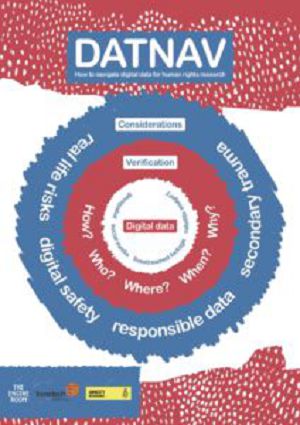
"Digital data can support human rights documentation in depth, breadth, accuracy and efficiency."
This guide is designed to help human rights researchers, journalists, students, and philanthropists navigate and integrate digital data and online media into their human rights work. This is a broad introduction that aims to inspire critical thinking, rather than be prescriptive about what specific software, devices, or platforms should be used, since these evolve constantly. Some forms of digital data discussed in this guide: photos, videos, and their metadata; satellite imagery and geospatial information; search engines, social media, and online opinions; and government statistics and budgets. Readers can use the suggestions included in this guide to:
- Boost traditional research and documentation (interviews, surveys, and spreadsheets) by learning to incorporate digital data;
- Build knowledge and expertise in advance of the next emergency to avoid the reactionary collection of data while an event or violation is in full swing;
- Understand the opportunities, limits, and risks of digital data, as well as when and how to seek expert advice; and
- Overcome fear of digital data and technology.
Case studies in the guide illustrate the ways in which data can help human rights professionals in the courtroom, when working with governments and journalists, and in documenting historical record. For example, in April 2011, a group of activists in Syria began systematically monitoring and documenting human rights violations by collecting and watching online videos of violence and atrocities. When several people from the team were kidnapped, the remaining members developed a non-profit organisation called the Violations Documentation Center (VDC) and now collect data on the imprisonment, torture, missing and killed civilians, rebels, and regime forces in Syria so their documentation can potentially be used in transitional justice events when the conflict ends. They have more detailed database categories and more filtering options for search, and make better use of satellite imagery for corroboration. "Now our information is used confidently by UN [United Nations] representatives, governments and advocates around the world, since we feel certain that our data is complete," says a VDC representative.
The guide is the result of a collaborative project led by Amnesty International, Benetech, and The Engine Room that began in late 2015. Collaborators conducted a series of interviews, community consultations, and surveys to understand whether digital data was being integrated into human rights work. In the vast majority of cases, they found that it wasn't. To support everyone in the human rights field in navigating this complex environment, they convened a group of 16 researchers and technical experts in May 2016 to draft this guide over 4 days of intense reflection and writing. For example, contributions from WITNESS are informed by that organisation's work with partners and allies around the world and seek to address specific issues they confront on a regular basis, such as video verification and ethical use of eyewitness media, video takedowns on online platforms, and developing well-organised catalogues of human rights footage, such as police abuse or war crimes. The guide's publishers have vetted resources and collected further reading on the areas examined in the guide, which you can find online here.
88
C4D Network Twitter Trawl: 19 – 25 September 2016; and WITNESS website, September 27 2016.
- Log in to post comments