










































Combatting Japanese Encephalitis in Nepal: A Public Health Success Story
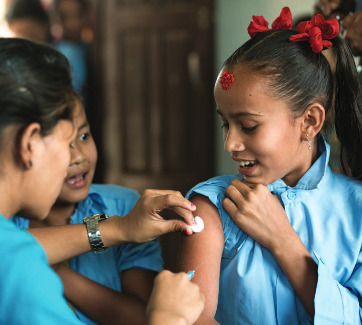
"Nepal demonstrates that, through commitment, resourcefulness, and creativity, it is possible to successfully implement a routine JE vaccination program despite logistical and financial challenges."
From PATH, this case study details Nepal's successful efforts to overcome several challenges so as to protect the community against Japanese encephalitis (JE) - from establishing disease surveillance to a robust routine JE immunisation programme. In 2005, a JE outbreak took the lives of nearly 2,000 people - mostly children - living in economically poor, rural districts of the Terai in southern Nepal and northern India. Just a few years later, however, the number of JE cases in Nepal began to drop, and not a single JE death has been recorded in Nepal since 2010. This case study examines the reasons for this rapid progress, including expanded use of a safe, effective JE vaccine and the government's commitment to its use.
High-level decision-makers in JE-endemic countries often cite 4 main barriers for JE vaccine introduction. The case study explores how Nepal overcame all of them.
- Lack of surveillance data to determine disease burden and diagnostic laboratory testing capabilities to confirm JE cases. While Nepal lacked surveillance data and laboratory testing capacity at the outset, the country prioritised JE surveillance and set up a robust JE surveillance system by utilising existing disease surveillance networks and partnering with the World Health Organization (WHO). Improved surveillance uncovered an unexpected burden of JE among adults in addition to children. Thomas Wierzba, head of WHO-Immunization Preventable Diseases (IPD) in Nepal from 2003-2006, said: "The surveillance program was a success because people knew JE was a problem, and they were terrified of it. They were eager to implement the surveillance because they wanted to know what the burden was and what they could do about it." The Ministry of Health (MOH) also established a safety surveillance programme to detect any adverse events following immunisation (AEFI) at sentinel sites and all major hospitals. The government used these data to continually monitor the vaccine's safety.
- Inadequate financial resources and health infrastructure capacity to introduce vaccination. Despite limited finances, Nepal introduced JE vaccine because decision-makers knew it would be cost effective compared to the cost of managing JE cases and accommodating lifelong neurologic disabilities. Nepal was able to save even more money by introducing a live attenuated JE vaccine called CD-JEV that had been developed by China's Chengdu Institute of Biological Products (CDIBP), which has a low public-sector cost and one-dose regimen, and by utilising its existing infrastructure and human resources from polio eradication efforts, including health workers, facilities, cold chain equipment, and logistics systems. Once it became available, Nepal utilised Gavi financing to expand JE vaccination to additional districts. These campaigns began in May 2016 with the aim of vaccinating an additional 4 million children in 44 districts in Nepal and intensifying coverage in 3 Terai districts with existing routine JE immunisation. Eventually, the country plans to expand JE into the routine immunisation programme nationwide.
- Competing policy priorities around introducing other vaccines. Decision-makers in Nepal prioritised JE vaccines because of the significant burden in the country, but they knew that introducing multiple vaccines was feasible through coordination. Through careful planning and evidence-based decision-making, Nepal coordinated JE vaccine introduction alongside other lifesaving vaccines.
- Need for technical assistance and training materials to guide JE vaccine introduction. Nepal's government sought the assistance and expertise of WHO, as well as of PATH. With this help, the MOH designed an evidence-based phased vaccination scale-up plan and developed materials to train health workers along the way. Prior to each district's JE vaccination campaign, local health authorities, health workers, and volunteers were trained at district-level meetings. In addition to providing an overview of JE disease and vaccine handling requirements, the MOH armed health workers with social mobilisation tools and expanded their roles in routine and supplementary immunisation. The MOH produced materials, including posters and vaccination invitation letters in a variety of local languages, as part of a JE awareness programme. Local media outlets and interpersonal communication (IPC) with health workers also helped spread the word about JE vaccines.
Dr. Rajendra Pant, chief of the Child Health Division at the Department of Health Services within Nepal's MOH, states, "The keys to success in combatting JE are greater community participation, government commitment, and the hard work of health professionals and community volunteers." According to this case study: "The impact of Nepal's JE vaccination program will only continue to grow," and the hope is that, one day, JE will be a thing of the past in Nepal.
PATH website, November 30 2016. Image credit: PATH/Rocky Prajapati
- Log in to post comments