










































PolioTrac - Pakistan
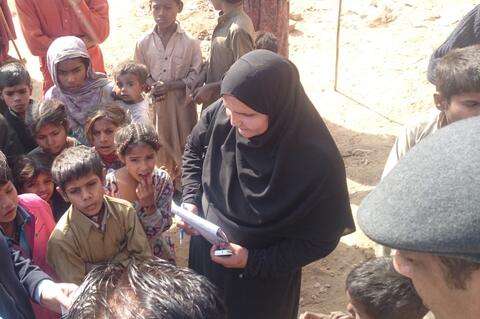
In Pakistan, PolioTrac is an information and communication technology (ICT)-based system designed to facilitate real-time communication between the United Nations Children's Fund (UNICEF) and its social mobilisation network, COMNet. Simple mobile phones are used to collect structured data for rapid analysis and open-ended conversations to address individual needs. By providing frontline staff with mobile phones, UNICEF intends to offer a fast and cost-effective way to get actionable information and deliver messages - constituting a real-time feedback loop.
PolioTrac uses RapidPro, which is UNICEF’s common platform for developing and sharing mobile services that can be adapted for different contexts and sectors. It is built on RapidSMS, a free and open source framework designed to send and receive data using basic mobile phones, manage complex workflows, automate analysis and present data in real-time. In terms of putting this technology into action to fight polio in Pakistan:
- Training is a key aspect in advancing the fight against polio and protecting the lives of frontline workers. In trainings to strengthen interpersonal communication (IPC) skills, frontline workers use role play to model the process of visiting with a caregiver, learn how to talk to reluctant parents about the importance of vaccination, and deescalate difficult situations like an encounter with an aggressive parent. Parents typically have many questions, and if a social mobiliser fails to answer even one, children are more likely to remain unvaccinated. PolioTrac is used to monitor the rollout of training sessions, assess knowledge, gauge participant satisfaction, and reinforce these crucial messages and skills. In order to help COMNet to refresh their knowledge on IPC skills, UNICEF Pakistan has designed a series of "quizzes" using interactive voice response (IVR), also known as robocall (for more on this, see below).
- In terms of campaign and programme quality, PolioTrac provided a pulse on reach and quality of communication tools, like radio spots, and it provides an opportunity for frontline staff to give open-ended feedback in real time.
- PolioTrac has sent motivational messages through voice and short message service (SMS, or text) to thank frontline workers for their important contribution to the polio eradication effort.
- PolioTrac has sent reminders to frontline staff of their roles and responsibilities.
- PolioTrac has supported supply and logistics through: the monitoring of campaign and programme material distribution; payment for frontline workers; and performance of third party field monitors and other partners working in the field on behalf of the Polio Eradication Initiative.
From a programmatic perspective, information collected through PolioTrac has led to concrete actions, such as:
- In an effort to assess IPC skills, organisers sent COMNet mobilisers a phone call where they listened to two scenarios they might encounter when speaking with caregivers (e.g., when a caregiver may get angry or aggressive, reluctant, or unwilling to cooperate). They were prompted to answer a question about each situation, received immediate feedback on their responses, and were provided with additional information on the topic. Respondents were also given the option of send in a text message with questions or comments about IPC skills. Furthermore, mobilisers were asked to give open-ended feedback, where they expressed appreciation and even the intention to review training materials. Although 90% of 1,021 respondents replied with the correct responses, UNICEF also learned through SMS that over 100 people were interested in additional training in the area of IPC. This approach is now part of a series of questions that will be used to reinforce IPC skills learned through training.
- UNICEF used a RapidPro campaign to support Union Council Medical Officers (UCMOs) in planning and logistics for vaccination campaigns. At the district level, UCMOs are responsible for 30 to 50 tasks to prepare for each campaign. Training vaccinators, distributing communication materials, collecting data, and reporting are a few of the tasks that complicate the organisation of vaccination campaigns. In a pilot, UCMOs began to receive SMS reminders containing the details of their daily tasks two weeks before the launch of a vaccination campaign. UCMOs were asked to respond to each message when they completed each task. This approach was employed in Sindh province with 20 participants receiving 25 reminders. Participants are being interviewed to determine the value of the reminders and next steps for the programme.
- COMNet staff stationed at transit points (bus stations, border crossings, etc.) were asked over SMS to report the number of children vaccinated at the transit point during their shift, and the number of those children who were "zero-dose" or had never been vaccinated. UNICEF found that of 17,040 children reached at transit points, 251 "zero-dose" children (1.47%) received their first dose of oral polio vaccine (OPV). This finding was used to validate a longer, three-month assessment examining the effectiveness of vaccination at transit points. In addition, vaccine stockouts at transit points were reported through this channel, and the relevant focal points were notified accordingly.
In addition to supporting programmes, information collected through PolioTrac has been used for advocacy and to influence policy. To identify gaps in the programme and show support for COMNet, UNICEF deployed a voice flow asking four questions about training, supervision, community relevance, and payment. First, the results showed that only 61% of COMNet mobilisers in Islamabad had received training. Those who had not been trained were sent to training immediately. Second, results showed that timely payment was a problem across all provinces, but it was particularly low in northwest Pakistan. The consulting firm managing COMNet was notified of the inconsistencies and asked to resolve them. Two months after the survey, a follow-up was conducted to confirm payment and assess progress in compensation. These data were used to maintain pressure on the responsible consulting firm, thereby advocating for COMNet. Timely payment is now the number one policy issue in Pakistan's Polio Eradication Emergency Action Plan. The information collected using PolioTrac played a central role in that shift and engendered conversations to continue supporting mobilisers and vaccinators. These data have been instrumental in recognising issues as they arise so that UNICEF can engage, support, and advocate for frontline workers in their efforts to reach every child and realise the goal of Pakistan free of polio.
Immunisation and Vaccines, Technology.
In 2014, 85% of the world's polio cases occurred in Pakistan, one of three countries where polio is still endemic. Until vaccination coverage is boosted to levels necessary to stop transmission, children in all countries remain at risk to contract polio. UNICEF, partner organisations, and governments are working together to vaccinate each child, stop transmission, and eradicate polio. During monthly government-coordinated campaigns, frontline health workers go door to door vaccinating children. But reaching Pakistan's 35 million children under five is a significant logistical challenge. In the most difficult operating environments in Pakistan, frontline staff must negotiate access to communities, identify unvaccinated children, address caregivers' concerns about vaccination, and educate parents who refuse to vaccinate their children because of misconceptions surrounding polio and polio vaccination. These difficult tasks are compounded by isolation, long travel distances, limited training and supervision, and threats to personal security. The eradication of polio will only happen if vaccinators are able to reach each and every child multiple times; therefore, every doorstep interaction between frontline staff and caregivers must be accompanied by trust, respect, empathy, and accurate information.
RapidPro website and "Innovations help fight polio in Pakistan", by Sergiy Prokhorov, unicefstories, April 9 2015, and RapidPro website - all accessed on February 5 2018. Image caption/credit: COMNet social mobiliser visits a household in the Punjab province in Pakistan. UNICEF/PAK/2014/S.Prokhorov
- Log in to post comments