










































Development of a Mobile Health Intervention to Promote Papanicolaou Tests and Human Papillomavirus Vaccination in an Underserved Immigrant Population: A Culturally Targeted and Individually Tailored Text Messaging Approach
The University of Alabama (H.Y. Lee); East Carolina University (M.H. Lee); University of Minnesota (Sharratt, Blaes); University of Memphis (S. Lee)
"The findings of the study could help guide future intervention development targeting different types of cancer screening in other underserved racial or ethnic groups."
One potential reason behind the disproportionate burden of cervical cancer faced by Korean American immigrant women might be the low uptake of both Papanicolaou (Pap) tests and human papillomavirus (HPV) vaccines. Text messaging has previously been shown to be a useful and efficient means of educating patients on sensitive health-related issues, and young Korean American immigrant women have a high accessibility to mobile phones. In light of these factors, a United States (US)-based research team developed a culturally targeted and individually tailored mobile text messaging intervention called mScreening; this article details the design methodology.
The 7-day educational programme mScreening is designed to promote the uptake of Pap tests and HPV vaccines among Korean American immigrant women aged between 21 and 29 years. Its development was guided by the Fogg behaviour model (FBM), which posits that to make positive health behaviour happen, researchers should identify barriers to a specific health behaviour, convert the barriers to motivators, and provide triggers to make the action occur. To that end, 5 focus groups were conducted between April 2011 and March 2012 with 22 young Korean American immigrant women. Three barriers were identified, including limited knowledge about cervical cancer and preventive behaviours, cultural barriers, and low accessibility to healthcare services. In addition, the research team held regular meetings with community advisory board members and mobile technology developers to get feedback and refine mScreening. They explored what messages and pictures would motivate young Korean American immigrant women, what real-life stories exist, how the stories should be presented, and in what format the content should be delivered.
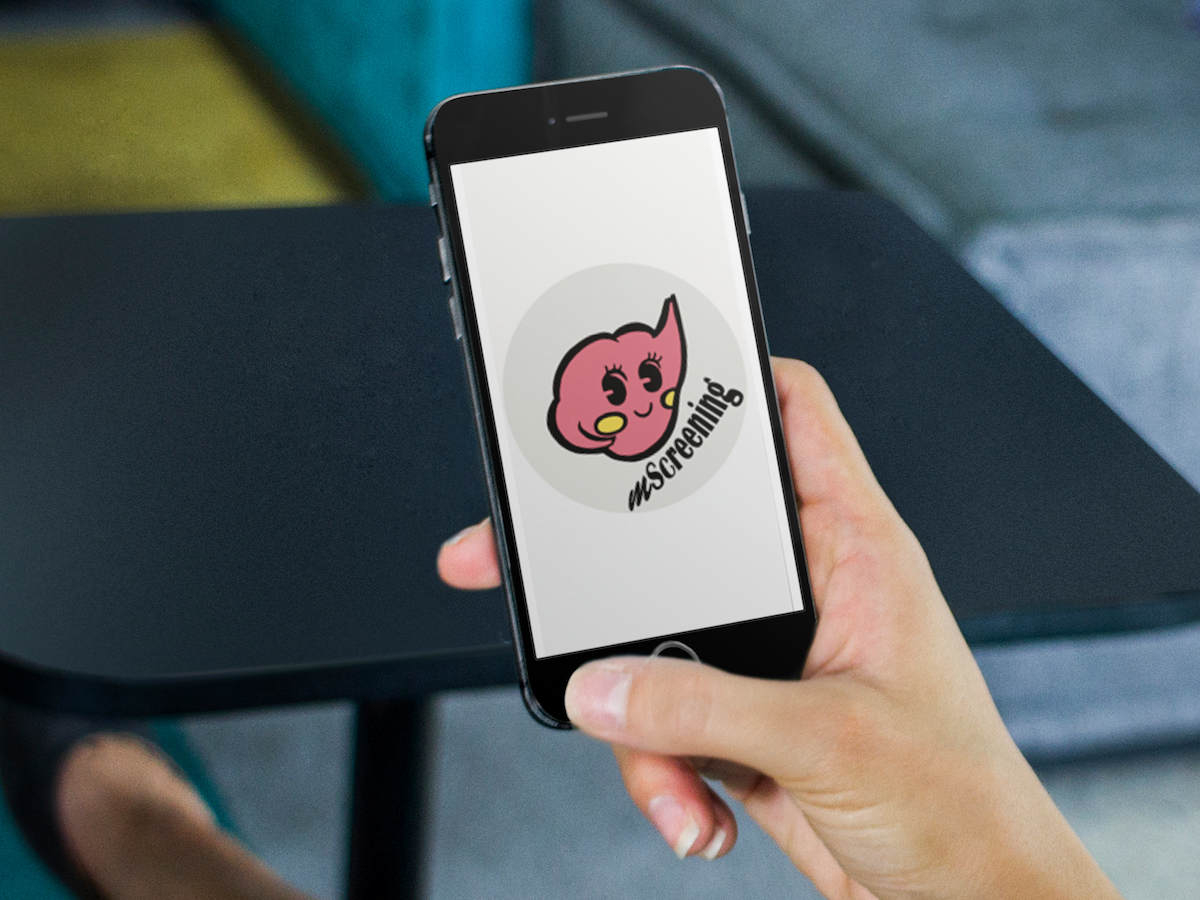
On the basis of the suggestions generated through that process, the 7-day text message programme was crafted. First, mScreening introduced information about cervical cancer. Then, the Pap test was explained, followed by information on clinics and health professionals, as well as the cost of the Pap test. Next, HPV and the HPV vaccine were introduced and described, followed by information on the cost of the HPV vaccine and possible cultural barriers. The last day consisted of summarising what was learned through the 6 days using quizzes and games. The mScreening messages for each content area were developed using the message-framing techniques that affect health decision making based on the FBM model. The programme's logo symbolises a happy and healthy cervix; the focus group participants provided multiple ideas of how the logo should look and what colour and shape would represent the cervix in a culturally appropriate way. A bilingual health navigator, who is a registered nurse, was available for questions and comments as part of mScreening.
The article delves more deeply into 4 core themes that emerged from the design process:
- Culturally targeted and individually tailored messages to improve knowledge about cervical cancer, Pap tests and HPV vaccines, and healthcare access - All participants suggested using a female doctor to share the content, given that talking about women's reproductive organs with a male doctor is embarrassing in Korean culture. The research team sought to integrate participants' proposal to create surprising messages on the topic of basic knowledge about cervical cancer to capture users' attention. That said, participants recommended that, rather than tapping into fear or guilt, the mScreening messages should highlight the benefits of Pap testing and HPV vaccine uptake by framing the messages in terms of potential gain. A majority of participants also expressed wanting text messages to be targeted to overcome misinformation (e.g., hymen breaking during a Pap test) and apprehension about cervical cancer screening (e.g., feeling uncomfortable in a gynaecology clinic as an unmarried female). They suggested several methods toward achieving this goal, such as including powerful emotional messages or life experience examples from people who have successfully overcome these obstacles. Testimonial text messages were created and incorporated into mScreening by working with young Korean American immigrant women who had received the Pap test and/or HPV vaccine.
- An interactive and visual message format - Participants suggested 3 types of messages that could be used together to maximise engagement: visual messages, interactive messages, and dynamic characters or emoticons. Given the fact that cervical cancer screening and prevention are not a common topic of discussion in the Korean American community, using age-appropriate text messages with cartoons was suggested as a way to culturally target the intervention and decrease discomfort around having conversations regarding screening and prevention.
- Brief message delivery formats to promote participant engagement - To deliver accurate information despite the short messages, the research team created messages that would lead participants to a reliable online resource for further information.
- Use of an incentive to motivate participation (i.e., gift cards) - Participants also suggested sending a celebratory message to intervention participants who received a Pap test or a dose of the HPV vaccine after their participation in mScreening.
mScreening results published elsewhere showed the effectiveness and feasibility of the intervention, including improved knowledge of cervical cancer and Pap test rates and raising knowledge, attitude, and uptake rates of the HPV vaccine. The present study has sought to retrospectively share the design methodology based on the success the research team had with the solution. It may help guide other researchers interested in developing text-message-based interventions for underserved minority populations.
JMIR Mhealth and Uhealth 2019;7(6):e13256. DOI: 10.2196/13256. Image credit: JMIR
- Log in to post comments