










































Evaluation of BRIDGE IPC Training Programme (IPC Skills Training in Routine Immunization for Frontline Workers)
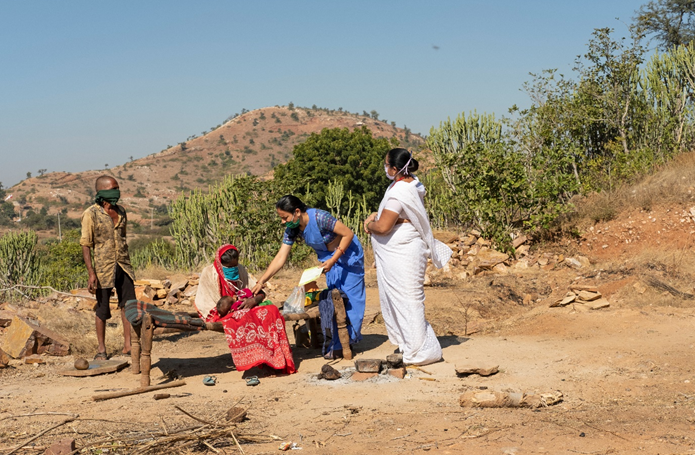
"The training has resulted in enhanced FLWs skills that have led to an improved rate of immunization across the state." - State official, Odisha
One of the key challenges faced by countries, including India, in achieving universal immunisation coverage is ensuring sustainable demand for vaccination at family and community levels. Frontline workers (FLWs) within India's health system, primarily the Auxiliary Nurse Midwife (ANM) and Accredited Social Health Activist (ASHA), serve as a bridge between the health delivery system and the community and thus have a critical role to play in engaging with caregivers around routine immunisation (RI) to generate demand and reduce hesitancy. To support these FLWs, the United Nations Children's Fund (UNICEF) created a Boosting Routine Immunization Demand Generation (BRIDGE) Interpersonal Communication (IPC) skills training programme. This document and associated presentation describe IPE Global's evaluation of BRIDGE's training module in five states of India: Uttar Pradesh, Rajasthan, Karnataka, Odisha, and Assam.
UNICEF developed the BRIDGE IPC module based on the Tarang training module on social and behaviour change communication (SBCC) endorsed by the Ministry of Health and Family Welfare (MOHFW). The BRIDGE IPC training has been implemented across all states of India since August 2017. It was implemented using a cascading (Training of Trainers - ToT) model where national-level trainers trained district trainers, who further trained FLWs during the block-level training. To ensure uniformity in implementation, operational guidelines [PDF] were developed.
This evaluation (November 2019 - October 2021) assessed the BRIDGE IPC module's planning and implementation process (what worked and what didn't work). Primary data were collected through structured interviews with district trainers, or DTs (608), ANMs (128), ASHAs (632); qualitative interviews with state-level stakeholders (24); district-level stakeholders (37) and observations at immunisation sites (40). The data were analysed to help assess the BRIDGE IPC skills training and cascading model's:
- Relevance: Both DTs and FLWs found the training material, content, and methods appropriate and consistent for building the IPC skills of FLWs for delivering key messages on RI, mobilising communities, mitigating vaccine hesitancy, preparing village-level communication plans, and tracking vulnerable children. The illustrations and material (e.g., videos) were considered relevant to build the knowledge of FLWs. Simple-to-remember techniques like the Greet, Ask/Assessment, Tell, Help, Explain, Return (GATHER) approach, which focuses on the importance of communication during home visits, enabled FLWs to address the challenges they faced in the community for improving immunisation coverage. Officials who were interviewed said that the village-level communication plans, developed by 72.7% of the trained FLWs (vs. 65.9% of untrained FLWs), helped FLWs spread awareness about RI, especially in high-risk areas. However, DTs mentioned that some FLWs found the training content too technical, and some found it generic and not contextualised as per their local needs (e.g., in non-Hindi speaking states).
- Effectiveness: A higher proportion of trained FLWs than those untrained delivered key messages on RI. The trained FLWs developed a positive attitude and confidence while communicating with the parents and caregivers, especially on addressing queries and providing information about adverse events following immunisation (AEFI) and improving vaccine acceptance. For example, during community-level meetings, trained FLWs reported covering more key communication messages than their untrained counterparts, such as discussing minor AEFI, addressing myths and misconceptions, and sharing information on new vaccines introduced. Nearly half of trained FLWs also developed skills in evidence-based planning, outreach and advocacy, and tracking left-out and drop out children, albeit with significant variations across states. DTs emphasised the positive effect of training on the knowledge level, practices, and attitude of FLWs through improved communication skills and confidence and enhanced convincing power. Findings revealed the non-uniform implementation of supportive supervision during and after the training for both DTs and FLWs.
- Efficiency: All the planned sessions and topics were covered in almost all the batches of training. However, there were some operational challenges related to logistics, training material, timely fund allocation and other administrative issues, and natural calamities (e.g., floods and COVID-19) that influenced the quality of the FLW training. Moreover, the findings showed that close to 30% of the DTs were at the developing level of proficiency while conducting training, and around one-fourth of the DTs faced challenges like lack of communication channels to resolve issues, lack of required support, and lack of required material. Some stakeholders also pointed to gaps in training and content, such as: the inclusion of several topics in the training package designed for a single day; lack of context-specific illustrations and pictures showing local customs and culture; and the inability of some FLWs to share their queries with male trainers. The findings also revealed an absence of an integrated system to collate data on the training planning and implementation, to capture feedback from the DTs and FLWs, and to monitor the performance of the FLWs.
- Sustainability: The need to regularly conduct refresher training to upgrade the IPC skills of FLWs is critical for sustaining the gains of the training. Though the BRIDGE module includes periodic refresher training for this purpose, only one-third of the FLWs received any refresher training. Hurdles to conducting refresher training included delay in completion of the first round of training, unavailability of funds and staff, and unavailability of DTs. There is also a need to develop robust monitoring and support mechanisms to monitor the performance of FLWs and BRIDGE training activities. Technical inputs are required to create processes for tracking drop-out children due to AEFI and other reasons.
- Equity and gender: As directed by the BRIDGE training, the trained FLWs prepared a Left-Out, Dropout and Resistant (LODOR) list and were more likely to identify and cover these families than their untrained counterparts. However, the training focuses on priorising non-immunised children irrespective of gender and social affiliation. The trainers discouraged FLWs from using discriminatory terms related to religion, gender, colour, or caste in their discussions.
Overall, the evaluation found that the BRIDGE IPC training was successful in building the IPC-related knowledge and skills of FLWs to increase immunisation coverage in their respective areas. State and district officials also reflected that the BRIDGE training successfully built the capacity of FLWs in reaching out to the community so as to address challenges underlying low immunisation coverage.
Major learnings that emerged from the evaluation to enable strengthening of future training include: local contextualisation of training content to improve relatability and comprehension; supportive supervision and systematic monitoring of implementation at all stages for ensuring quality process and outcomes; proper, adequate, and timely resource allocation for smooth implementation of the training; and periodic refresher training to upgrade the skills and knowledge of the district trainers and FLWs. Recommendations based on these learnings are offered; for example, UNICEF should ensure that training content includes details of gender-inclusive strategies and gives more focus to ensuring gender inclusion during service delivery.
Data from the National Family Health Survey 5, 2019-2021 released in November 2021 shows that RI coverage has improved substantially: 76.4% of the children between the ages of 12-23 months received all basic vaccinations, up from 62% recorded in NFHS4 (2015-16). It also shows that 11 out of 14 states/union territories (UTs) have more than three-fourths of children aged 12-23 months with full immunisation; the figure is highest for Odisha (90%).
Email from Sumita Thapar to The Communication Initiative on December 15 2021. Image caption/credit: FLWs on their routine home visits to check on a 13-month-old child in Dungarpur district, Rajasthan. UNICEF India/2020/Sri Kolari
- Log in to post comments