










































Assessment: Life-Skills Based Curriculum Project in Lao PDR
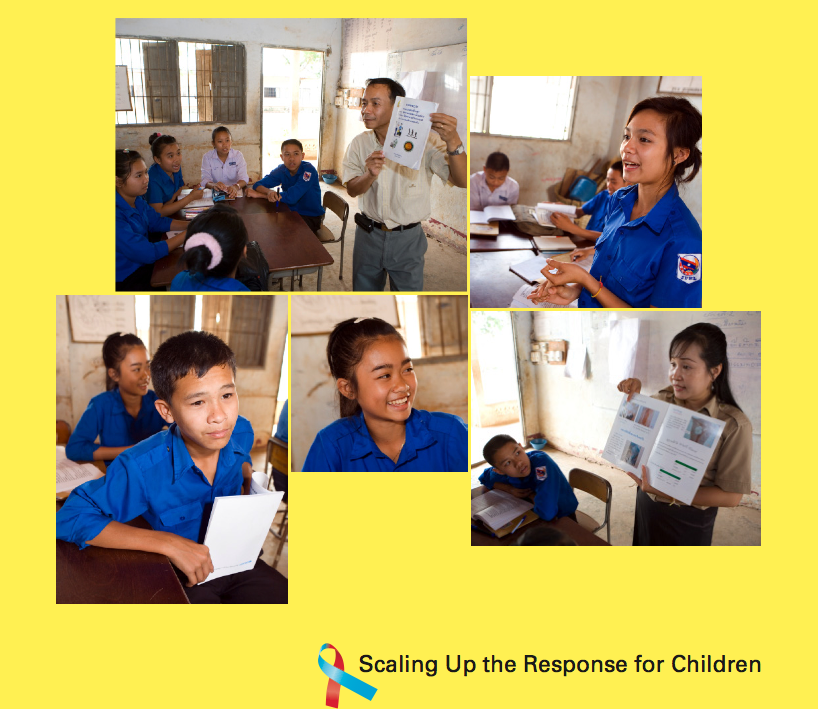
This assessment from the United Nations Children's Fund (UNICEF) Asia-Pacific Shared Services Center (APSSC) and East Asia and Pacific Regional Office (EAPRO) investigates the knowledge, attitudes, and behaviours of students in Laos PDR regarding reproductive health, HIV and AIDS, sexually transmitted infections (STIs), and drugs. It describes what young people know and makes specific recommendations to the Ministry of Education to support the national response on HIV/AIDS and STIs.
From the Executive Summary: "In 2006, UNICEF conducted a baseline survey of the programme, and in 2009 conducted a follow-up assessment in 20 schools in six provinces. Students in another nine schools in three provinces, which had not yet been exposed to the life-skills curriculum, were interviewed as a control group.
The assessment made use of a questionnaire and in-depth interviews to explore Grade 11 students’ knowledge of HIV and AIDS, STIs, reproductive health, alcohol and drugs. The sample of 860 both boys and girls were also asked about their risk-taking behaviours and their sources of information, while teachers and parents were asked for their views on the curriculum.
- HIV and AIDS - The assessment found that nearly all students had heard of HIV and AIDS and knew it could be transmitted by unprotected sex with an infected person. Most could name at least two other forms of transmission. Boys and girls had approximately the same knowledge of HIV and AIDS, as did students in the control group. However students in non-curriculum schools were more likely to believe that sharing a meal or clothes could transmit the virus.
When asked about methods of HIV prevention, about 95 per cent of boys and 75 per cent of girls mentioned condoms. The number of students who said they received information about condoms in school was higher among those exposed to the life-skills curriculum.
An average of 95 per cent of students in curriculum schools said they learned about HIV and AIDS, STIs, reproductive health and drug abuse in school, compared to 77 per cent in noncurriculum schools. Students in curriculum schools were far more likely to discuss the risks of HIV and methods of HIV prevention with a teacher than were students in non-curriculum schools.
- Sexual activity - ...In schools that did not offer the curriculum, a larger proportion of boys said they had a girlfriend and that they drank alcohol with their girlfriend....Boys in curriculum schools were a little less likely to be sexually experienced than their counterparts in non-curriculum schools....There was no significant difference [in condom use in most recent sexual encounter] among boys in non-curriculum schools. Of the girls who reported sexual activity, four out of five said their last sexual encounter was without a condom. Fewer girls in non-curriculum schools saw the need for their boyfriends to use a condom. Students in curriculum schools felt slightly more at risk [after unprotected sex] than those in non-curriculum schools.
Drugs and alcohol - Nearly all students knew the names of drugs like Ya Baa (methamphetamine) and marijuana. Four per cent of boys in curriculum schools and 7 per cent of boys in non-curriculum schools said they had taken drugs, mainly Ya Baa....Around 2 per cent of students said they would accept drugs if they were offered. This proportion was higher in non-curriculum schools, at 5 per cent for boys and 7 per cent for girls....In terms of drunkenness among boys, there was no significant difference between curriculum and non-curriculum schools, but girls in non-curriculum schools were somewhat more likely to admit to having been drunk. Researchers were surprised to find that girls enjoyed drinking even more than boys.
- The curriculum - Teachers expressed a number of concerns relating to their training and their capacity to effectively deliver the life-skills curriculum. In general, they saw a need for more training and support, better educational materials, and textbooks that were more relevant and accessible to students.
For their part, students said the most difficult subject was reproductive health, because there were many lessons and the content was lengthy, while the easiest was drug awareness because they had heard a lot about this elsewhere. The issue of textbooks - which contained too much writing but no pictures, and which had to be handed in when the class finished - came up repeatedly.
- Recommendations listed at the end of this report focus on integrating life-skills education into national core curricula, and ensuring that teachers and schools are empowered to deliver measurable results. The content should be less theoretical and more relevant to the real world. The findings point to the need to improve the quality of both in-service and pre-service teachers' training, provide more supervision for teachers in school, and review the quality and availability of books and other educational materials.
The life-skills programme should coordinate with external organizations pursuing the same goals to create synergy, and should ensure the curriculum is reinforced outside the classroom and be positioned within cultural norms by involving parents and community groups. There is a need to improve monitoring at all levels - including regular assessments of young people’s risk taking; the sources of information to which they are exposed; and the impact of those messages on their behaviour - to ensure the continuing relevance of the life-skills programme.
Finally, the assessment recommends that stigma and discrimination should be actively addressed in schools by involving people living with HIV, and ensuring that children and young people affected by AIDS are able to participate in school activities and learning opportunities."
Youth InfoNet No. 86 of November 29 2011. Image: IYWG website