










































Scaling up of Life Skills Based Education in Pakistan: A Case Study
Department for Reproductive Health and Research, World Health Organization (Svanemyra and Chandra-Mouli); Rutgers WPF (Baig)
"The scale-up of a comprehensive sexuality education programme that targets young people in a conservative Muslim country is possible when there is careful curriculum design and materials and approaches are developed in close collaboration with key stakeholders."
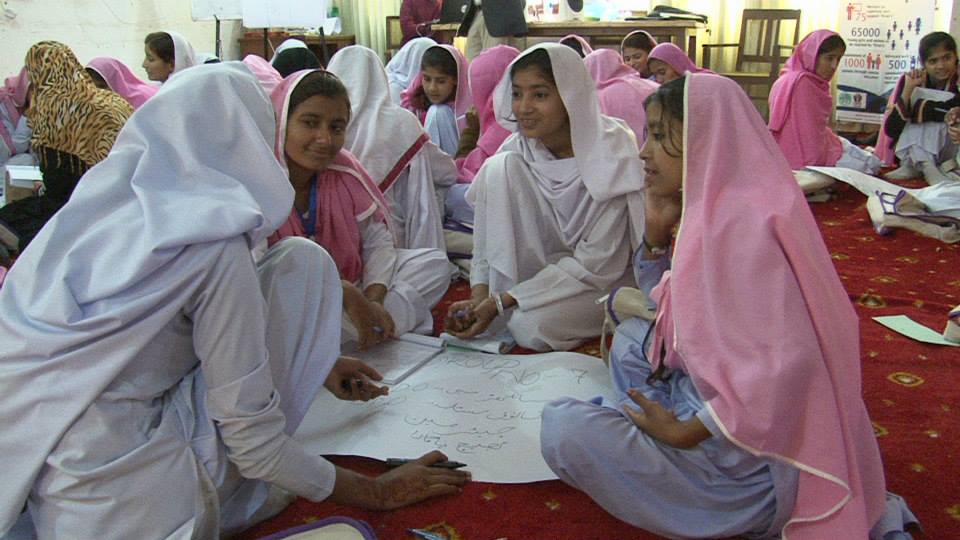
Part of a series of analytic case studies, this paper examines the scale-up of a rights-based, life skills-based education (LSBE) programme conducted from 2004 to 2013 in Pakistan that included training and education about sexual and reproductive health (SRH) issues. The programme was introduced by Rutgers WPF Pakistan in a total of 1,188 schools. As is detailed in the paper and summarised below, over time, introduction and scale-up were made possible by a combination of attributes among the organisations leading the development of the programme and the users. Due to the conservative operating environment in which the LSBE curriculum was first introduced, a multiplicity of media and advocacy activities led to the modification and adaptation of the curriculum, with topics included or disregarded according to the needs of the intended group and feedback from the community, involving parents, religious leaders, community leaders, teachers, school administrators, and members of district education departments, amongst others.
"Life skills have been defined by the World Health Organization (WHO) as the 'abilities for adaptive and positive behaviour that enable individuals to deal effectively with the demands and challenges of everyday life' (WHO n.d.). These attributes represent the psycho-social skills that determine valued behaviour and include reflective skills such as problem-solving and critical thinking, as well as personal skills such as self-awareness, and interpersonal skills. Practising life skills has the potential to empower and may lead to qualities such as self-esteem, sociability and tolerance. It enables young people to take action and generate change, to have capabilities to decide what to do and who to be, and to have a better understanding of the context in which they live."
As explained here, Rutgers WPF has been working in Pakistan since 1997; the first step towards providing SRH education in schools was initiated in 2002. This initiative started with support from the European Commission and the United Nations Development Programme (UNDP) on drafting a curriculum and providing reproductive health information to girls and young women aged 14-19. The curriculum was developed for community sessions with small groups of 10-15 girls. As will be detailed below, in 2004, with support from the Dutch Government, local partners, and Master Trainers, a detailed and comprehensive curriculum was developed on life skills and sexual and reproductive health and rights (SRHR) for adolescents entitled "LSBE for Adolescents Workbook". This consisted of 17 modules with 2-3 sessions each. The term LSBE term was chosen in preference to "Comprehensive Sexuality Education" in an attempt to tackle resistance to the use of contested terms like sexuality.
During the course of introducing LSBE in Pakistan, the curriculum has been subject to many revisions through ongoing feedback and evaluation that included consultative processes with relevant stakeholders. Several lessons have been taken into consideration according to the need of the intended audience. However, core lessons on SRHR and sexual- and gender-based violence (SGBV) were retained. It was unanimously agreed that the curriculum devised at that time was too comprehensive to be taught in schools over the course of one year. Hence, over a 9-year period, the curriculum was reduced from 17 lessons in 2004 to 13 lessons through the integration of SRHR lessons in 2013. In a similar way, modifications were made according to the need created by the growth in the programme's scale and the varying intended audiences for the project.
By 2006, the curriculum had been somewhat simplified to consist of 11 lessons, including topics such as self-awareness, puberty, averting risks and peer pressure, decision-making, reproductive health, marriage and pregnancy, menstruation, and SGBV. Topics and exercises were revised for younger adolescents (ages 13-16 years) and also for school-based programmes. The workbooks and teachers' manuals were made available separately for boys and girls, with paper-based and CD-ROM versions. The curriculum was translated into 3 languages to cater to the needs of the local population.
By 2007, the LSBE programme was expanded to run in 12 districts (Peshawar, Karachi, Matiari, Quetta, Pishin, Gujranwala, Lahore, Multan, Vehari, Dadu, Gilgit, and Faisalabad). As a part of the programme, selected teachers were given 4-5 days of training on the curriculum and were later observed and monitored during classroom delivery. Furthermore, the most promising of these teachers were selected on the basis of their willingness and performance to be trained as Master Trainers. These Master Trainers were responsible for delivering training to other teachers throughout the year.
In 2008, the LSBE curriculum was adapted for implementation in Islamic boarding schools. Drafted in consultation with Islamic scholars, it included topics such as self-awareness, puberty, averting risks and peer pressure, and decision-making. Each lesson included references and explanation from a religious point of view, and key messages were reinforced with Quran and Hadith references.
In 2009, the LSBE curriculum was split into 2 levels in line with the age of the young people. Level 1 (for Grades 6, 7, and 8 - average student age 12–14 years) talked about basic life skills, whereas level 2 (for Grades 9 and 10 - average student age 14-16) provided information on SRHR and provided support for the acquisition of the necessary skills to apply this knowledge.
Over a period of 4 years (2006-2010), the LSBE programme was taught to 92,649 students (age 13-17 years), and 1,708 teachers were trained in the delivery of the LSBE curriculum to students.
After implementing levels 1 and 2, it was observed that greater commitment from schools was required in terms of time. In addition, some schools discontinued the curriculum before reaching level 2. To address this, Rutgers WPF partnered with the local non-governmental organisation (NGO) Aahung to develop a comprehensive curriculum with separate books for boys and girls. This curriculum comprised 18 lessons and was implemented in 2010. The LSBE curriculum for girls was developed with an aim of educating them about LSBE and SRHR and equipping them with knowledge to prevent sexual harassment, school dropout at menarche, and early marriage. For the first time, the curriculum introduced topics such as early marriage and pregnancy, the 'nikahnam' or marriage contract, family planning, peer education, and leadership. The curriculum was taught in 55 schools of Gujranwala and Sanghar to 5,900 girls. After 6 months, delivering the curriculum work was discontinued due to negative community reactions within these conservative societies.
However, in 2011, in consultation with local stakeholders, a specialised curriculum with a combination of LSBE and an economic empowerment component was subsequently developed for girls, with the support of a different curriculum development organisation, Empowerment through Creative Integration. This curriculum covered 49 different topics on life skills, gender-based violence, and economics, accounting, and entrepreneurship. Additional topics such as early marriage and puberty were taught by experts through specially organised lectures. This specialised curriculum was taught over a period of 3 months with 2-3 lessons per week and was completed by 19,576 girls in 84 schools in Sanghar and Gujranwala districts, and 225 teachers were also trained on LSBE.
In 2012, pictorial stories, based on the concept of reverse education (Parent Involvement Strategy [PIS]), on LSBE and SRHR topics were developed. This introduced the concepts of life skills and SRHR to the parents of young people and also included a peer education toolkit comprising a board game for girls to play that provided information on life skills, social and economic aspects of the community life, and girls' empowerment. The game was used to reach out to more than 250,000 young girls. Qur'anic verses and Hadiths were also included in each lesson of LSBE curriculum, providing reference to the key messages in line with a religious framework. Apart from LSBE being taught in schools, other support materials, such as peer education toolkits and PIS (i.e., children talking to their parents) reverse education booklets, were also developed to reach out to out-of-school young people and parents.
By 2013, taking into consideration the views and feedback from key stakeholders, health care providers were appointed to deliver lessons, instead of teachers, on family planning and health-seeking behaviours. Qur'anic references remained in the curriculum due to their positive reception by teachers and community. By the end of 2013, the programme had expanded to include 115 more schools reaching 41,121 students. In addition, electronic and mobile phone technology was being used to share key messages with young people. Simple text messages (drawn from age-appropriate LSBE lessons) are delivered through cell phones. Through a new Access Service and Knowledge initiative, organisers intend that this focus should be expanded to colleges attended by 18- to 24-year-olds.
An excerpt from the document follows (footnote numbers have been removed):
"The core of the LSBE programme that has remained integral to the various versions has a number of features that are worth highlighting. The major components of the programme were based on the World Health Organization guidelines for life skills education (WHO n.d.) [editor's note: see "Practical Guidance for Scaling up Health Service Innovations"] and include self-awareness and empathy, decision-making and problem-solving, creative and critical thinking, communication and interpersonal skills, and coping with emotions and stress. The development of the curriculum was based on core values for working on rights-based sexuality education which stress the dignity of all persons irrespective of gender, religion and class, and promote respect for others' rights. The programme introduced into Pakistani schools teaching methods that are more participatory as well as a cascade approach for building capacity among LSBE educators. For most teachers included in the programme, this was a new experience as they were used to more traditional and authoritative teaching styles. Teachers, however, reacted very positively and reported that they gained confidence in themselves and changed their teaching methods in other disciplines. To create an enabling environment, the programme also worked with children's parents through the PIS, which opens up communication channels between parents and their children and enables parents to realise their responsibility towards their children at this important phase of life. A simple questionnaire was provided to the children to complete after sharing the stories with their parents and this was then evaluated. Focus group discussions with parents revealed that parents frequently became involved with their children and empathised with their SRH guidance needs. Quantitative data findings highlighted that as a result of heightened parental involvement, children gained confidence and developed new skills to engage with their parents. For teachers, classroom discussions were enriched by teacher-generated discussion on the problems students faced during story-telling sessions with their parents. Teachers then guided students on how best to strengthen their engagement with parents.
An impact assessment of the LSBE programme (covering the period 2006-2010) identified a notable impact on students in deconstructing traditional gender roles and also highlighted improvement in decision-making skills and protection in risky situations among boys and girls. The impact assessment, which used a range of methodologies (focus group discussions, in-depth interviews and questionnaires), concluded that the programme had generated a strong desire for the continuation of LSBE among stakeholders (WPF 2011). Advocacy efforts with policy-makers resulted in LSBE being mentioned for the first time in the Pakistan National Youth Policy as well as the National Education Policy. Another LSBE programme entitled ‘Empowering Girls: Transforming Communities' (2009-2012) was implemented in two districts (Sanghar - a rural setting, and Gujranwala - a semi-urban setting) and evaluated in 2013. The evaluation reiterated how the LSBE curriculum was highly appreciated by students and teachers, and parents were reported to be satisfied with the content taught in the programme (Research and Development Solutions 2013). The assessment of the impact of LSBE programmes on sexual and reproductive health outcomes showed that some girls were able to convince their parents to allow them to continue education and postpone marriage (Rutgers WPF 2013). There are also reports of girls being empowered enough to avoid or end sexual abuse (Rutgers WPF n.d.).....
The key innovation detailed earlier was the introduction and scale-up of a programme, and a curriculum, for education on SRH in the form of LSBE. The programme included innovative participatory teaching methods, cascade training for teachers and the development of low-cost teaching resources. The design of the programme and its curriculum built on acknowledged WHO guidelines and tools. The innovation's credibility was based on evidence on effective approaches, which was advocated for by respected persons and institutions such as heads of schools and community leaders. Programme users and stakeholders were able to see the results of the work in practice, and team effort to address persistent and on-going problems. The programme's potential relevance had been confirmed by a needs-assessment study undertaken in 2003 involving boys, girls and teachers in five districts of four provinces (WPF 2011). The programme was considered relatively easy to implement and understand; although it was decided to simplify the curriculum after the programme management realised that it was difficult for teachers to go through the full set of lessons in one academic year."
Posting from Ados Velez May to the Global Knowledge Gateway on March 19 2015. Image credit: Rutgers WPF Facebook page
- Log in to post comments