










































Attitudes and Practices of Auxiliary Nurse Midwives and Accredited Social Health Activists in Uttar Pradesh and Bihar Regarding Polio Immunization in India
Indian Academy of Pediatrics - IAP (Thacker, Choudhury, Vashishtha); Emory University (Gargano, Orenstein, Hughes, Weiss, Omer); Centers for Disease Control and Prevention (PazolBahl, Jafari); St. Stephen's Hospital (Kumar, Arora); Bill and Melinda Gates Foundation (Venczel)
"The findings of this study provide important and encouraging information on the support and commitment of community health workers for polio eradication in these two states that may be applicable to other countries facing importation of WPVs [wild polioviruses] and potentially for future efforts in India, like planning end-game vaccination strategies and measles elimination."
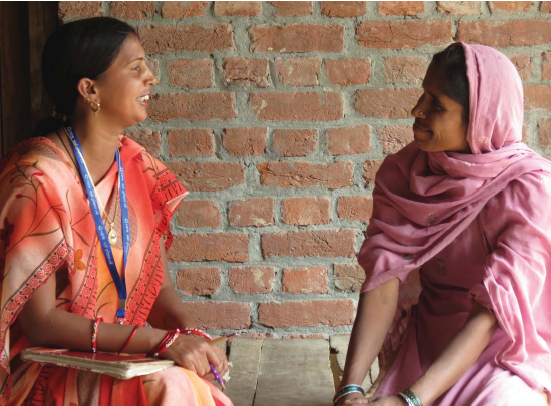
This paper describes research conducted to assess the attitudes and practices of frontline health workers in India regarding polio immunisation in Uttar Pradesh (UP) and Bihar. In India, auxiliary nurse midwives (ANMs) and accredited social health activists (ASHAs) play key roles in delivery of immunisation services. In the rural health system, the ANMs interact directly with the community and have been the central focus of reproductive and child health programmes. ASHAs work at the interface between the community and the public health system, mobilising community members to obtain health services.
Guided by the Health Belief Model (considered the most appropriate for use with one-time behaviours, such as vaccination, where perceived threat and illness avoidance are the most salient issues), the researchers conducted surveys were done in-person between June 2009 and June 2010. Overall, 720 of 773 ANMs (93%) and 722 of 773 ASHAs (93%) completed the survey. Selected findings:
- ANMs and ASHAs in both UP and Bihar responded that polio immunisation is essential for a child's health (97.1 and 98.6%, respectively).
- 98% of ANMs and ASHAs supported polio supplementary immunisation activities (SIAs), and more than 95% of them agreed that polio SIAs helped in increasing acceptance of all vaccines.
- Despite support for polio SIAs, 27.8% of ANMs and 40.1% of ASHAs stated that polio SIAs interfered with their responsibilities related to routine immunisation (RI). The top two activities that ANMs and ASHAs would devote more time to if they did not have to do polio SIAs were antenatal care and RI.
- The majority of ANMs (60-70%) and ASHAs (56-71%) believed that polio immunisation activities benefitted or greatly benefitted other activities they were carrying out.
- Only 13.6% of ANMs and 13.4% of ASHAs reported that they were very likely or likely to face resistance against polio vaccine. This is compared with diphtheria, pertussis, and tetanus (DPT) vaccine, which had the highest reported resistance from both ANMs (41.9%) and ASHAs (36.8%). "Resistance varied by vaccine type, but the survey did not assess what type of resistance is faced. This is an important area for future study so that educational interventions for the public can be guided by the degree of resistance. Further research is needed to distinguish whether the resistance is coming from parents, community members or other health workers."
- In UP, ANMs reported non-availability of vaccines and lack of awareness of time and place of vaccination as important barriers. ANMs in Bihar felt that insufficient personnel and parents' belief that children were fully vaccinated through receiving oral polio vaccine (OPV) during mass campaigns were important barriers.
One forward-looking observation made in the discussion section: "One encouraging finding was the level of support of these health workers for ongoing eradication efforts, including frequent SIAs....Future research into how ANMs and ASHAs can be supported, such as redistribution of workload, better planning or increasing the workforce, is important to improving routine immunization efforts."
Journal of Tropical Pediatrics, 2013 Aug; 59(4): 266-73, sourced from the CORE Group website, accessed February 11 2016. Image credit: Rina Dey, CORE Group Polio Project (CGPP) India
- Log in to post comments