










































Brief Report: Parental Attitudes and Knowledge on Routine Childhood Immunization: An Experience from Central Sri Lanka
University of Peradeniya
"A qualitative study would shed more light into the exact factors that contribute to the development of vaccine hesitancy. These are likely to be different from those found in Western, developed countries."
Although Sri Lanka has very high vaccine coverage, approaching 99% for most infectious diseases, anecdotal stories of vaccine refusal are being reported there. Thus, there is an increasing concern about vaccine hesitancy, defined by the SAGE Working Group as "delay in acceptance or refusal of vaccines despite availability of vaccinations services". This study was conducted to assess parental knowledge of childhood vaccination in Sri Lanka, as lack of awareness could make parents susceptible to messaging by the anti-vaccine movement.
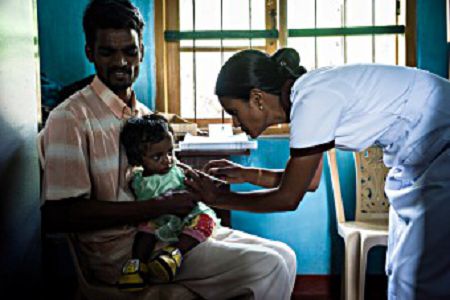
A pre-validated, interviewer-administered questionnaire was used to assess the knowledge, attitudes, and practices (KAP) of 141 parents presenting with children to the well-baby clinic at Teaching Hospital, Peradeniya, from September to November 2017. The majority of the participants (127, 90.1%) thought that vaccinating their children is very important. The major motivation for parents to vaccinate children was their understanding that vaccination prevents serious disability (139, 98.6%). Other factors that contributed to their decision include the need to be compliant with routine practice of Sri Lanka (23, 16.3%), free availability (11, 7.8%), fear of social isolation (11, 7.8%), and persuasion by the health authorities (7, 5%). Participants identified that midwives (135, 95.7%), doctors (97, 68.8%), books (110, 78.0%), TV (100, 70.9%), relatives (105, 74.5%), and online material (22, 16.6%) as modes of acquiring information about vaccination.
With regard to hesitancy issues:
- Nine stated that they would not promote vaccination to others. However, the vast majority (131, 92.9%) believed that the Expanded Programme on Immunization (EPI) has been extremely useful to their children's health.
- Two participants acknowledged they had delayed at least one vaccine. One person stated that he/she had not given one vaccine to a child but declined to give the reason, while one person stated that he/she delayed a vaccine dose due to an employment-related issue.
- Thirty-seven (26.2%) believed that it is better for their children to develop immunity by natural disease.
- Five (3.5%) participants stated that they were not in favour of vaccination despite bringing their children to get vaccinated. Four of them believed vaccines have more harmful effects than benefits, one stated that previous unpleasant experience of vaccination contributed to this view, two of them thought vaccination is not important for the health of children, and one stated that their socio-cultural background does not favour vaccination. However, two of the five acknowledged that they did not have sufficient knowledge to make an informed decision about vaccination.
- Of the 5 participants who stated they were not in favour of vaccination, 2 were males. Two were Muslims, while 3 were Sinhalese. Education levels and incomes also varied. This is in contrast to findings from studies elsewhere that have shown vaccine hesitancy to be associated with factors such as affluence and religious and cultural beliefs.
The researchers deduce that the findings indicate that knowledge regarding the childhood immunisation programme of Sri Lanka and generally on vaccination among parents can be improved. They suggest that there is a need to involve both parents in such educational programmes and that these programmes should be appropriate for educational and socio-cultural background of the parents.
The findings also highlight that even this sample of parents who had brought their children for vaccination have misconceptions about immunisation. Lack of knowledge is one factor that contributes to vaccine hesitancy; it can leave parents vulnerable to misinformation propogated by anti-vaccine movements.
The authors conclude that, "even in countries with high vaccine coverage, general public could be vulnerable to the potential influence of anti-vaccine movement, due to lack of proper understanding on vaccination and that timely, target specific educational programmes are a need of the hour."
BMC Research Notes. 2018; 11: 402. doi: 10.1186/s13104-018-3519-y; and email from Veranja Liyanapathirana to The Communication Initiative on July 19 2018. Image credit: Gavi, the Vaccine Alliance
- Log in to post comments