










































Communication Strategy to Address Sex Selective Elimination
This PowerPoint presentation describes the methodology of the organisation Breakthrough in selecting a communication route to establish a women's human rights campaign against sex selective elimination (SSE) of female gender foetuses before birth. The organisation researched the gender ratios of males and females in birth years 2001 and 2011 in various districts in India and chose 4 with a larger number of male children born in 2011. Breakthrough chose its methodology through: a literature review of possible communication strategies from secondary sources and a multistakeholder approach to develop routes and strategies, including primary research - message testing and messenger effectiveness - leading to recommended strategies and implementation design. Breakthrough then developed draft routes and assessed stakeholder understanding of these routes as phase one of the project. In phase two, it prioritised routes and developed action plans; in phase three, it identified stakeholder effectiveness potential and developed strategies for these stakeholders.
The stakeholders include: youth, government, educational institutions, media, corporations, the medical field, non-governmental organisations (NGOs) and frontline health workers, religious leaders, and panchayat or council members. The Breakthrough strategy intends to empower stakeholders to act as influencers while simultaneously developing media and mobilisation tools to impact the community.
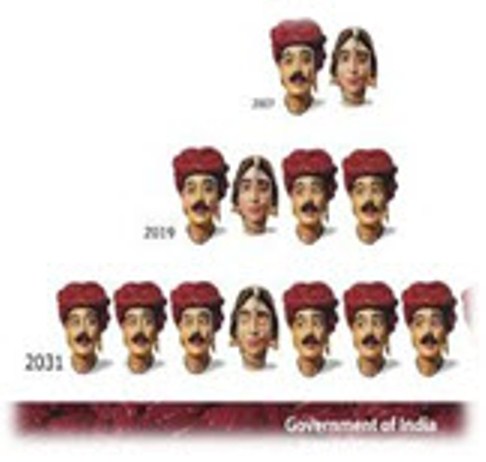
The presentation reviews the messages considered by the organisation with the aim of addressing parents, family, community, medical practitioners, and marriageable men. Some messages show the ratio of males to females progressing from one to one, then, in 2014, as 3 to one and then, in 2034, as six to one. Another says "Save the Girl Child." Messages were analysed for what worked and what did not, including connection to other issues, for example, the cultural tradition of dowry. Breakthrough then developed the basis for choosing its routes including:
- "Need of the hour is a strong message
- Go beyond creating awareness
- Need for clear action
- Appeals to different sections of society
- Hits where it hurts
- Challenging the power structure in the society
- Uplifting the position of girls and women"
It decided that:
- "Messages that tell people not to do something do not work e.g.: Anti-smoking, anti-dowry messaging
- Messages must be created within the context of the target group’s current patterns of thinking; and belief systems and plant seeds of change within them
- Pillars and belief systems that support SSE are the starting point for message development"
Five routes were then developed based upon messages that succeeded with the various stakeholder groups. For example, in route one, the current context addressed was: "Belief in the supremacy of the male (decoded - as strength/ ability/ power/authority)." The inroad chosen for addressing it was: "Questions masculinity and what it really means to be a man." The way the campaign messaging was designed to work was: "Reminds people (fathers, grandfathers, village elders…) that real men use their strength to support women." Of the five, two routes were chosen for recommendation, one based upon respect for women and one designed to address apathy by giving a human face to the statistics. Those routes were analysed for pros and cons of empowerment, action points, appeal, audience focus, etc.
The campaign then analysed potential messengers, understanding that:
- "Campaign against SSE needs multi-agency effort to tackle it
- Needs a sustained, multi-stakeholder and multi-platform campaign
- Success will depend on understanding the strength of each stakeholder as an advocate and using these strengths effectively"
A chart lists each stakeholder group and the challenges in moving them to action. The presentation then addresses each group, assigning each one focus areas and strategies for reaching out to them, for example, using edutainment tools, digital media, networks, and public speaking opportunities for youth. Strategies include:
- Community leaders: build advocates and equip them with tools and messages on possible action; ask them to reward parents of girls and to use public gatherings for message delivery.
- Media professionals: share information with them in news format; release "advertorials", use community radio to send positive stories and connect SSE with women's rights.
- Government officials: explore possible convergence of departments and better implementation of existing programmes; include them in all initiatives; provide them with materials they can use, including posters and outdoor billboards and support to be spokespeople.
- Frontline workers: build capacity on SSE and its implications; provide tools such as audio-video modules and charts with minimal text for them to disseminate information; award their local work with national and state recognition.
- Teachers: offer them materials in "plug and play" format; ask them, as role models, to spark debate; encourage state-level curriculum review and development on gender.
- Medical level: increase awareness of medical students; engage doctors and hospitals to send a message to the community on SSE.
- Corporations: ask them to champion the cause, mentor girls, give women workplace opportunity and skill development, and give recognition to any workers with 2 daughters.
Breakthrough concluded by analysing their stakeholder groups, including naming corporations and choosing an age focus for youth activists and then organised their analysis as to: networking - which groups to connect; capacity building - where to focus training; multimedia - where to focus media development; and government - what research to recommend and with whom to align.
For a copy of this PowerPoint presentation, please email the contact below.
Email from Urvashi Gandhi to The Communication Initiative on April 12 2013.
- Log in to post comments