










































Country Case Study: Syria - Support to Media Where Media Freedoms and Rights Are Constrained
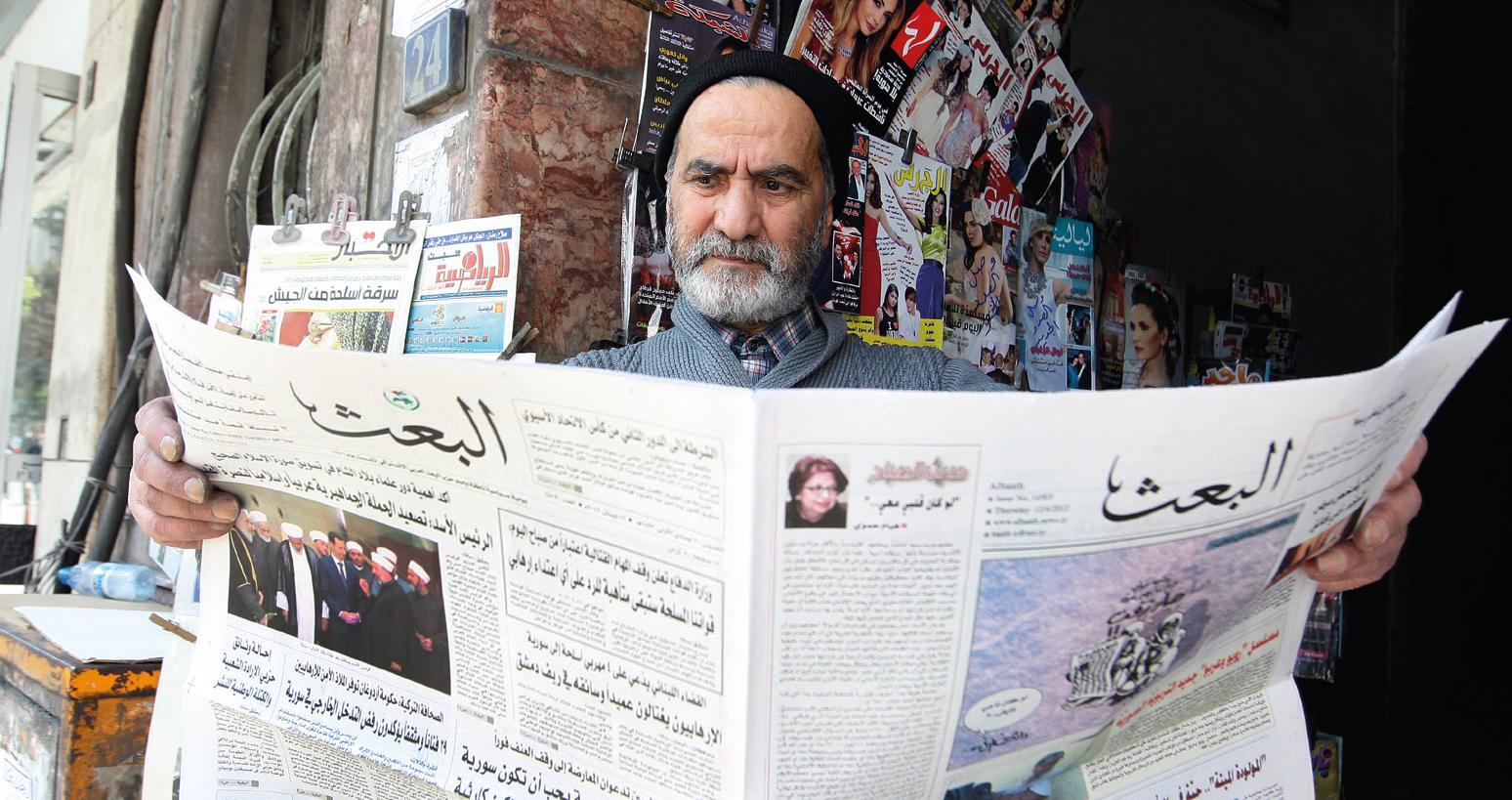
"To this day, the [Syrian] Ministry of Information monitors content to ensure that all outlets adhere to government policies and directives. All private media that cover political content are aligned strongly to the regime."
This case study is part of a series of BBC Media Action research papers, including 5 case studies and a synthesis, discussing reasons why the media in each of the countries featured is constrained and how outside agencies and donors support free and independent media. Commissioned by Swedish International Development Cooperation Agency (SIDA), they are designed to describe the media landscape and media development (countries include Syria, South Sudan, Cambodia, Bangladesh, and Uganda) and set out best practice for donors to sustainably fund and support media internationally.
This document describes Syria's history of Ba'ath party rule since 1963 in which the media is monitored by the government and is forced to remain aligned to the government ("Freedom House has rated Syria “Not Free”...and, in 2011, rated it 7 on political liberties and 6 on its civil liberties, with 1 representing most free and 7 least free.") "Given the sensitive and restrictive media environment, much of the work that is carried out is either under the radar or focused on less contentious development themes and constitutes only a small portion of donor investment....Donors have taken two approaches to working in Syria. The first is unofficial: donors or implementing organisations do not have an official local partner or an endorsement by the authorities and their activities are usually limited to training journalists (often abroad) or supporting online initiatives and the Syrian Diaspora. The second - perhaps the only way to work inside Syria on a large-scale project – is working in partnership with Syrian ministries or government-organised non-governmental organisations (GONGOs)."
Since the uprising, those organisations who sought to work with reform-minded individuals with established media have had to put relations on hold as security has become the focus and foreign publications and international journalists are barred from entering the country, while Syrian journalists are being detained. International media has been relying on citizen journalists' reports.
Strategies (the author refrains from conclusive recommendations due to the volatility of the situation) that donors might consider include:
- Recognising that regime change doesn’t guarantee media freedom - "...Cultural and structural factors that are embedded in Syrian society should be recognised when setting up media support projects, regardless of the outcome of the uprising. At this stage, and before investing in Syria’s media, there needs to be serious research into the situation and context...."
- Investing in research on media reform processes, and aligning donor strategies to fit the local media context - "The domestic political environment determines the types of media development work that can have real impact, so evidence-based academic research looking at processes of reform and change is important...."
- Supporting links between media elites and the grassroots by encouraging mainstream media practitioners to understand and engage with new media - "The role of social media during the Arab Spring reflected the changing status of bloggers and social media users in the regional media and their aspiration to be viewed as credible social commentators. There is a disconnect between traditional media and a burgeoning young community that is using new technologies to overcome some of the restrictions and traditions of old media. Syria has also witnessed a proliferation of new online fora that signal a major shift in its journalism field."
Email from Aoife Allen to The Communication Initiative on September 4 2012 and BBC Media Action website, September 11 2012.
- Log in to post comments