











































Diabetes Community and School Outreach Project
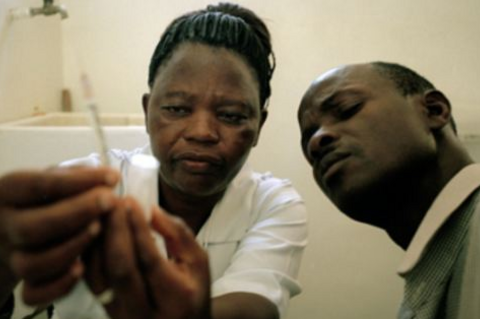
Running from September 2009 to June 2012, this project's objective is to improve diabetes prevention and care by integrating school, community, and health facility approaches to prevention, detection, treatment, and rehabilitative care. Led by the Association of Private Health Facilities in Tanzania (APHFTA), in collaboration with the Ministry of Health and Social Welfare and Ministry of Education and with funding from the World Diabetes Foundation (WDF), the Diabetes Community and School Outreach project focuses on training teachers and health care workers, initiating school-based health clubs, and conducting community screening and awareness campaigns.
The project is a continuation of an earlier WDF funded project "Diabetes Care in the Private Sector," which trained health care providers from private clinics in diabetes care. This follow-up project seeks to further build skills of these health care providers and also strengthen prevention activities carried out in schools and communities.
Three health care providers from each of 65 clinics out of the 79 private clinics who took part in the first project were targeted for further training. According to APHFTA, these 65 clinics were chosen because they are running smoothly and have continued their focus on diabetes and related non-communicable disease (NCDs), and were therefore deemed motivated and eligible for further training. The training of health care providers mainly focused on the management of diabetic foot and gestational diabetes. In addition, one nurse from each clinic was selected for training on maternal and child nutrition, with special attention paid to prevention and dietary management of diabetes. Clinics were also provided with basic diabetics kits for the diabetes clinic, which included medical tools, special bicycles for conducting outreach visits to diabetic patients, booklets, and guidelines for care and treatment of diabetes and hypertension.
Each of the health facilities in the project was attached to a nearby primary school of which the school teachers have been trained on healthy lifestyles. Teachers in turn taught school children how to lead a healthy lifestyle, including healthy eating and being involved in physical activities. Nutrition clubs and recreation activities were also started involving schoolchildren.
In addition, community members living nearby the health facilities and schools have been involved in diabetes screening campaigns and camps for their health checks. To increase awareness and promote a healthy lifestyle, posters and leaflets were distributed. To further increase awareness about diabetes, especially gestational diabetes, a radio programme on maternal and child nutrition, and prevention and management of gestational diabetes is planned.
Diabetes, Health
Established in 1994, the Association of Private Health Facilities in Tanzania (APHFTA) provides an array of advocacy, administrative, knowledge-sharing, and networking products and services to the private health sector. APHFTA works to expand quality health care services to the citizens of Tanzania by strengthening membership capacity through advocacy, resource mobilisation, and programme development, as well as enhancing knowledge and networking.
Association of Private Health Facilities in Tanzania (APHFTA), Ministry of Health and Social Welfare and Ministry of Education, World Diabetes Foundation (WDF)
- Log in to post comments