










































Food Secure and HIV-Positive in Ethiopia (the Breedlove Project)
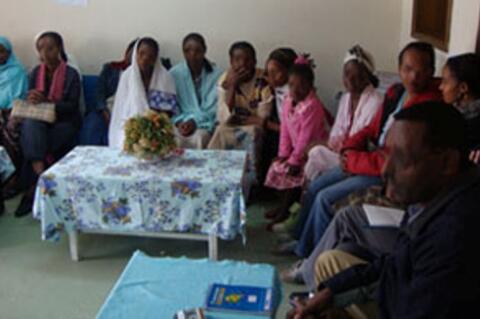
Managed by Project Concern International (PCI), a United States (US)-based non-governmental organisation (NGO), this Ethiopian project combines distribution of highly nutritious soups, promotion of urban agriculture, and delivery of educational messages (via coffee ceremonies) on issues related to HIV and food and nutrition security (FNS). All of the women participating are either living with HIV and pregnant or lactating or are caring for children living with HIV who receive life-saving antiretroviral (ARV) drugs at the hospital. Below is a summary of the communication-centred aspect of this project (which is officially called "Food Secure and HIV-Positive in Ethiopia", but dubbed by the women participants as the "Breedlove Project): the coffee ceremony - part of everyday life in Ethiopia.
The Breedlove Project integrates HIV programming (treatment and prevention of mother-to-child transmission (PMTCT) of HIV) with nutrition programming to address short-term and long-term needs of families and households in Ethiopia. The monthly coffee ceremony aspect of the project might take place in, say, the antiretroviral therapy (ART) unit of a hospital in Addis Ababa. As women arrive for the discussion, they note that the reception area is transformed - condoms and pamphlets are swept off the table to make way for a colourful tablecloth, a bowl of flowers, and a pot of coffee. The group discusses issues such as stigma and the lies people tell to their own neighbours and family members to avoid the shame and discrimination of living with HIV in Ethiopian society. Over the next few hours, they drink coffee, listen, and discuss their experiences as a counsellor leads them through the agenda. Twenty to thirty women normally attend the monthly coffee ceremonies (while men are also invited - being caretakers of orphans and vulnerable children - few attend). Every ceremony routinely includes discussions on health, FNS, and their relationship to HIV and AIDS. The familiar setting and ritual of coffee-drinking is designed to encourage participants to relax and talk openly about HIV, sex, illness, domestic abuse, rape, birth control, and other taboo topics that are normally difficult to discuss in this extremely traditional society. Given the traditional three cups of coffee minimum, the ceremony provides enough time to delve into a wide array of issues; some ceremonies last up to two or three hours. Reportedly, many women linger afterwards, building friendships and sharing stories about how they cope with the challenges of living with HIV.
Session topics are planned in advance. The topics cover ART adherence, nutrition, and opportunities for producing food at home. Other topics are added based on current events and issues noticed along the way, as well as a variety of issues raised by the women themselves. There are usually four or five topics, and some are selected by the participants themselves to ensure relevance and a sense of ownership. The facilitators, trained by PCI, keep discussions focused. Often, facilitators launch a topic with the delivery of several key messages. They keep messages clear and succinct, and deliver them slowly and repeatedly, giving women of different education levels time to absorb the concepts. Sometimes, the ceremony will include a guest speaker; alternatively, the facilitator will invite some of the women from within the group to speak about their own experiences.
HIV/AIDS.
With an HIV prevalence rate of 2.4%, an estimated 1.2 million people in Ethiopia are currently living with HIV. In Addis Ababa, the capital and largest city, the HIV prevalence is 9.2%, translating to more than 200,000 people living with HIV (Addis Ababa HIV/AIDS Prevention & Control Office 2010).
Every day, about 1,000 children under the age of 15 become infected with HIV globally, and, in 2007, the Joint United Nations Programme on HIV/AIDS (UNAIDS) estimated there were 2 million children living with HIV, almost 90% of whom live in Africa.
In Ethiopia, from an estimated 84,189 pregnant women living with HIV in 2009, only 6,466 (8%) received antiretroviral prophylaxis. A total of 13,305 children were ever started on ART at the end of 2009, while 9,992 were currently on ART. ART coverage for children was 48.7% (Federal HIV/AIDS Prevention & Control Office 2010).
According to organisers, chronic food insecurity compounds the problems posed by HIV. Children living with HIV frequently have low birth weight, so high-quality nutrition interventions are essential to providing them with the best possible start in life. Furthermore, individuals who start ART when malnourished suffer more severe side effects than those who are sufficiently nourished. Side effects, including nausea, taste changes, diarrhoea, vomiting, and loss of appetite, threaten to reduce adherence to drug regimens and contribute to the development of drug-resistant strains of HIV.
Food Secure and HIV-Positive in Ethiopia began in 2006 as a supplementary feeding intervention supported by a small, one-year grant to PCI from the US Agency for International Development's (USAID) International Food Relief Partnership (IFRP). The grant has been re-awarded annually since 2006.
"Coffee, Popcorn, Soup, and HIV" [PDF], by Kara Greenblott, AIDSTAR-One Case Study Series, April 2011.