











































'To Get or Not to Get Vaccinated against COVID-19': Saudi Women, Vaccine Hesitancy, and Framing Effects
University of Bremen (Abdel-Raheem); Taif University (Alkhammash)
"[C]onspiracy theories and misinformation surrounding the COVID-19 vaccination may cause the public to be hesitant to get the vaccine."
The use of language and images in the media exerts influence on people's cognition. In the context of the coronavirus pandemic, the effect of positive and negative frames on people's reasoning has been confirmed in a number of studies, but the evidence has been mixed. Thus, this paper offers an empirical test of the effects of multimodal framings on people’s willingness to be vaccinated. In Study 1, participants are asked to read semi-artificial news reports and in Study 2 political cartoons. It is hypothesised that willingness to take a COVID-19 vaccine also depends on the credibility ratings of the journalist, newspaper, and/or medium.
In reviewing the literature on framing, the researchers distinguish two types: equivalency (or valence) and emphasis (or issue) framing. An equivalency framing effect occurs when identical facts are described in logically equivalent ways, but the different descriptions lend different meanings to the facts. In contrast, an emphasis framing effect appears when highlighting different elements of a choice problem elicits different preferences. In other words, emphasis framing focuses on qualitatively different yet potentially relevant considerations of an issue. For example, a public rally may be framed in terms of freedom of expression or the risk of violence.
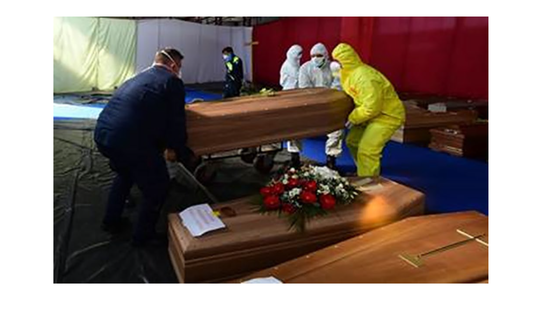
A total of 243 unvaccinated female undergraduate students (aged 18-22) at Taif University, Saudi Arabia, voluntarily took part in Study 1, which asked: Can fake news in the time of coronavirus influence willingness to be vaccinated? Participants in the pro-vaccination condition read a semi-artificial news report accompanied by an image of the Saudi crown prince getting vaccinated against COVID-19. The news report attempted to downplay concerns about the possible side effects of coronavirus vaccines and to confirm their high efficacy. Participants in the anti-vaccination condition read a news story accompanied by an image of health workers in hazmat suits resting COVID-19 victims in coffins. The news story asserted that COVID-19 vaccines are ineffective and unsafe. For Study 1, both pro- and anti-vaccination framings successfully influenced participants' willingness to get vaccinated against the novel coronavirus. The framing of news reports was significantly associated with an increased probability of COVID-19 vaccine uptake. Vaccine news framings also affected participants' tendency to trust pharmaceutical companies
Study 2 recruited 189 unvaccinated female undergraduate participants (aged 18-23) from Taif University. In the pro-vaccination condition, participants looked at three political cartoons portraying COVID-19 vaccines as a tool for advancing health, accompanied by a title depicting vaccines positively. The cartoons were intended to communicate COVID-19 vaccinations' potential negative effects while also demonstrating their high efficiency. In the anti-vaccination condition, participants were shown three cartoons depicting vaccines as ineffective, accompanied by a title describing each cartoon. COVID-19 vaccines are inefficient and dangerous, according to the three cartoons. For Study 2, the visual framing was not significantly associated with an increase in the probability of agreeing to get vaccinated. However, the pictorial framings did exert an effect on participants' trustworthiness toward pharmaceutical companies.
In exploring the findings, the researchers point to the distinction between fact and opinion, and hence between a news story and an editorial cartoon. In the news reports about coronavirus vaccines, the journalist or newspaper mentions reliable, official sources of their information and opinions and cites "objective" numbers. The images of the Saudi crown prince receiving his first dose of the COVID-19 vaccine and that of healthcare professionals in hazmat suits resting bodies in coffins seem to increase the credibility of the newspaper. The images are real, not photoshopped or drawn. In contrast, an editorial cartoon is a deliberate blend of "reality" and "fiction". Humour, albeit not the central element in political cartoons, plays a crucial role in how cartoonists convey ideas. Political cartoonists may thus be found by participants to be less reliable sources of information than news correspondents or newspaper columnists.
A possible avenue of future research the researchers outline here concerns the incorporation of gender as a factor in COVID-19 framing effects. Aillaud and Piolat (2012), in a study of gender differences for humour perception and styles, found that women express a preference for neutral or absurd humor while men appear to prefer humour with sexual or aggressive topics (i.e., "dark humour"). Of the six cartoons used in Study 2, only one had a nondark metaphor. Perhaps gender and the type of humour are a prerequisite for successful framing, which needs further investigation.
In conclusion, this study found that "readers of news articles, but not of political cartoons, were sensitive to framing effects. Altogether, the two experiments demonstrated a novel area in the potential effect of news and images on people's health decisions."
Discourse & Communication 1-16. DOI: 10.1177/17504813211043724.
- Log in to post comments