










































From the Ground Up: Women's Role in Local Peacebuilding in Afghanistan, Liberia, Nepal, Pakistan and Sierra Leone
Conflict, Violence and Development Cluster, Institute of Development Studies
"For generations, women have served as peace educators, both in their families and in their societies. They have proved instrumental in building bridges rather than walls." - Former UN Secretary-General Kofi Annan
This study addresses roles of women in local peacebuilding in five countries - Afghanistan, Liberia, Nepal, Pakistan, and Sierra Leone - and examines how women, supported by women’s rights organisations, are building peace in their communities. It uncovered commonalities across the countries which provide guidance on how women’s rights and their peacebuilding efforts can be supported in conflict-affected communities. This research from the Institute of Development Studies was initiated and funded by ActionAid’s International Emergencies and Crises Team and Womankind Worldwide.
From the Executive Summary:
"This research found that women are more likely than men to adopt a broad definition of peace which includes the household level and focuses on the attainment of individual rights and freedoms such as education, healthcare and freedom from violence. In contrast, men have a greater tendency to associate peace with the absence of formal conflict and the stability of formal structures such as governance and infrastructure....
This research has revealed that women face multiple barriers as they attempt to build peace in their communities including the following:
- Restrictive social norms and attitudes;
- Violence against women and girls;
- Poverty and economic inequality;
- Inequality in access to education;
- Women often de-value their role as peacebuilders; and
- Sustainability of support...."
"The skills of women as mediators, decision makers within the home and their experiences building trust and dialogue in their families and communities are frequently dismissed as irrelevant or are not sufficiently valued by national governments, the international community or by women themselves. Yet this research demonstrates that at the local level, women continue to build peace within their homes and communities and to come together collectively to create change."
A key characteristic of women’s involvement in peacebuilding across the study's countries is that women and girls organise themselves collectively to achieve change. "Across the study countries, women come together and form support networks to create spaces where they can be heard, settle disputes, address unjust treatment, promote women’s involvement in decision making, propose initiatives for community development and seek justice for female survivors of violence and sexual abuse. This collective action results not only in a greater impact in building peace in the community, but also offers a degree of protection and support for women."
The study found that post-conflict periods can give women space to organise collectively and to assert their power in decision making with new standing and possibly a transformation of gender roles,leading to the emergence of women leaders or a stronger women's rights moment. However, "[a]cross the study communities, participants expressed concern with the disconnect between national peace and decision-making processes and local communities... There are clearly few spaces for the voices of those working for peace within their communities to have dialogue with decision makers at a national level and this is compounded by remote geographical locations and technology barriers."
Research participants agreed that a "bottom-up approach to peacebuilding with peace built from the individual, to the household, and to the community level before it can be achieved nationally. Non-governmental organisations (NGOs), and in particular networks, are seen as the key connector between local-level peace processes and priorities and the national level...."
This research found that the work of local NGOs and women’s rights organisations can use the following approaches and recommendations to empowering women as peacebuilders:
- Long-term support and investment - Provide long-term support and funding to women’s peacebuilding.
- Empowering women through access to justice - Develop and implement concrete, coherent policy commitments, and ensure women’s participation in peace processes (including a guarantee of 30% representation).
- Creating safe spaces for women’s participation - Tackle violence against women and girls.
- Changing attitudes towards peace and valuing women’s contribution - Build an enabling environment for women’s peacebuilding.
- Recognising the diversity of women’s experiences - Widows, ex-combatants, survivors of sexual violence, displaced women, and women living with HIV and AIDS or disabilities all face unique challenges and require different approaches to enable their participation in peacebuilding and post-conflict recovery.
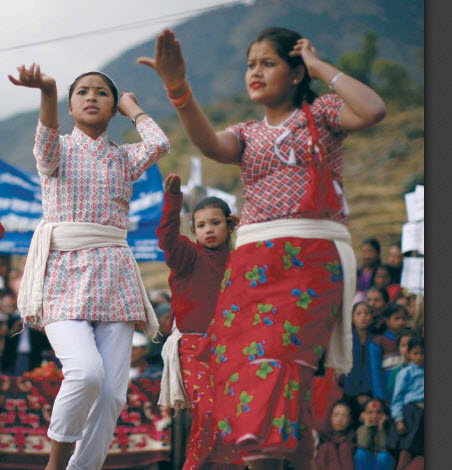
ActionAid website, April 9 2012 and September 17 2021. Image credit: Brian Sokol/ActionAid
- Log in to post comments