










































Engaging Children & Youth as Partners in Preventing Violence against Children in Guinea, Liberia and Sierra Leone
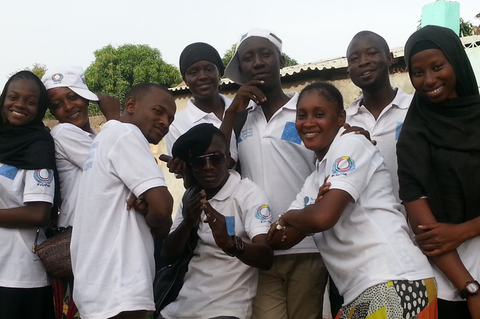
Engaging Children & Youth as Partners in Preventing Violence against Children is a project seeking to eradicate violence against children and youth in Guinea, Liberia, and Sierra Leone. The project objectives are to: (1) identify the worst forms of violence against children and understand the cumulative impact of current approaches addressing them; (2) utilise children and youth recommendations to influence country-level programmatic and policy actions to involve children and youth; (3) mainstream findings at a societal level to enable communities to prevent the worst forms of violence; and (4) build the capacity of children and youth to advocate for their needs and prevent violence against their peers (cross-cutting). Activities involved youth-led action-based research to obtain youth and children's views of the worst forms of violence faced in their daily lives. These findings were used to develop plans and policies and recommendations that could address the issue at programme and policy levels. Communication tools, such as radio, were also used to mainstream the findings at a societal level and engage a wider audience in the discourse of the findings.
The original intention was for the project to be implemented between 2014 and 2015, but, due to the Ebola crisis, the project was extended until 2016. It was implemented by Search for Common Ground with partners in each country, and funded by the European Union.
The two-year project set out to give young people in the region a platform to influence policymaking and public opinions, in order to build a society where children and youth are not seen as victims or troublemakers, but as positive change-makers and leaders. The project’s Theory of Change is based around the idea that if youth have the research skills and knowledge related to the status of violations against children’s rights, then they are more likely to advocate for an eradication and prevention of human rights or child rights violations in their community.
The project’s expected results were: (1) Target groups have a clear understanding of the worst forms of violence against children and youth; (2) recommendations allow for programmes and policy in each country to be more children and youth friendly; (3) children and youth play an active role in ensuring their rights, while a society-wide understanding of the issues helps prevent future violence against children and youth. Project beneficiaries were children, youth, and key stakeholders comprised of different groups that supported programme implementation on the ground, as well as those impacted by the project.
The project’s activities were divided into three phases:
Phase I: Evidence gathering through research
Goal: to identify the worst forms of violence against children and understand the progress made with traditional peacebuilding approaches.
The main activities included a literature review, field research, research trainings for local youth, and structured interviews with target groups in each country. These were paired with youth-led open discussions on sensitive topics, based on the Listening & Learning Methodology [PDF], which is "an innovative youth lead, technically advised and adult supported approach that is based on conversations to capture individual perspectives and experiences” It is grounded on principles of Participatory Action Research (PAR), which shifts the act of gathering information from a one-sided interview where only subjects share intimate and private information, to an exchange of experiences where the researchers themselves participate in the sharing of personal views, experiences, and emotions in a non-adversarial manner. The results of these discussions led to the production of a set of youth-led research reports which can be accessed here.
Phase II: Evidence sharing with key stakeholders to influence policy
Goal: to influence country-level programmatic and policy actions, using recommendations developed by children and youth themselves.
Phase Two focused on drawing conclusions and recommendations from the research findings. Youth-led summits with target groups to present the results of the research and develop training and resource materials and toolkits for programmatic planning and policy initiatives were held in each country. One of the outputs of this activity was a “Manual on Engaging Children and Youth as Partners in Preventing Violence Against Children” [June 2016], which was developed by the Sierra Leone project. Click here to read the Introduction to the manual. It is hoped that the information provided in the manual will be used by child protection actors to develop training to be delivered to other people and organisations working in child protection. It is also hoped that information in the manual will be used to influence policymakers and donors around the changes needed to eradicate violence against children, and generally inform the priorities of child protection programming.
Phase III: Evidence sharing with wider audience to influence societal change
Goal: to share findings at a societal level to enable communities to prevent worst forms of violence against children.
Phase Three focused on mainstreaming the research results and recommendations. Weekly youth-produced radio shows were produced and broadcasted over a six-month period to reach a broad portion of the population and share research findings and discuss issues surrounding violence against children and youth in the three countries. One of the main programmes in Guinea was called Barada, a 15-minute magazine programme consisting of a mixture of interviews, youth-led talk-shows, and interviews. This radio programme is in French and aired on 26 radio stations across Guinea.
Children, Youth, Rights, Empowerment
Rationale for the project:
Violence against children is prevalent in each of those countries, and all three societies put children at risk by exposing them to dangerous practices such as child labour, trafficking, sexual exploitation, and female genital mutilation.
Outcomes:
Click here to access the final evaluation of this project.
Search for Common Ground and local partners: West African Youth Network in Guinea; the Young Men Christian Association and the Ministry of Youth & Sports in Liberia; the Center for the Coordination of Youth Activities and the Sierra Leone Youth Empowerment Organization in Sierra Leone. Funded by the European Union.
SFCG website on May 11 2017.