










































The Little Jab Aid: 5 Ideas to Increase COVID-19 Vaccination for Women in Middle East and North Africa (MENA)
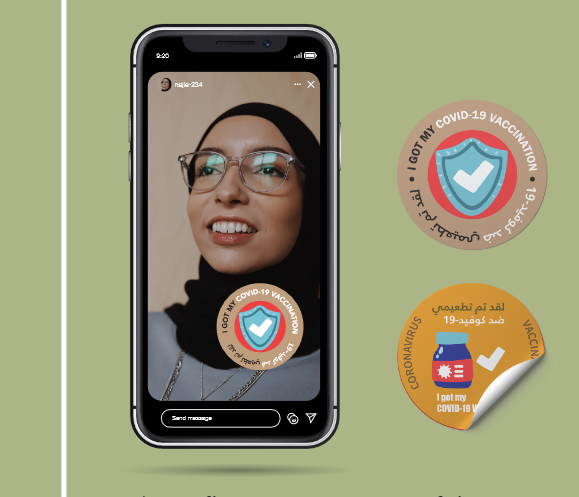
"In many MENA countries, women have higher levels of vaccine hesitancy, and lower vaccination rates."
This practical tool is designed to help those leading or implementing a public health or vaccination programme to increase COVID-19 vaccination rates among women in the Middle East and North Africa (MENA) region. Using behavioural science, the tool explores the drivers of vaccine hesitancy according to the Socio-Ecological Model (SEM) and provides 5 evidence-based solutions. Each recommendation is accompanied by a series of questions and checklists to assist with the tailoring and contextualisation of solutions.
Inspired by The Little Jab Book (see Related Summaries, below), the Little Jab Aid (LJA) was developed through a process that involved rapid desk research, a co-creation workshop, stakeholder interviews, and user testing. For example, in response to users who noted they are not comfortable publicly showing they are using a job aid on the job, LJA is presented in the form of a notebook.
The barriers to COVID-19 vaccination uptake amongst teachers identified by countries in MENA that took part in LJA's development are grouped into environmental, social, and individual factors that may be interacting simultaneously to influence individual and collective human behaviour. For example: "Compared to men, women in MENA may be less socially mobile, and exposed to the public. They may be more likely to stay at home, and go out less for work and socialization than men. This leads to a perception that they - and other women - have lower risk of catching Covid-19, and less need for the vaccine." Thus, an intervention might be to make the risks of the disease more tangible to women and their families through easy examples, risk comparisons, storytelling, and prosocial messaging - emphasising the benefits to children and other family members as well as the wider community.
The 5 interventions are meant to be feasible to implement and are all grounded in behavioural science insights globally and regionally. They work best when combined together, or with other interventions:
- Bring vaccines to places and events that women frequent.
- Promote and provide "women only" vaccination sites and platforms.
- Engage men as vaccine advocates.
- Share positive stories from trusted messengers.
- Highlight the risks of getting COVID-19 and use prosocial messaging.
Alongside specific tips, various inspirational stories are included throughout to illustrate interventions in action. For example, women's lower COVID-19 vaccination rate in Sudan was attributed to concerns about the vaccine's effect on fertility and the safety of vaccination during pregnancy, lactation, and menstruation. To address these concerns, the United Nations Children's Fund (UNICEF) produced four gender-oriented messages and disseminated them through Facebook, Twitter, and Instagram accounts via the Sudan News Agency platform. After launching these communications, UNICEF saw a rise of 144% in female engagement on COVID-19 social media topics, as reflected through Talkwalker. Now, according to UNICEF Sudan, women are asking gender-oriented questions online and having open conversations about vaccine safety.
Publishers
62
Save the Children Resource Center, January 4 2022.
- Log in to post comments