











































The Little Jab Book: A Playbook for COVID-19 Vaccination in the Philippines
"While improving the supply of vaccines is vital to increased uptake, the behavioral interventions here focus on improving demand and intention to vaccinate."
This playbook offers 12 localised, behavioural-science-informed interventions to increase demand for COVID-19 vaccination in parents and children in both rural and urban Philippines. The proposed interventions target key barriers and enablers to vaccination gathered from in-depth interviews with 29 parents and a survey of 627 people in living in Malabon and Sarangani carried out through a partnership involving the Busara Center for Behavioral Economics, Common Thread, Save the Children Philippines, and Save the Children's Center for Utilizing Behavioral Insights for Children (CUBIC).
Inspired by "The Little Jab Book" (see Related Summaries, below), the playbook is organised according to the three main causes of under-vaccination in the Philippines, as revealed by the research. They include:
- A lack of trust in the vaccine - People may be hesitant to get vaccinated due to a fear of vaccine side effects, a lack of confidence in the vaccine, the strong negative impact of the botched Dengvaxia vaccine campaign, or erroneous beliefs generated by rumours and misinformation. Interventions proposed include:
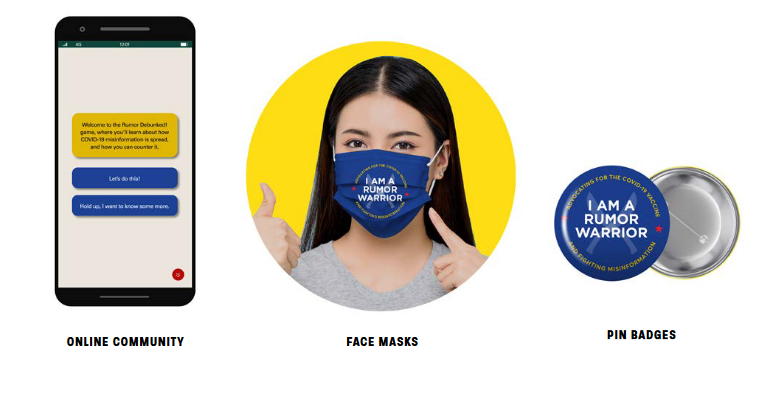
- (i) activating "anti-rumour warriors" (see image above); (ii) framing vaccination as complementary to traditional medicine; (iii) highlighting positive testimonials from newly converted vaccine supporters; and (iv) providing transparency around vaccine development by screening short films on vaccine history.
- A lack of perceived severity of COVID-19 - People do not want to get vaccinated because they think COVID-19 no different from mild colds or coughs, and/or they believe they will be able to overcome the disease due to youthfulness or good health. Interventions proposed include:
- (i) normalising vaccination amongst young, healthy people by making vaccine registration fun and social; (ii) increasing the salience of COVID-19 risk using interactive, visual depictions of transmission statistics; (iii) clarifying COVID-19 risks compared to vaccination risks through gamification; and (iv) leveraging people's sense of altruism via personalised letters from health workers in their communities.
- A lack of motivation to follow through on vaccination intentions due to long wait times and uncertain vaccine availability. Interventions proposed include:
- (i) making vaccine registration available at common places; (ii) coupling vaccine registration with other social services; (iii) providing up-to-date information about vaccine availability through eye-catching reminders in public places; and (iv) encouraging follow-through on vaccination by highlighting visible commitments to vaccination.
Organisers stress that the implementation and use of this playbook should be tailored to the local context.
Publishers
57
Save the Children Resource Centre, July 25 2022.
- Log in to post comments