










































Modelling and Controlling Infectious Diseases
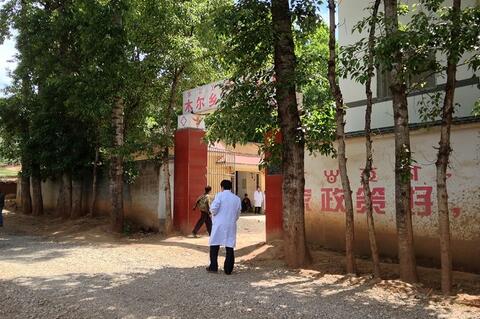
"Mathematical modeling provides an appropriate framework to integrate data coming from different sources. This, together with computer simulation and interdisciplinary collaboration between data scientists and domain experts, provides in-depth understanding of the complicated medical-socio-economic processes behind big data and subsequent evidence insights for decision making and program development and implementation."
A research team supported by the International Development Research Centre (IDRC) undertook a 5-year project (completed in August 2014) to explore the potential of mathematical modelling to inform a new generation of tools and approaches to control disease spread, to the end of influencing local and national policies in China to reduce HIV transmission. Drawing on research and surveillance data from China's National Center for AIDS/STD [sexually transmitted disease] Control and Prevention, the team created disease models, focusing first on HIV. Recognising the different transmission pathways, the team investigated at-risk populations in several regions of China. The team also collaborated with health service agencies to design prevention policies, which were evaluated over the duration of the programme. The overall objective was to enhance China's national capacity for analysing, modelling, and predicting transmission dynamics of infectious diseases through joint research, training young scientists, and building collaborative relationships.
This is a bilateral Canada-China collaboration in infectious disease modelling and management designed to get information (data) in the hands of policymakers. General activities included:
- developing, validating, and using mathematical models to analyse and predict the dynamics of communicable diseases such as HIV, tuberculosis, and hepatitis, using surveillance data and prospective cohorts from the Chinese Center for Disease Control and Prevention;
- providing support for public health policy by delivering improved evidence-based data developed using model-assisted analyses and predictions;
- training young scientists in several Chinese universities, through the collaboration between the (Canadian) Center for Disease Modelling and the Chinese Centre for Disease Prevention and Control, in applying mathematical modelling and analysis techniques in an interdisciplinary public health setting;
- organising workshops and professional exchange events to improve collaboration among trainees, researchers, and public health officials in China and Canada, as well as with other international collaborators; and
- eventually extending the training and modelling applications from this project to India and African countries with similar challenges and opportunities for professional and strategic alliances to build capacity in public health policy based on disease modelling.
Specifically, the bilateral team developed a mathematical model and parameterised the model using a variety of demographic and social data from some Chinese HIV-AIDS endemic regions. Their analysis and simulation then urged integrated economic-medical AIDS management in some remote Chinese ethnic areas. This type of data-driven analysis contributed to the decision of financial investment and support from the local and central governments on some pilot trials of a new Rural Economical Enterprises AIDS control measure for fighting the epidemic both at its biomedical front and by addressing social factors contributing to the spread of disease in underdeveloped communities.
One important factor in the decision-making is whether HIV infection rates are increasing or declining. The team responded to this need by developing models to better predict incident rates. The results pointed to higher annual HIV incidence than national estimates and led China's Ministry of Health to re-evaluate their 2013 estimates. Researchers also used modelling tools for evaluation and are working with the Guangxi provincial government to evaluate the results of Guangxi's Intensified AIDS Control Plan (2010-2014).
During a public health crisis, large amount of data emerges from different sources, including social media, which then translate these data in a variety of ways to influence the individual behaviours that impact crisis management. In a series of studies, this Canada-China team, expanded to include media communication experts, have looked at the impact of media on influenza pandemic management. They correlated many different sources of data from hospital notification and disease epidemiological characteristics to communications and discussions in major social media, and suggested best possible risk-communication strategies in different phases of a pandemic. For example, in their article "Media Impact Switching Surface during an Infectious Disease Outbreak" (Scientific Reports 5, 2015), the team parameterised the proposed model with the 2009 A/H1N1 influenza outbreak data in the Shaanxi province of China, drawing attention to the important role of informing the public about "the rate of change of case numbers" rather than "the absolute number of cases" to alter behavioural changes through "a self-adaptive media impact switching on and off, for better control of disease transmission."
Realising the importance of harnessing the data for public health policy development and implementation, the bilateral collaboration created two international journals: Infectious Disease Modelling, published by KeAi (a joint venture between Elsevier and Science Press), and Big Data and Information Analytics.
A few national mathematical research institutes are joining forces with a few Chinese partners and some medical organisations to build a joint Canada-China centre to enhance and sustain the bilateral collaboration developed through the project.
HIV/AIDS, Health
Led by a medical scientist Dr. Yiming Shao (the Chinese Center for Disease Prevention and Control) and a mathematician Prof. Jianhong Wu (York University), the project was funded by IDRC in collaboration with Mitacs and the Canada Research Chairs Program.
Email from Liane Cerminara to The Communication Initiative on September 1 2016, email from Jianhong Wu to Liane Cerminara on September 15 2016, email from Jianhong Wu to The Communication Initiative on September 30 2016, IDRC website, September 2 2016, and "Media can help slow spread of disease, study finds". The Globe and Mail, January 18 2015 - accessed on September 15 2016. Image caption/credit: A renovated health clinic in Butuo that provides diagnostic and treatment services for HIV/AIDS patients. Yiming Shao
- Log in to post comments