










































Oral Polio Vaccine Refusal Pattern in Kumbotso Local Government Area, Kano State, Northern Nigeria
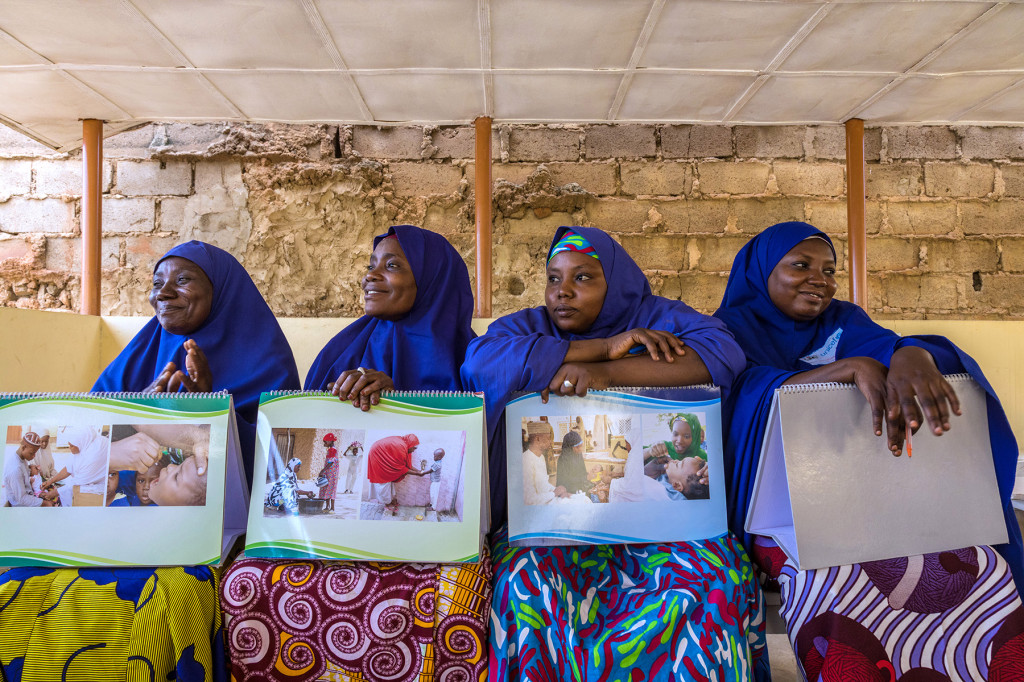
National Primary Health Care Development Agency Abuja (Nuhu, Mawashi); World Health Organization, or WHO (Umeh, Anthony)
"The challenge of vaccine refusals by a significant number of parents and caregivers has historically been a significant concern for Nigeria and the rest of the world. This refusal alone is sufficient to undermine the success of the global polio eradication effort."
Oral polio vaccine (OPV) refusal is a difficulty the Global Polio Eradication Initiative (GPEI) encounters in multiple endemic areas, including Nigeria. In 2003, the polio campaign had to be discontinued by the government of Kano State due to the negative public outcry on unfounded rumours of various deleterious effects of OPV on the children who received it. Further compounding the situation were negative pronouncements by traditional and religious leaders in Kano State and some notable persons within and outside the health profession. This study investigated the reasons and possible solutions for persistent OPV refusal by parents in Kumbotso local government area (LGA) of Kano State, Nigeria.
Primary health care (PHC) service in Nigeria is delivered mainly through public health facilities; the infrastructures delivering these services are mostly dilapidated, compounded by inadequate human resources for health.
The research was conducted during 4 rounds of OPV campaign activities conducted in January, April, May, and October 2018. Each Immunization Plus Day (IPD) round lasted for 4 days. The polio campaign activity was conducted by vaccination teams (usually ad-hoc, non-health workers under the supervision of trained health personnel), recruited to go from house-to-house to administer the OPV to eligible children who are below the age of 5 years.
Four hundred households were randomly selected from the list of refusal families in the LGA and were interviewed. The majority of heads of the households had more than one reason for not allowing their children to be vaccinated with OPV. Selected findings:
- Refusal of OPV was more common among the females (207) than the males (193).
- A total of 291 respondents regarded the OPV administered to children as a means of birth control, while 109 said it was not.
- 175 respondents believed receiving OPV is against religious injunctions, while 225 believed that it did not. The females were more in opposition to the vaccine on a religious basis.
- 295 respondents expressed fear of side effects, whereas 105 felt that it did not pose any problem. Again, the female parents/caregivers expressed greater concern about the vaccine's side effects.
- 294 respondents said they are refusing OPV for their children/wards because they received several doses earlier ("too many doses"), while 106 respondents did not show any concern.
- About 35% of the 400 interviewed lacked formal education. Lack of formal education has been associated with vaccine refusal in many developing countries.
The study highlights the fact that unfounded rumours have led to the misconception of the programme, expressed by poor polio risk perception, adverse religious connotations, mistrust of immunisation, and erroneous beliefs about population control and other disease-causing contents in the OPV. The researchers suggest that the government in collaboration with development partners and experts should support the conduct of operational studies to fully understand factors that may be responsible for non-compliance in addition to what was outlined here.
In conclusion, the researchers stress that the programme has to do more in order to make people - particularly mothers - realise the dangers of not vaccinating their children. Communication strategies should be aimed at increasing awareness of polio as a real health threat and should focus on educating communities not only about the safety of the vaccine but about the basic concept of revaccination and booster doses. Furthermore, polio eradication partners should collaborate with other agencies and ministries to improve total PHC packages to address identified unmet health and social needs beyond polio.
International Journal of Advanced Research (IJAR). 6(11), 262-68. DOI: 10.21474/IJAR01/7995. Image credit: Andrew Esiebo/Courtesy of the U.N. Foundation
- Log in to post comments