










































Performing Arts for Behavior and Social Change
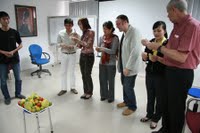
This summary report describes the second round of a United Nations Children's Fund (UNICEF) sharing session on creative communication under the theme "performing arts for behavior and social change". Organised on April 8 2010 in Hanoi, Vietnam, the session drew participants from over 20 non-governmental organisations (NGOs), United Nations (UN) agencies, and independent consultants, who joined the network to share experiences and discussion around the effectiveness and efficiency of theatre, acting, role play, and interactive games to tackle issues including HIV/AIDS prevention, reproductive health, stigma reduction, and other social and health issues in Vietnam.
Several case studies are provided:
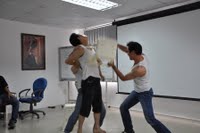
- "Stereo Man" by the Youth Theatre, an established ensemble theatre in Hanoi. The play talks about the feelings and aspirations of various men and women and analyses social issues like gender identity, sex, HIV/AIDS, homosexuality, lesbianism, eroticism, and gender and anti-gay violence. Following each performance there are discussions with the audiences to clarify and respond to the issues raised in the compelling scenes of the drama. It has been staged more than 50 times at universities and colleges all over Vietnam as well as Thailand, India, and Cambodia. For more information, please click here.
- "Interactive theatre" by World Population Foundation (WPF) Vietnam, which uses community-based theatre to improve knowledge and attitude toward safe and healthy behaviour related to sexual and reproductive health (SRH) of youth and adolescents. In interactive theatre, the script is open-ended, and the audience must be involved in the performance and decide how the story is elaborated and ends. Following the success of phase I and II in urban areas in Hanoi, Nghe An, and HoChiMinh city, phase III implementation took place in several rural districts in Nam Dinh, Ninh Binh, and Nghe An provinces. This group of enthusiastic young theatre group makes young people aware of their rights related to SRH in schools and out of school. For more detail on WPF's interactive theatre, click here.
- "Project N.A.M." by Save the Children, wherein participants compete to put fruits into a condom as part of interactive game by project N.A.M. The project consists of a series of interactive public events as well as events at schools which include live performances, quiz shows on HIV and sexual health, condom filling or condom inflating contests, skits performed by students, and booths set up with information and free condoms. Peer educators set up clubs in vocational schools and facilitate public events for out of school youth. These highly interactive events seek to attract young men and involve them in the performance, thus creating an opportunity for active participation and learning.
Discussion points:
- Script development: The process of developing a script has to be based on accurate facts and data, while creating positive attitudes and avoiding exacerbating stereotypes. In the case of sensitive issues such as transgender, stigma, and reproductive health, getting feedback from the group of people affected by these issues is important. Sometimes the members of troupe or peer educators are PLWHA (people living with HIV AIDS) and LGBT (lesbian, gay, bisexual, transgender people); audiences have direct communication with them. Often, theatre role play, and acting are used as entry points to raise specific issues, which lead to the group discussion during or after the performance. According to organisers, games, quizzes, and other ice breaking activities are crucial to set the tone for the audience so as to incorporate messages that are clear but that do not create conflict with the performance later.
- Culturally sensitive approach: It seems that singing is as popular as theatre in Vietnam and could be an effective tool for communication. Contents of theatre should be adopted and specific to the local context and may differ from village to village. Organisers note that, while volunteer-based theatre is fun and participatory, involving professional artists is crucial to make a "mash" between grassroots initiatives and high-quality art work.
- Project management: "Measuring impact of interactive theatre seems to be a common challenge. It is difficult to say that one theatre performance can change the behavior or awareness on certain issues, but it does influence the change."
Email from Keisuke Taketani to The Communication Initiative on April 21 2010.

- Log in to post comments