










































Polio and Measles: Reasons of Missed Vaccination in Italy, 2015-2017
University of Perugia (Gianfredi); National Institutes of Health, Rome, Italy (Gianfredi, D'Ancona); Ministry of Health, Rome, Italy (Maraglino, Maraglino, Cenci, Iannazzo)
"[A] high quality communication campaign combined with a conscientious observation of mandatory vaccination law could better educate parents on the importance of vaccination."
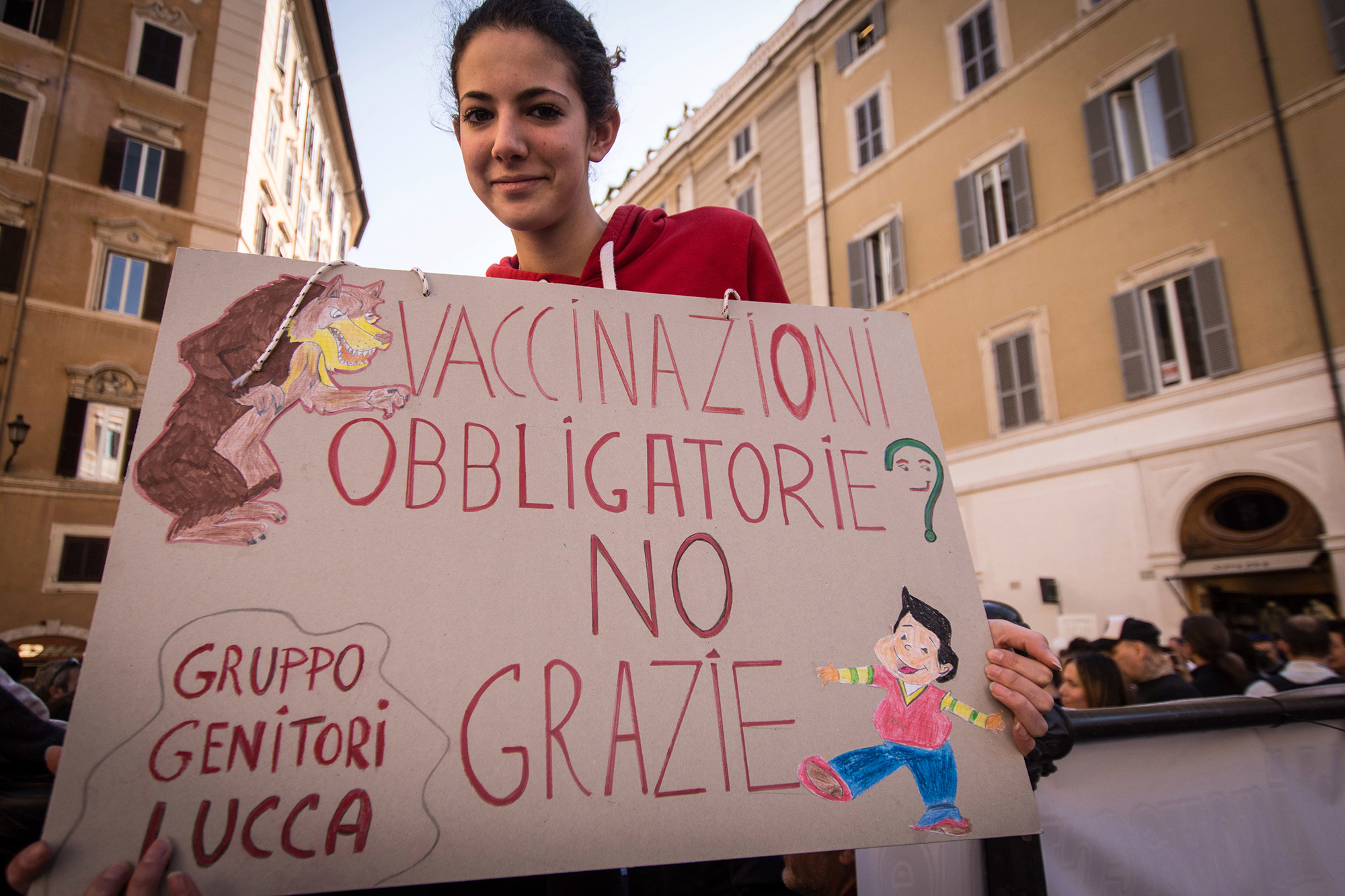
Growing anti-vaccination sentiment is being experienced worldwide. In Italy, evidence confirms the recent spread of vaccine hesitancy, resulting in approximately 4-7% of the paediatric population not immunised every year against polio and approximately 9-15% against measles in the last few years. Considering these developments, the National Ethics Committee has recommended strict monitoring of the reasons for non-vaccination, both at local and national level, in order to identify non-compliant parents and to carefully inform and persuade them. The aim of this paper is to describe the reasons polio and measles vaccination were missed in Italy in the period 2015-2017 and to analyse any potential effect of the July 2017 mandatory vaccination law. (This law increased the number of mandatory vaccinations from 4 to 10 and required that children up to 6 years of age could be admitted to educational services only if they have received all the vaccines required for their age.)
For the study, the number of missed vaccinations in children younger than 24 months, stratified by reason, were collected separately for measles and polio with a regional level of detail.
In the analysed period, the missed vaccination for polio was 5.5% as a mean value, while the mean in the analysed period for measles was 10.9%. The most frequent reason for missed polio vaccination was "definitive informed dissent" with a mean value 1.5%, followed by "found/contacted, but did not attend the appointment" with a mean value 1.3%. Inversely, "acquired immunity subsequent to previous disease or vaccination performed elsewhere" and "excused in a permanent way for health conditions" were the less frequent reasons, with a mean value 0.03% for both. For measles vaccination, the reason "found/contacted, but did not attend the appointment" was the most frequent (mean value 3.2%), followed by "definitive informed dissent" (mean value 2.9%).
The researchers explain that the percentage of missed vaccination showed a remarkable reduction in 2017, which is likely due to the introduction of the mandatory vaccination law. In point of fact, "dissent" decreased for both polio and measles during the study period, while "delay" increased during the 3-years. It seems that hesitant parents prefer to postpone vaccinations instead of refusing them.
Research cited here indicates that vaccination opinions and communication preferences of parents who postpone vaccines are different than those who refuse. Counselling, parents' empowerment, and vaccine education are described here as central strategies in the face of vaccination-postponing behaviour. Previous results show an active role played by tailored communication strategies in addressing vaccine delay. Thus, for parents who refuse vaccines ("dissent"), monitoring the trends and attempting to understand their reasons is important so as to prevent this choice by filling in potential gaps in understanding.
In addition, regions that are fully computerised and using the same software across the region and regions with fully computerised immunisation information systems (IIS) but using different software across the region seem to be able to better identify people, therefore reducing the number of subjects classified as "not found", according to the definition used in this analysis. The researchers suggest that the implementation of a national IIS will improve efficacy for both identifying and inviting people to go for vaccination. Furthermore, it will enable health authorities at national, regional, and local levels to monitor vaccination programmes in real time.
Thus, this study suggests that the mandatory vaccination law should not be the only strategic effort aimed to contrast vaccine hesitancy in Italy. According to the results, there is still a small but stable group of parents who did not turn up at the vaccination appointment or are trying to delay vaccination. The researchers argue that good and adequate communication can positively impact vaccine uptake and help combat the lack of confidence and the complacency that are elements of vaccine hesitancy. In addition: "Regular monitoring of the VC [vaccination coverage] and ordinary evaluation of reasons for missed vaccination are essential efforts needed to understand as to reduce the burden of infectious diseases, increasing VC, and mobilizing society against vaccine preventable diseases. Only by systematic monitoring, we will be able to document progresses in contrasting vaccine hesitancy."
Annali di igiene: medicina preventiva e di comunità 2019 May-Jun;31(3):191-201. doi: 10.7416/ai.2019.2282. Image credit: New York Post
- Log in to post comments