










































Pregnant Women & the Zika Virus Vaccine Research Agenda: Ethics Guidance on Priorities, Inclusion, and Evidence
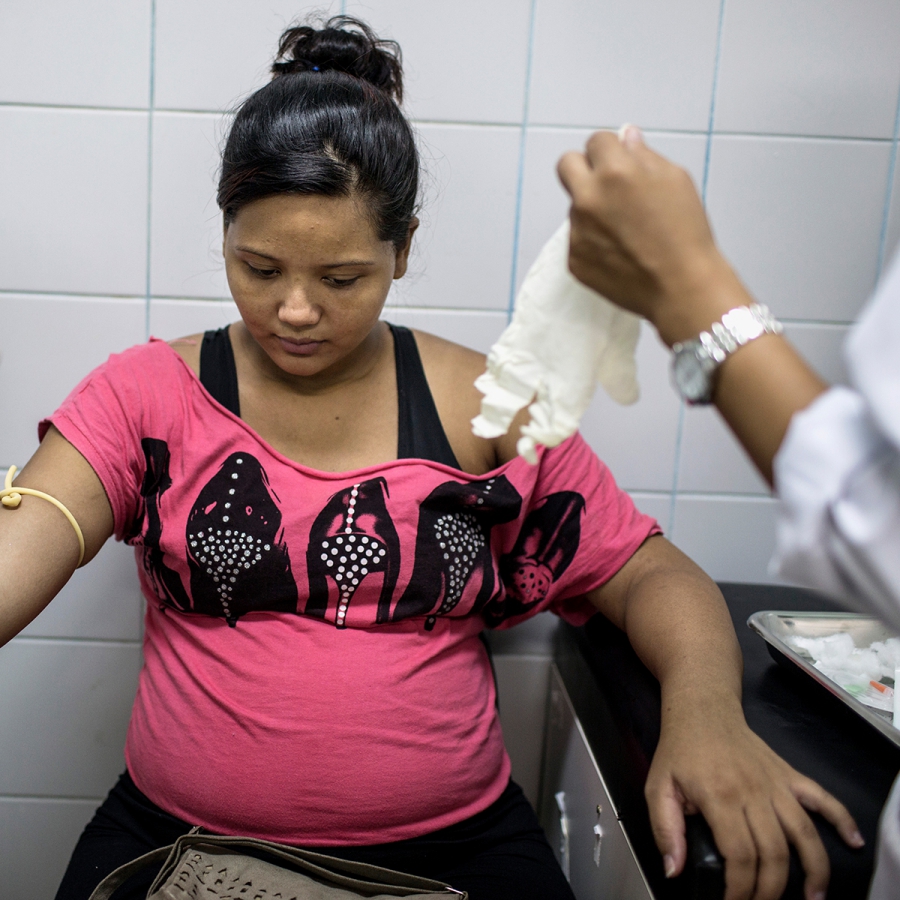
"[I]n line with ethical practice in the conduct of any research study, ZIKV vaccine investigators should communicate and engage with local members of study communities early and often."
Issued by a group of international experts in vaccinology, maternal and child health, public health, and ethics, this resource offers guidance for including pregnant woman and their babies in Zika virus (ZIKV) vaccine research. Pregnant women are often automatically excluded from vaccine trials over safety concerns, but the guidelines hold that those most at risk from the virus - pregnant women and their babies - should be at the centre of ZIKV development. "Adequately addressing the specific interests of pregnant women in ZIKV vaccine R&D [research and development] efforts is not only essential to mitigating the potential harms faced by pregnant women and their offspring, it is also a matter of justice and respect."
The guidance outlines 3 moral imperatives: (1) to develop a ZIKV vaccine that can be responsibly and effectively used during pregnancy, (2) to collect data specific to safety and immunogenicity in pregnancy for all ZIKV vaccine candidates to which pregnant women may be exposed, and (3) to ensure pregnant women have fair access to participate in ZIKV vaccine trials that offer a reasonably favourable ratio of research-related risks to potential benefits. From these imperatives, the guidance specifies concrete recommendations for how a range of relevant actors can ensure ethical inclusion of pregnant women's interests at various stages in ZIKV vaccine R&D and across the product lifecycle.
Following introductory material that provides background, including the evidence gap for pregnant women and ethical principles for pregnant women and biomedical research, a set of 15 specific recommendations is provided. For example: "All findings on ZIKV vaccine use in pregnancy should be communicated with sufficient contextual information and adequate translation of their significance for health policy, clinical practice, and personal decision-making to ensure that the evidence is appropriately interpreted and communicated." This recommendation is directed to those responsible for communicating with policymakers, clinicians, patients, trial participants and study communities, and the media. For instance, in 2009, when H1N1 influenza was causing significant morbidity and mortality among pregnant women in the United States (US), and campaigns were underway to vaccinate pregnant women against the virus, the National Vaccine Program Office (NVPO) conducted a series of "table-top" sessions with journalists from various local and national newspaper outlets. The purpose of these meetings was to educate reporters on baseline rates of miscarriage in the population in the hopes of mitigating sensationalist stories falsely attributing miscarriages to H1N1 vaccines. "The role of the media in spreading information, or misinformation, cannot be understated."
Production of this guidance is part of a multi-year project funded by the United Kingdom (UK)'s Wellcome Trust. The Pregnancy Research Ethics for Vaccines, Epidemics, and New Technologies (PREVENT) project is working to developing concrete, actionable, consensus-driven ethics guidance on how to equitably include the interests of pregnant women and their offspring in vaccine R&D for priority pathogens and emerging epidemic threats.
English, with an executive summary also in Portuguese and Spanish
103
"Zika Vaccine Research: Guidance for Including Pregnant Women", Wellcome, June 29 2017 - accessed on July 24 2018; and PREVENT website, July 24 2018. Image credit: Lianne Milton/Panos
- Log in to post comments