











































Report on the Meeting of the Technical Advisory Group for the Eradication of Poliomyelitis in Pakistan [June 2016]
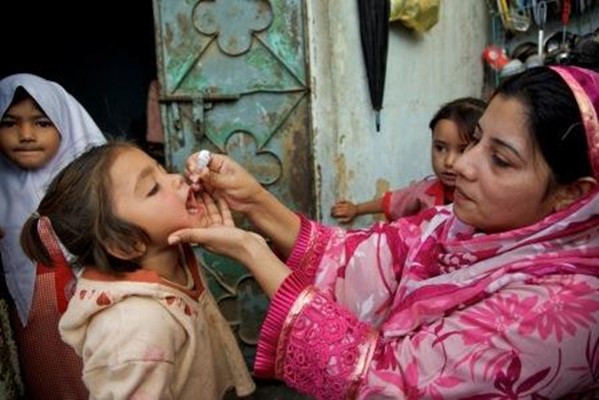
"The Pakistan programme is on track and has all the essential elements in place to interrupt virus transmission by the end of 2016."
This report summarises the discussions of the Technical Advisory Group (TAG) on Poliomyelitis Eradication in Pakistan, June 28-29 2016, Islamabad, Pakistan, one of the remaining two polio-endemic countries in the world. The objectives of the consultation were to: assess progress made since the January 2016 meeting; identify and develop consensus on remaining gaps and challenges; review the National Emergency Action Plan (NEAP) 2016/17 and advise on its appropriateness and completeness; and advise on any further measures the programme should take to keep the country on track to interrupt transmission by end-2016. This TAG consultation occurred after the end of the 2015/16 low transmission season in a climate of justified optimism that interruption of virus transmission is within reach.
The TAG noted that the major paradigm shift from "covered" to "missed children" continued to drive all programme operations with very encouraging results: The 13 confirmed cases to date in 2016 represent a 55% decline in the case count when compared with the same point in time last year; the proportion of positive environmental samples decreased from 20% in 2015 to 10% in the first half of 2016; and the number of circulating genetic clusters is at its lowest level ever. Data from acute flaccid paralysis (AFP) surveillance indicate that the immunity gap continues to close. The proportion of zero-dose oral polio vaccine (OPV) among non-polio AFP cases 6-59 months declined in Tier 1 districts from 10% to 2% to 1% between 2014 and 2016, and was 0% in all other districts in 2016. Between September 2015 and May 2016, less than 4% of children were "still missed" 14 days after campaign start. While this is a clear reduction from earlier, the percentage "still missed" has hovered around the same level since September. The proportion of children missed due to "no team" decreased from 52% in January to 18% in May.
This progress can be attributed in part to the united front being presented by the team of partners working together under the leadership of the government through a network of Emergency Operation Centers (EOCs). Sustained government commitment and oversight at every level underpin all programmatic activities. The Prime Minister (PM)'s continued direct oversight and active involvement through the National Task Force (NTF) and the PM's Focus Group (PMFG) allowed the programme to further heighten oversight and accountability. The involvement of Chief Secretaries in the PMs Focus Group has increased the leadership role at provincial level. Divisional task forces emerged as crucial oversight mechanisms in key areas such as Karachi, Sukkur, Larkana, Peshawar, and Islamabad, and more will be established in targeted areas throughout the remainder of 2016. "With the government's unconditional support, the Accountability and Performance Management Framework has become a guiding principle for all." Through the implementation of this framework, the government and partnership ensured that "accountability at all levels" became a guiding principle for all, rewarding good performance while actively removing underperforming governmental or partnership staff from positions of authority.
Improvements were also ascribed to other strategies, such as the expansion of community-based vaccination (CBV) and health camps, which have helped with enhancing community ownership of the programme interventions. In addition, thousands of trained and dedicated frontline workers have ensured that 280 million children have received polio drops during 9 campaigns conducted in the low transmission season. The successful campaigns of the inactivated polio vaccine (IPV) in targeted high risk areas of Karachi, Khyber Peshawar, and Quetta block helped in quick immunity boosting of approximately 3 million vulnerable children.
According to the TAG, "[i]ntegrated communication strategies are critical to ensuring that demand and acceptance remain high." The Harvard Knowledge, Attitudes and Practice (KAP) survey conducted in the Tier 1 districts between February and April 2016 revealed high degrees at aggregate level of acceptance, awareness, and intent to vaccinate." The poll confirmed that: the fundamentals in terms of knowledge and broad views are in place across geographies of interest; vaccinator experience is positive; the programme is linked with well-trusted institutions; the behavioural norms for OPV acceptance are high; and the perceptions of community support are high. However, as numbers of missed children decline and the areas of circulation become more localised, "the challenge will be to understand and respond to what is happening at increasingly local areas below those that a KAP study can capture. Strengthening communication monitoring and data collection at the lowest possible level is a critical factor for the programme. While the programme is on track with increasingly lower numbers of missed children per campaign it will need to continue to refine and localize integrated operations and communication tactics where improvement is required particularly in pockets of persistent vaccine hesitancy, including detailed analysis of reasons for non-acceptance."
The TAG urged the programme to maintain the quality of campaigns by focusing on improving the overall performance and decreasing the number of missed children in the core reservoir areas, as well as to identify and address the residual risks and to act swiftly in response. The TAG pointed to "the substantial achievements in coordination between the Afghanistan and Pakistan programmes on their common reservoirs, including synchronization of the SIAs [supplementary immunisation activities] schedule since mid-2015, weekly interactions between the national EOCs and at provincial and district levels, joint analysis and coordinated responses to any relevant epidemiological events and before and after each SIA round. The TAG strongly believes that this type of close coordination is the best mechanism to chase the virus from its remaining hiding places on either side of the border." Perhaps concerned that frequent changes of senior management officials dealing with the polio programme and secretaries of government departments could affect the programme, the TAG stressed that "transfers of well performing key officials should be avoided unless absolutely necessary, until interruption of transmission has been achieved."
The TAG called NEAP 2016/17 "a well-developed document and a logical continuation of its predecessors. It is based on proven strategies and contains appropriate tactical adjustments. The TAG endorses the approach and the key programme deliverables of the NEAP 2016/17 and encourages the partnership to finalize and submit the document ASAP." The National Coordinator of the EOC, Dr. Rana Safdar, outlined the overriding priorities for the 2016-2017 NEAP as follows: to ensure all children are vaccinated, especially the most young in the most high-risk districts; to detect every signal of the polio virus and any emerging immunity or performance gaps; and to respond rapidly, aggressively, and comprehensively to every significant event with implications for WPV interruption.
The TAG recommends that efforts continue to be made to strengthen CBV and mobile team performance to reach every last child in all districts. They highlight that stopping transmission in North Sindh is of utmost importance. Recommendations were also made to strengthen surveillance and to strengthen routine immunisation (RI) through the CBV initiative. The TAG urges that communication efforts continue to focus on remaining clusters (geographic and social) of missed children, especially in high-risk area such as Gadap, Bannu and Peshawar. Specifically, the TAG recommends:
- Continue emphasis on using evidence to understand, document and address, at as local a level as possible, the causes of missed children and persistently missed children;
- Ensure communication strategies are optimally fitted to the core programme objective of reducing missed children, as well as demonstrating impact; and
- For future TAG meetings, include within TAG briefing documents a summary report on the impact of communication and related monitoring activities for reducing missed children at all levels. This report should include indicators and impact assessment related to local utilisation of communication data for campaign assessment, course correction, and reduction of missed children in Tier 1 areas or other places where clusters of persistently children are found.
"The TAG believes that full implementation of NEAP 2016/17 will bring Pakistan to 'zero' by the end of 2016."
"Technical Advisory Group Meets to Assess Eradication Efforts in Pakistan", July 4 2016 - accessed on July 26 2016. Image caption/credit: "Immunization campaigns have helped to secure a polio free future for millions of children across Pakistan" ©UNICEF/ Pakistan
- Log in to post comments