










































Report on the Meeting of the Technical Advisory Group for the Eradication of Poliomyelitis in Afghanistan [July 2016]
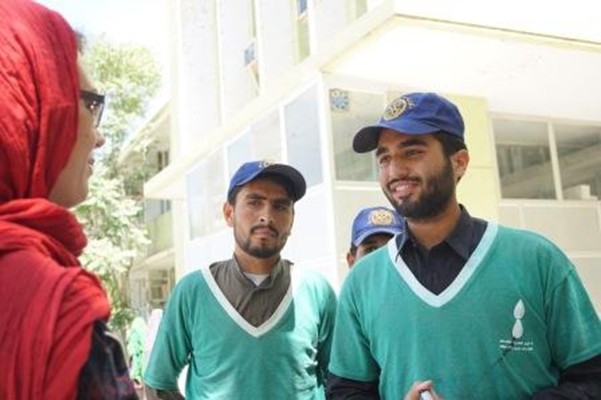
"Communication is integrated across all key components of the programme and there is now a cohesive, solid, integrated communication strategy in place."
This report summarises the discussions of the Technical Advisory Group (TAG) on Poliomyelitis Eradication in Afghanistan, July 12-13 2016, Kabul, Afghanistan, one of the remaining two polio-endemic countries in the world. Senior leaders from the Ministry of Public Health, the Global Polio Eradication Initiative (GPEI), donor agencies, and national and provincial polio teams presented the gains and achievements of the programme in the last 6 months since the group last met, reviewed and commented on the newly drafted National Emergency Action Plan (NEAP) 2016-2017, and made recommendations for intensifying efforts to stop the circulation of wild poliovirus (WPV) by December 2016.
The TAG noted that Afghanistan has witnessed significant progress in its polio eradication programme as demonstrated by polio epidemiology, improvements in population immunity, and the quality of supplementary immunisation activities (SIAs) and vaccination campaigns. In 2015, 20 polio cases were reported, down from 28 cases in 2014. Six cases have been reported so far in 2016. To date, Afghanistan has been able to limit the transmission to a fairly small area, and no wild poliovirus has been detected in environmental samples through surveillance in 2016. The TAG highlighted that Afghanistan has a sensitive polio surveillance system and the circulation of poliovirus is therefore unlikely to be missed. Most of Afghanistan is now polio-free, with transmission limited to a small geographical area in Kunar province in the East and the northern parts of Helmand and Kandahar in the south.
Transmission in the East illustrates the importance of common reservoir transmission between Pakistan's Khyber Pakhtunkhwa and Federally Administered Tribal Areas (FATA) and the area bordering Afghanistan. The TAG suggested that Afghanistan develop a generic response plan for any outbreak in inaccessible areas and for outbreaks in areas contiguous with Pakistan; there should be joint analysis, planning, response, monitoring, and reporting. "There have been significant improvements in coordination between Pakistan and Afghanistan on polio eradication efforts with regular exchange of information, coordination and face-to-face meetings between Emergency Operations Centres [EOCs] at national and local levels," said TAG Chairman Jean-Marc Olive. In addition to regular face-to-face meetings and video/teleconference calls between respective national, regional, and provincial teams of both countries, the campaign schedules have been synchronised, the dates of the April 2016 switch from trivalent oral polio vaccine (tOPV) to bivalent OPV were coordinated, and the intended age group at cross-border points as well as was the reporting tools and communication materials were harmonised. Data on population movements, cross-notification of acute flaccid paralysis (AFP) cases, and detailed investigations of all new polio cases are regularly shared.
New achievements and initiatives commended by the TAG include the revision and validation of micro plans in 47 very-high-risk districts (VHRDs), revision and implementation of a new training module for frontline health workers, and a modified revisit strategy that ensures that more children are reached during vaccination campaigns. TAG members also endorsed the 2016-2017 NEAP for polio, which will guide the programme's interventions in the coming year. The United Nations Children's Fund (UNICEF) representative Dr. Adele Khudr highlighted that the government has UNICEF's full support in the implementation of the NEAP: "We renew our commitment to accompany Afghanistan in the last few miles to eradicate polio. We will work together as one team towards our common goal," she said.
Despite these achievements, many challenges remain on the road ahead to reaching a polio-free Afghanistan. The recent deterioration of the security and access situation, particularly in the northeast and eastern regions, is a cause for concern. The proportion of under-immunised children remains high in Helmand and Kandahar and has increased in Kunar. For instance, during the May National Immunisation Day (NID), over 320,000 children remained unreached due to bans on campaign activities. The programme is actively addressing accessibility issues by, for example, installing permanent vaccination points around inaccessible areas, ensuring vaccination from all nearest health facilities, and engaging with communities and households to guarantee access by increasing demand and trust in vaccination while maintaining strict neutrality. Specifically, the group called for sustained engagement with local influences, such as religious leaders (e.g., through Ulema Conferences with support of the Islamic Advisory Group) and community elders in the VHRDs, as well as efforts to explore new forums for discussions to gain access in the eastern and northeastern regions. The TAG recommended that efforts continue to rapidly operationalise the full-time deployment of the Immunization Communication Network (ICN) to boost ongoing social mobilisation and community outreach activities.
Among the other recommendations: The Ministry of Public Health (MoPH) and basic package of health services (BPHS) non-governmental organisations (NGOs) should make concerted efforts to improve routine immunisation (RI) in high risk areas where low RI coverage is identified. The TAG also suggests developing a contingency plan for possible return of refugee populations.
In conclusion: "if the programme is able to continue consolidating on the key interventions started since the January 2016 TAG and which are showing impact, the target to stop transmission within the current year seems attainable."
"Technical Advisory Group Commends Progress in Afghanistan", July 18 2016 and "Expert group commends Afghanistan’s progress in polio eradication " - both accessed on July 26 2016. Image caption/credit: "The review commended the dedication of polio workers across the country in their efforts to immunise all children regardless of their background or location". WHO/R.Tangermann
- Log in to post comments