










































Report on the Meeting of the Technical Advisory Group (TAG) on Poliomyelitis Eradication in Afghanistan [2022, October]
"...further progress is urgently needed to reach optimal campaign quality and programme performance to ensure sustained interruption of transmission in 2023."
The Technical Advisory Group (TAG) on polio eradication in Afghanistan convened from October 7-9 2022 in Muscat, Oman. It was the first face-to-face meeting of the TAG after 3 years due to travel restrictions imposed by the COVID-19 pandemic and the first meeting since the transition of government in August 2021. The objectives of the meeting were to review the status of polio eradication, key challenges, and programmatic gaps and to provide technical guidance on programme priorities and the required interventions, which includes the supplementary immunisation activity (SIA) calendar for 2023.
With longstanding humanitarian and economic crises and insecurity as overarching risks to the programme and considering the narrow window of opportunity to interrupt the remaining transmission, the TAG identified epidemiological risks that include uninterrupted endemic wild poliovirus type 1 (WPV1) transmission in the East region, cross-border spillover of the outbreak in southern Khyber Pakhtunkhwa (KP) (Pakistan), and the risk of an explosive outbreak among the large number of susceptible children in the South region. There is a real risk of undetected poliovirus transmission, especially among high-risk mobile populations (HRMP) within and across the border.
The TAG noted with appreciation the strong "all-of-government approach" at all levels in Pakistan, as well as the programme's close collaboration with law enforcement agencies. They saluted frontline workers who were martyred in the line of duty. The TAG recommended continued efforts intensify cross-border collaboration with Afghanistan to ensure synchronised vaccination, identify key cross-border populations that may be missed, and fill surveillance gaps, while ensuring continuation of an "all party" neutrality approach ahead of the 2023 elections. One specific recommendation: Implement harmonised social behavioural change (SBC) activities using an agreed list of influencers and religious leaders.
There are strong national and regional SBC communication plans and multiple activities implemented, leading to increasing use of data to demonstrate impact, despite some loss of the local programme capacity during the transition in 2021. For example, the programme has adopted approaches to address chronically missed children and refusals, including extensive vaccination of children in transit to cover HRMP, creating a supportive environment by strategic mass media interventions with specific focus on southern KP. The programme has also strengthened advocacy, with a focus on gender, by partnering with local influencers with tribal, religious, and political affiliations, as well as community-based and non-governmental organisations in high-risk union councils (HRUCs). With these key strategies, since March 2022, the national trends of missed children and still refusals improved. However, some 4,25,800 children were not available and 50,433 still refused to take the vaccine during the August 2022 campaign round.
The TAG noted that missed children in SIAs comprise two categories of concern: (a) children not available, the largest category of missed children in most areas, and (b) pockets of chronic refusals. Overall, there are 0.5%-4.6% children still unvaccinated in each province, with the highest percentage seen in Nangarhar. Recommendations for SBCC include:
- Prioritise SBCC activities in low-performing districts in the East, Southeast and South regions.
- Evaluate by measuring caregivers' intention to vaccinate and rate of missed children (not just refusals).
- Continue to build and test community engagement strategies during and between SIAs (polio plusses, additional antigens).
- Develop and implement strategies to motivate and attract families with young children to fixed sites in areas with no house-to-house delivery during campaigns.
- Support analysis of mobile populations, particularly in the Southeast, to enhance engagement and vaccination opportunities.
- Review programme capacity, identify gaps, and strengthen local staff for community engagement in high-risk areas.
- Continue efforts to investigate and understand what drives fake finger marking in special contexts.
- Fully implement dialogue with frontline workers (FLWs) to sustain and maximise their motivation, and consider their suggested solutions as the basis for a FLW engagement strategy.
TAG stressed upon adherence to protocols and conventions to ensure there is gender parity in the programme and observed that the June 2021 TAG recommendations on gender remain valid:
- Implement the prevention of sexual exploitation, abuse, and harassment (PRSEAH) at all levels of the programme fully.
- Draw on gender analysis done by humanitarian actors to understand the different needs of men and women.
- Develop objectives to overcome gender-related barriers for the programme.
- Prioritise the integration of women into all levels of the programme, ensuring a safe environment - starting with frontline teams and working towards senior female roles.
- Actively ensure male and female participation in community engagement processes (jirgas, etc.), including "spaces" for dialogue in household visits for women when not possible at community level.
- Develop clear national and regional criteria for recruitment of women.
- Focus on bottom-up community engagement with men and women for planning and assessing SIA delivery, routine immunisation, and other integrated services (not just "leaders/influencers").
- Build alliances with women's organisations and community-based organisations at the local level.
- Integrate sex-disaggregated data to ensure no population is missed.
- Introduce gender awareness and training for programme staff at all levels (men and women).
- Integrate gender sensitivity into communication strategies and materials.
The "TAG concluded that Afghanistan is well positioned to succeed in interrupting WPV transmission in 2023 if the programme acts swiftly on its recommendations with vigorous focus on priority actions. This conclusion is based on significant developments after the government transition in August 2021, whereby remarkable improvement in programme access and progressive increase in house-to-house campaign modality has been attained, leading to the largest number of children reached in the last several years."
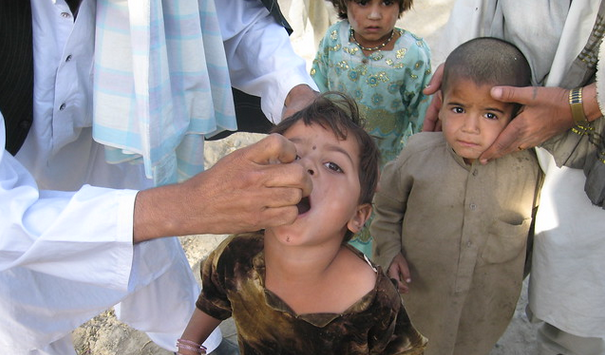
Global Polio Eradication Initiative (GPEI) website, October 13 2023. Image credit: © CIDA/ACDI: Sharif Azami via Flickr (CC BY-NC-ND 2.0 Deed)