










































SiMchezo! Magazine: Community Media Making a Difference
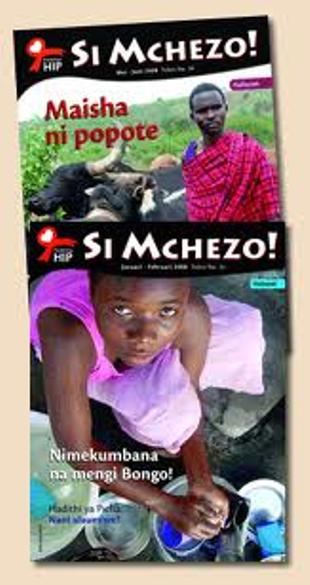
In the book "Media & Glocal Change: Rethinking Communication for Development" (Chapter 24), Minou Fuglesang analyses the docudrama approach of the Swahili-language SiMchezo! Magazine. While many initiatives applying entertainment-education methodology use the fictional drama to communicate, the Health Information Project (HIP) in Tanzania, creator of this magazine, uses docudrama, drawing on journalistic tradition, real-life testimonials, and human interest stories. “Anyone who has a story to tell, whether celebrity or street vendor, will be heard through interviews, testimonials, letters and short essays from readers”, according to Fuglesang. As stated by the author, the power of SiMchezo! Magazine is its ability to foster open discussion about sensitive issues surrounding sexuality and HIV/AIDS in rural areas of Tanzania.
Fugelsang describes the process as follows: "The two editors travel out to selected rural areas with a laptop and digital camera to collect stories. The production builds on such modern production technology, which has simplified and transformed editorial work. Editors meet with various youth groups, partner organizations and community members and get ideas for story lines. Scripts for photo-novels are chiselled out with the help of the community members, who also act and pose as models for the photographs. The script and photos are written, shot, edited and basically completed within a day for one article or photo-novel".
Issues such as HIV/AIDS, life skills, career opportunities, violence, and drugs are communicated by using real life stories and testimonials, photonovels, advice columns, and other formats that are intended to engage audiences emotionally. The chapter describes SiMchezo! Magazine as having helped to engage people emotionally, spurring open discussion and interpersonal exchange about issues that are considered taboo by using examples drawn from their own lives.
Please see "Related Summaries" below for a description of the entire book.
17
Email from Huyen Tran Dieu to The Communication Initiative on February 27 2012.
- Log in to post comments