










































Use of Dedicated Mobile Teams and Polio Volunteer Community Mobilizers to Increase Access to Zero-Dose Oral Poliovirus Vaccine and Routine Childhood Immunizations in Settlements at High Risk for Polio Transmission in Northern Nigeria
United Nations Children's Fund, or UNICEF (Ongwae, Corkum); World Health Organization, or WHO (Bawa, Braka, Isa); National Primary Health Care Development Agency, Federal Ministry of Health, Abuja, Nigeria (Shuaib)
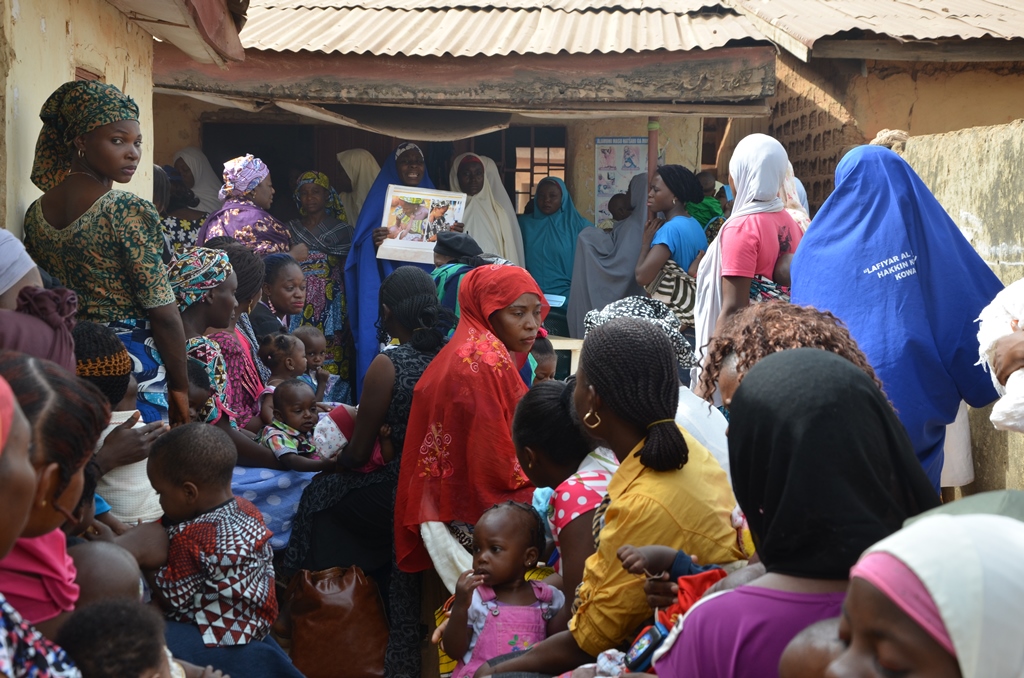
Reflecting on the Polio Eradication Initiative (PEI) in Nigeria, this article examines the use of dedicated mobile teams and polio volunteer community mobilisers (VCMs) to improve not only polio immunisation but also routine immunisation (RI) and other primary health care (PHC) services in the underserved communities thought to be at high risk for polio transmission in 6 of the 12 states of Northern Nigeria. The study is based on the initial 6 states (Bauchi, Borno, Kaduna, Kano, Katsina, and Yobe) that started implementation of the dedicated mobile teams and polio VCM initiative in 2014.
Some background on the PEI in Nigeria illuminates how this approach came into being. The programme has faced many setbacks, starting in 2003 with the initial widespread boycott of poliovirus vaccinations in some of the country's Northern states. This transitioned into a continuation of anti-poliovirus vaccine sentiments and reduced access to services after the escalation of insecurity in Northern Nigeria in 2009. These challenges led to the development of the National Emergency Action Plan (NEAP), improved partner coordination and government engagement, and the establishment of a Polio Emergency Operations Centre (EOC). Although monthly supplementary immunisation activities (SIAs) continued, starting in 2013, resources from the polio eradication programme were used to set up a network of VCMs. The PEI also involved traditional and religious leaders at all levels in a bid to minimise resistance to the poliovirus vaccine and mobilise communities for the services. The engagement reportedly helped diffuse the hostile environment for polio eradication in the face of rejection and insecurity based on then-prevailing cultural norms and religious practices.
The strategy of involving community, religious leaders, and household heads was also used in the selection of VCMs in the communities. A VCM was identified from each of the settlements at high risk for polio transmission and trained on how to conduct household microcensus, home visits, administration of oral polio vaccine (OPV), and tracking and linking of newborns with routine services in the nearby health facilities. The trained VCMs conduct routine home visits, with particular emphasis on homes with pregnant women or newly delivered newborns.
The baseline assessment in May 2014 and the midterm assessment in November 2015 were conducted in 317 randomly selected settlements at high risk for polio transmission. Among the findings: Both the number of newborns reached with OPV0 (first dose of OPV according to the RI schedule) and zero-dose OPV (the first OPV dose for children aged over 12 months who were not vaccinated according to the RI schedule) significantly increased between 2013 and 2015. Following a similar trend, the mean number of infants less than 12 months of age receiving OPV per VCM by reporting period showed a general increase from 2013 to 2015.
Specifically, the network of 9,196 VCMs in the 6 states delivered increasing OPV0 doses, from a mean of 78 per VCM in 2013 to 122 in 2014 and 102 in 2015. The mean number of children receiving zero-dose OPV per VCM increased from 2 in 2013 to 17 in 2015.
This article offers evidence on the use of polio personnel to increase immunisation coverage, delivery of other basic PHC services, and improved community linkages. Over a period of 21 months, the percentage of children aged 12-23 months seen with a RI card increased from 19% to 49%. Full immunisation coverage went up by a similar margin during the same period, from 16% to 50%.
The selected settlements at high risk for polio transmission were also provided with a community-based services delivery platform used for community social mobilisation and demand generation. For instance, the linking of newborns to facilities for RI is a demand generation intervention for RI and other newborn-related PHC services.
In conclusion: "The range of services beyond poliovirus vaccination provided using polio resources reinforces the integration and strengthening of PHC as a sustainable delivery mechanism for RI and other related PHC services....The VCM structure needs to be considered for scale-up as part of PHC approach in hard-to-reach communities..."
The Journal of Infectious Diseases. 2017 Jul 1; 216(Suppl 1): S267–S272. doi: 10.1093/infdis/jiw520. Image credit: Global Polio Eradication Initiative
- Log in to post comments