










































Promoting Wellbeing and Empowerment via Youth First: Exploring Psychosocial Outcomes of a School-based Resilience Intervention in Bihar, India
CorStone (K.S. Leventhal, Cooper, S. Leventhal); University of Edinburgh (K.S. Leventhal); Mathematica (DeMaria); CorStone India Foundation (Priyam, Shanker, Andrew)
"...findings suggest that psychosocial skills and assets in youths are modifiable and can be strengthened through mental health promotion and prevention interventions in schools in LMICs..."
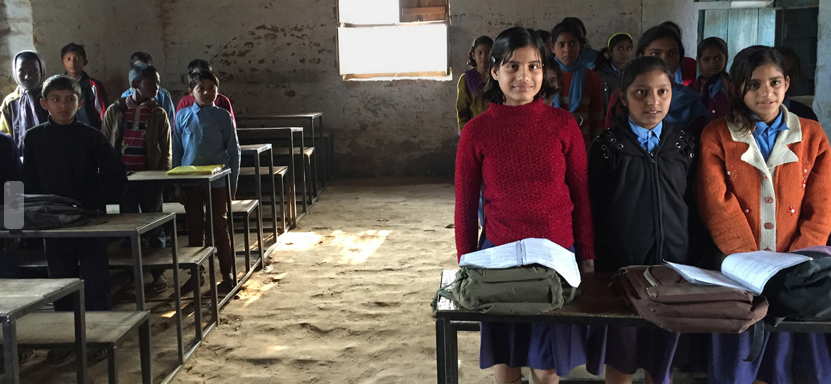
One promising way to support youth psychosocial wellbeing is via mental health programmes for youth. CorStone's Youth First is a school-based psychosocial resilience programme that seeks to improve the mental, physical, social, and educational wellbeing of early adolescents in India, Kenya, and Rwanda. This study, conducted in Bihar, India, observed Youth First participants' inter- and intra-personal psychosocial skills and attitudes, contrasting these skills and attitudes with those of a control group that did not attend Youth First. This paper reviews findings from the study and applies its implications to a set of broader recommendations for researchers conducting outcome and measure selection in studies that aim to quantify school-based mental health promotion and prevention programme effects among low- and middle-income country (LMIC) youth.
In Bihar, India, where Youth First has been implemented since 2013, Youth First is a 2-year programme, conducted in government schools and facilitated by government schoolteachers among their 7th and 8th Standard students. See the figure below for the Youth First theory of change, describing expected proximal, intermediate, long-term, and distal outcomes:

Building on a previous randomised controlled trial (RCT) among middle school girls in Bihar, India, of Youth First (which, at the time, was called Girls First - see Related Summaries, below), this study relies on vignette-based qualitative data collection methods to investigate how and whether students who participated in Youth First displayed Youth First's proximal outcomes - inter- and intra-personal psychosocial skills and assets - vs. students who had not participated. Seventy schools were randomly assigned to either an intervention arm that received the Youth First curriculum (8 schools) or a control arm that received standard education (4 schools). Focus group discussion (FGD) data gathered from 322 students who attended an intervention or control school during the intervention period of 2018-2020. FGD data included in this study were collected from August to September 2021, 1.5 years after the completion of the Youth First programme.
Through the FGDs, students provided their opinions, thoughts, and ideas about vignettes describing challenges that youth in their communities frequently face. The vignette presented during the girls' FGDs told the story of a fictitious girl in the community, Archana, facing pressures related to early marriage that could interfere with her education. The other vignette, presented during the boys' FGDs, told the story of a fictitious boy in the community, Ajay, facing pressures to work to help his family that could interfere with his education. Analysis of the FGD transcripts integrated qualitative and quantitative approaches, consisting of an iterative thematic analysis process followed by quantising data and conducting t-tests.
Participants in the intervention and control arms responded similarly to one another in a number of ways (see Table 5 in the paper), including in their awareness that the situation in the vignette is linked to social inequalities, their awareness that the situation is "wrong", their empathy for the main character, and basic ideas of how to support her or him. However, as presented in Table 6, there were many differences observed between the intervention and control arms, all of which favoured the intervention arm. In particular, those in the intervention arms brought a higher-order set of skills and assets to their interpretation of the vignette compared to the students from the control schools. Students from the intervention arm had a more nuanced and multifaceted awareness of the issues in the situation; had a more empathic awareness of others’ perspectives and emotions; suggested more creative, innovative, self-aware, goal-directed, and assertive problem-solving strategies; suggested more creative, innovative, collective and empathic helping approaches; had a more in-depth awareness of strengths, resources, and skills that could be drawn upon in the situation; held a more detailed vision of potential future paths beyond the situation, both good and bad; and boys in particular had a more nuanced understanding of gender inequalities compared with those in the control arm.
Once the observed outcomes were dummy coded (1 = intervention fared better than controls, 0 = intervention fared similarly to controls, and -1 = controls fared better than intervention), the mean (M) of the outcomes was 0.61 (standard deviation (SD) = 0.50; this was the same for boys' and girls' FGDs). This mean reflected that 61% of the outcomes represented instances in which the intervention fared better than controls, 39% of the outcomes represented instances in which the intervention fared similarly to controls, and 0% of the outcomes represented instances in which the controls fared better than the intervention.
According to the researchers, these findings provide insights into potential outcomes for measurement in future evaluations of mental health promotion and prevention programmes among youth in LMICs. Namely: (i) the outcome categories identified do not map clearly to categories established via previous studies, meaning that existing ways to measure creativity or empathy may or may not have captured certain changes; and (ii) basic skills may be present in youth even without intervention, so higher-level skills are important areas in which to explore change. To this end, the researchers propose three recommendations to guide researchers in approaching future evaluations of mental health promotion and prevention programmes among LMIC youth:
- Integrate open-ended, qualitative investigations of outcomes experienced or exhibited by participants, in addition to or instead of quantitative methods. These outcomes can then be used to inform the design of evaluations.
- Identify outcomes that are specific to local understandings and applications.
- Ensure that any outcome measures can capture higher-level skills and nuanced attitudes and are sensitive to differences between higher- vs. lower-level skills and nuanced vs. basic desired attitudes. In the case of quantitative measures, this need can in part be mitigated via piloting outcome measures prior to final measure selection in order to examine distributions within the population prior to intervention.
In conclusion: "Overall, adolescents who participated in Youth First exhibited high-level inter- and intra-personal psychosocial skills, understanding, and attitudes, spanning problem-solving, perspective-taking, awareness of strengths, helping behaviors, and more. These findings are particularly promising given Youth First's potential for scale, and the fact that differences between the intervention and control arm were clearly observable 1.5 years after completion of the intervention. In addition, this study provides insight into the types of outcomes that emerged via the voices of adolescent participants, which can provide direction to future researchers regarding how to establish outcomes of interest when evaluating similar interventions among similar populations."
Frontiers in Psychiatry 13:1021892. doi: 10.3389/fpsyt.2022.1021892. Image credit: CorStone