










































Networking Proves Vital Strategy to Improving Women's Health Care: Relationships between Parliamentarians and HIV-positive Women Fosters Change
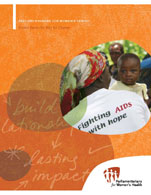
Parliamentarians for Women's Health
This eight-page report details the outcomes of the Parliamentarians for Women's Health project, which was spearheaded by the International Centre for Research on Women (ICRW) in Botswana, Kenya, Namibia, and Tanzania. The project sought to form networks between HIV-positive women, their communities, and members of parliament (MPs). Although the report states that results varied by country, researchers found that, overall, the project gave MPs a better understanding of women's barriers to HIV/AIDS treatment and care, and that networking strengthened women's ability to advocate on issues that affect them.
The report explains that project officers in the four countries led the networking activities. They visited communities, positive women's groups, and civil society organisations (CSOs) to create networks among them. In doing so, they also sought to raise awareness about women's health issues and the need for CSOs to involve positive women in their work and to identify priority areas and discuss ways to bring these priorities to the attention of policymakers. According to the report, the personal testimonies of women living with HIV gave MPs a powerful new understanding of the complicated issues facing women living with HIV, including the barriers they face in accessing health care. Women reported that they are often embarrassed to access HIV-related services and are also wary of telling health workers about health problems them may be facing. MPs reported that these personal interactions with the women gave them a better understanding of pertinent issues and said they felt better able to push for budget allocations to address these issues.
Likewise, the report highlights benefits experienced by the HIV-positive women, who reportedly gained a new understanding on how to conduct effective advocacy. Women reported gaining insights into the parliamentary process which, they felt, allowed them to be more strategic in their advocacy. Also, the project led some women to create new networks devoted to advocacy and lobbying that incorporated both civil society and government ministries.
The paper concludes by stating that networking remains a vital component in increasing politicians' awareness about women's health needs and creating the kind of political will necessary to improving women's health. The authors point out that not only does linking politicians with women provide policymakers with better understanding of women's issues, but it also allowed them access to feedback about the health system they create from women whom experience it on the ground. It suggests that these kind of linkages are crucial to the kind of political will needed to address the HIV epidemic in many countries and recommends that more is done to establish these kinds of networks.
ICRW website on September 28 2009.
- Log in to post comments