










































The Soul Beat 266 - Promoting the Sexual and Reproductive Health of Young People in Africa
Issue #
266

Soul Beat Africa
The Soul Beat 266 - Promoting the Sexual and Reproductive Health of Young People in Africa
February 14 2017
From SOUL BEAT AFRICA - where communication and media are central to AFRICA's social and economic development
In this issue:
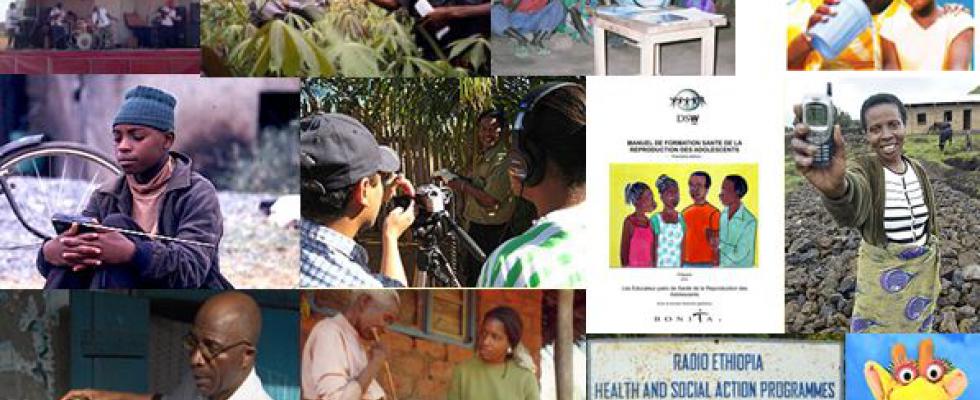
This issue of The Soul Beat looks at how communication is being used to promote the sexual and reproductive health (SRH) of adolescents in Africa. The newsletter offers a selection of content - programme experiences, evaluations, research reports, and resources - posted onto the Soul Beat Africa website which highlight how communication strategies involving, for example, advocacy, peer education, community mobilisation, and information and communication technologies (ICTS) - can be used to promote the SRH of young people, including their access to Comprehensive Sexuality Education (CSE).
- PROGRAMMES - student champions for SRH, and transforming norms to support healthy behaviours...
- EVALUATIONS - of the Ministerial Commitment to SRH, and a peer support programme in Uganda...
- STRATEGIC THINKING REPORTS - religion and Comprehensive Sexuality Education (CSE), and scaling up normative change interventions...
- RESOURCES - SRH and SBCC Implementation Kit, and a tool for designing youth-friendly services...
This issue of The Soul Beat looks at how communication is being used to promote the sexual and reproductive health (SRH) of adolescents in Africa. The newsletter offers a selection of content - programme experiences, evaluations, research reports, and resources - posted onto the Soul Beat Africa website which highlight how communication strategies involving, for example, advocacy, peer education, community mobilisation, and information and communication technologies (ICTS) - can be used to promote the SRH of young people, including their access to Comprehensive Sexuality Education (CSE).
SHARE OUR CONTENT!
- 1. University Leadership for Change in Sexual and Reproductive Health Project - NigerIn Niger, rates of childbearing, child marriage, and adolescent pregnancy are some of the highest in the world. This project engaged the students, the administration, and university health services from Abdou Moumouni University in Niamey, to tackle pervasive challenges to improving young people's SRH. The project involved strengthening services for youth, involving stakeholders from relevant ministries and the university in decision making and implementation, cultivating leadership skills among students as champions for SRH, and employing a comprehensive approach to behaviour change using peer education, films, and games.
- 2. Passages Project - Transforming Social Norms for Sexual and Reproductive Health - GlobalPassages is a research-to-practice project that seeks to address the core challenges to improving SRH, such as gender-based violence, child marriage, and unintended pregnancy, by transforming social norms. Researchers on the project are developing and testing scalable approaches to promote social norms that support healthy behaviours. They are also studying interventions that promote collective change through media, advocacy, community campaigns/mobilisation, and discussions within social networks and among community leaders. Results from the research will be used to build an evidence base and contribute to the capacity of organisations working to strengthen normative environments that support reproductive health.
- 3. Tikambe! (Let's Talk!) Project - ZambiaTikambe! (Let's Talk!) is a joint BBC Media Action and Restless Development project in Zambia that uses an integrated communication approach to get young people openly talking about sex, sexually transmitted infections (STIs), and how to prevent HIV and AIDS. Launched in 2014, the project combines a weekly radio show, a television talk show, policy engagement events, outreach activities, and peer-led education and training in life skills. The programme seeks to help young people look after their sexual health and improve their knowledge of their reproductive rights, and also empower youth to claim their rights to access youth friendly SRH services.
- 4. Fulfilling Our Promise to Young People Today (2013-2015) Progress Review: The Eastern and Southern African Ministerial Commitment on Comprehensive Sexuality Education and Sexual and Reproductive Health Services for Adolescents and Young People [July 2016]In 2013, Ministers of Education and Health from 20 countries in Eastern and Southern Africa agreed to work collaboratively towards a vision of young Africans who "are global citizens of the future, who are educated, healthy, resilient, socially responsible, informed decision-makers, and have the capacity to contribute to their community, country, and region." They agreed on two sets of targets to be achieved in 2015 and 2020 respectively. This report presents the progress made after two years of implementation (2013-2015), as well as the barriers and challenges that remain for all targets for 2020.
- 5. The GREAT Project - Results Brief [July 2015]This brief highlights the results of an evaluation of the Gender Roles, Equality and Transformations (GREAT) project, a pilot project in Uganda which was designed to "shift social norms and attitudes to foster healthier, more equitable behaviors by correcting misinformation, encouraging critical reflection and dialogue, changing expectations for appropriate behavior and supporting groups to take action."
- 6. Using Peers to Improve Sexual and Reproductive Health and Rights of Young People Living with HIV in Uganda: Findings from a Link Up Evaluation [May 2016]This brief presents the findings of an evaluation of the Link Up project's peer support programme in Uganda, which worked with young people living with HIV (YPLHIV) to improve their sexual and reproductive health and rights (SRHR). The brief describes the peer-based intervention, explaining how the programme trained peer educators to connect with networks of new and existing YPLHIV peer support groups, where they would provide health education and counselling on topics relevant to YPLHIV, including relationships, fertility awareness, safe conception, preventing HIV and STI transmission, HIV-related stigma, and the rights of YPLHIV to obtain comprehensive SRHR and HIV services.
ENQUIRY: Your priorities, opportunities and challenges!
What kinds of challenges and opportunities infuse your communication and media development, social and behavioural change work? This survey is a chance for you to let us know! We will report back on results and trends so you can gain insights from your peers in the network.
Click here to lend your voice.
POLL: What keeps you up at night with worry about your work?
Vote and comment here and then see what your peers are experiencing also!
- 8. Religion & Sexuality: A Report on Faith-based Responses to Children's Comprehensive Sexuality Education and Information [2016]This research on faith-based perspectives on Comprehensive Sexuality Education and Information (CSE & I) seeks to explore the role of African faith-leaders in providing CSE & I, specifically the extent of their current and potential involvement, and how their involvement can be enhanced.
- 9. Scaling Up Normative Change Interventions for Adolescent and Youth Sexual and Reproductive Health Literature Review Findings and Recommendations [September 2016]This document aims to advance knowledge and increase utilisation of evidence about normative change at scale by reviewing and describing youth SRH interventions that address normative change and that have, or are being, scaled up. The document is based on a literature review of published grey and peer-reviewed literature of 42 normative change interventions, predominantly from Africa and some from Asia, that have been evaluated during pilot phase and have gone or are going to scale. The results of the literature review including the lessons and considerations for scaling up normative change interventions are shared in this document.
- 10. Everyone's Right to Know: Delivering Comprehensive Sexuality Education For All Young People [March 2016]This report by the International Planned Parenthood Federation (IPPF) is intended to inform advocates and decision makers about how to support the sexual reproductive rights of young people around the world. It argues that CSE is critical for young people to realise their rights, and recommends that high quality CSE should be delivered to all young people, both inside and outside schools. In particular, it emphasises the importance of paying attention to who delivers sexuality education, how they are trained, and how CSE is delivered in relation to pedagogy and participatory, learner-centred approaches.
- 11. Adolescent Boys and Young Men: Engaging Them as Supporters of Gender Equality and Health and Understanding Their Vulnerabilities [2016]This technical paper, based on global research, seeks to create a better understanding of the realities of adolescent boys and young men. It explores the specific risks and realities in relation to health in general, violence, sexuality and SRH, media violence, sexual exploitation, education, and other specific vulnerabilities. It then analyses the implications of these risks and realities not only for boys, but also on the lives of women and girls. The study emphasises that a holistic approach to advancing gender equality and SRH must include both adolescent girls and boys.
- 12. ICT Solutions for Strengthening SRHR Programmes [August 2015]This position paper explores some of the information and communication technology (ICT) solutions for SRHR programmes that were developed by the International Institute for Communication and Development (IICD), a non-profit foundation whose work, mainly in sub-Saharan Africa and Latin America, specialised in ICT as a tool for development.
- 13. Fulfil! Guidance Document for the Implementation of Young People's Sexual Rights [September 2016]Translating the sexual rights of young people into practice not only involves raising awareness among young people for them to claim their rights, but working with duty bearers, such as health providers, educators and policy makers for them to fulfil these rights in law and in services. With this in mind, the International Planned Parenthood Federation (IPPF) and the World Association for Sexual Health (WAS) developed this guide, which explores opportunities to implement young people's sexual rights in a global context and provides specific guidance for adults seeking to empower young people to take action and to claim what is their due.
- 14. Essential Packages Manual: Sexual and Reproductive Health and Rights Programmes for Young People [April 2016]This manual is designed to be a comprehensive guide for successful SRHR programmes for young people. It seeks to help organisations to critically review programmes and identify gaps and areas to improve a programme in line with a rights-based, gender-transformative, and youth-centred approach. It was produced as part of the Access Services and Knowledge (ASK) programme, which was implemented from 2013-2015 in seven countries in Africa and Asia.
- 15. Evidence and Rights-based Planning and Support Tool for Empowering Approaches to SRHR Education with Young People: Second Edition [2016]This tool is designed to help organisations working in HIV prevention and SRHR to plan or improve their HIV prevention and SRHR education programmes for young people. The toolkit reflects up-to-date research findings and has translated this evidence for practical use. It can be used to plan new interventions, but also to analyse existing interventions.
- 16. The Urban Adolescent Sexual and Reproductive Health Social and Behavior Change Communications Implementation Kit [October 2015]This Implementation Kit provides a selection of tools to guide the creation, or strengthening, of SRH-related social and behaviour change communication (SBCC) programmes for urban adolescents aged 10 to 19. Published by the Health Communication Capacity Collaborative (HC3), the I-Kit breaks down and explains key SBCC elements for programme managers, designers, and implementers working with adolescents, SRH, and SBCC.
- 17. Thinking Outside the Separate Space: A Decision-Making Tool for Designing Youth-Friendly Services [May 2015]This tool, developed for the international SRH community, seeks to advance services tailored to young people's needs by helping programme designers to select and adapt appropriate youth-friendly service (YFS) delivery models, considering: the country context, the intended population, the desired behavioural and health outcomes, the services offered, and the needs and objectives for scalability and sustainability.
- 18. 2016 Calendar: A Parent's Guide to Comprehensive Sexuality Education [December 2015]This calendar is part of an initiative to ensure that children and young people in Eastern and Southern Africa are receiving accurate information about their sexual and reproductive health. Developed for parents and guardians across the region, the calendar is designed to be a practical guide to help parents talk to their children about comprehensive sexuality education, with each month representing a different activity.
- 19. Regional Module For Teacher Training on Comprehensive Sexuality Education for East and Southern Africa [July 2015]This training module was developed as a resource to support the training of teachers in East and Southern Africa to deliver school-based sexuality education. Designed for trainers who are delivering pre-service training on sexuality education in the region, the material provides a core set of lesson plans to equip teachers with the basic knowledge and skills necessary to deliver effective sexuality education in the classroom.
STAY CONNECTED WITH SOUL BEAT AFRICA
THE SOUL BEAT ARCHIVES
Click here to view a past edition of The Soul Beat e-newsletter related to sexual and reproductive health.Click here to view ALL past editions of The Soul Beat e-newsletter.
If you would like your organisation's communication work or research and resource documents to be featured on the Soul Beat Africa website and in The Soul Beat newsletters, please contact soulbeat@comminit.com
We would love to hear from you: Click here to send us your comments or email soulbeat@comminit.com
Click here to subscribe
To unsubscribe, reply to this message with "unsubscribe" as the subject.
- Log in to post comments