










































2017 Assessment Report of the Global Vaccine Action Plan
The Strategic Advisory Group of Experts (SAGE) Working Group (WG) facilitates a yearly SAGE independent review of the implementation of the Decade of Vaccines (DoV) Global Vaccine Action Plan (GVAP) and assessment of progress. In 2016, SAGE published a mid-term review of the GVAP, which noted the slow speed of progress towards GVAP's eradication, elimination, coverage, and other goals. This 2017 report notes that some progress has been made: the year saw the fewest number of cases of wild poliovirus ever reported, and three more countries were certified as having achieved maternal and neonatal tetanus elimination. Nine additional countries have introduced new vaccines.
However, SAGE has noted with concern signs of the complacency and inadequate political commitment to immunisation, as well as an insufficient appreciation of the power of vaccines to achieve wider health and development objectives. Additional risks identified include: growing levels of vaccine hesitancy; the worrying rise in vaccine stock outs disrupting access to vaccination; and the continued underperformance of certain countries relative to others within their region. The 2017 data continue to show that the benefits of immunisation are shared unevenly, both between and within countries. Achieving true equity is likely to require specific approaches to hone in on populations that are hard to reach, for geographic or sociocultural reasons. There is, SAGE stresses, a need to build the evidence base on how such neglected populations can be accessed effectively, ensuring that lessons learned are captured and shared, and good practice established and implemented.
SAGE explains that maintaining immunisation despite migration within countries or across borders will be a major future challenge for the global immunisation community, but a vital step in the journey towards equitable access to immunisation services. As a first step, there is a need to collate existing knowledge on best practices for reaching different categories of mobile populations and other neglected groups, to identify knowledge gaps, and provide a basis for the development of strategies to address the immunisation needs of such vulnerable populations. The World Health Organization (WHO) should synthesise existing knowledge on reaching displaced and mobile populations - including individuals escaping conflict zones or natural disasters, economic migrants, seasonal migrants, those moving to urban centres, and traditional nomadic communities - and other neglected populations to identify good practice and gaps in knowledge.
Furthermore, with polio eradication yet to be achieved, there is a risk of a mismatch in the timing of polio eradication and the polio programme transition. In some countries in regions where polio has been eliminated, surveillance is slipping; yet, in a globally connected world, poliovirus reintroduction remains a very real risk. A further point of concern is the possible simultaneous phasing out of support in countries affected by both the polio funding transition and a transition out of Gavi support. SAGE suggests that these two processes be undertaken in a coordinated manner to minimise the potential impact of loss of resources and technical support on routine immunisation programmes and associated functions such as surveillance.
The report offers a number of recommendations going forward, including the following communication-related ones:
- Broadening the dialogue: The immunisation community should ensure that immunisation is fully aligned and integrated with global health and development agendas, including global health security and International Health Regulations, health systems strengthening and universal health coverage, and the battle against antimicrobial resistance. Opportunities also exist to strengthen the dialogue with other sectors. Such dialogue could stress mutual benefits - the health and economic benefits that immunisation delivers and how the worlds of business and finance could support immunisation financially or through technological or other innovations.
- Technical capacity-building: There is an ongoing need to enhance capacity in immunisation programmes, identifying ways to make use of existing resources and thereby leveraging local, regional, and global opportunities to enhance technical capacity. WHO, for example, has developed a range of resources and e-learning tools, and has established key norms and standards. There may also be opportunities to draw on technical expertise within local academic and training institutes (an approach adopted in India). Local civil society organisations (CSOs), including the private immunisation sector, may also represent a source of expertise or, with appropriate training, could be integrated into national programmes to expand capacity. Given the likely importance of local and contextual issues, assessments of technical capacity-building needs should be carried out at a regional level. This would also provide opportunities for peer-to-peer learning.
- Acceptance and demand: Given the potential for hesitancy to have a major impact on coverage, it is important that all countries take steps to understand both the extent and nature of hesitancy at a local level, on a continuing basis. There are a range of tools by which this can be achieved, including population surveys, media and social media monitoring, and through community dialogue. Allied to this work is the need to develop strategies for building and maintaining trust with communities - an area where health workers and CSOs can play valuable roles. This includes ensuring that health care workers and communities are well versed on immunisation and can enhance vaccine demand, acceptance, and resiliency in the face of anti-vaccine messages. Each country should develop a strategy to increase acceptance and demand, which should include ongoing community engagement and trust-building, active hesitancy prevention, regular national assessment of vaccine concerns, and crisis response planning.
- CSO participation: Countries should broaden and deepen their engagement with CSOs, who have well-established roles in community mobilisation and in helping immunisation programmes access particular hard-to-reach populations. They can also contribute directly to immunisation services, play roles in education and dissemination of knowledge, and act as an important source of technical expertise. On the national stage, CSOs can play a critical role in advocacy and in holding governments to account. They also have the potential to make significant contributions to national hesitancy management strategies. There is a need to understand the variety of ways in which legislation and regulation have been used to advance or undermine the cause of immunisation (including their use to address hesitancy), the impact of such measures, and the contextual factors that have influenced their effectiveness. A synthesis of the evidence on the use of legislative and regulatory instruments could guide national efforts to advance the immunisation agenda.
"This year's indicator data confirm the trend observed in previous years and suggest that many of the GVAP goals will not be attained by 2020....Extending coverage will not be easy, and building more effective immunization programmes will necessarily depend on systematic and multidimensional analyses of current situations and future needs, recognizing the importance of local realities and contexts. While there is undoubtedly a place for global support and resources, there are powerful arguments for regional responses tailored to local contexts and cultures."
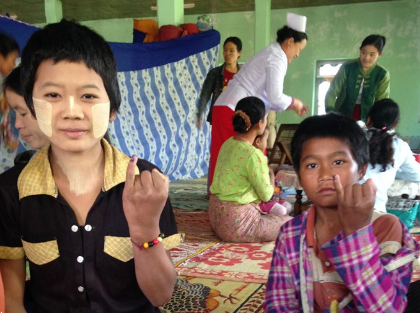
WHO website, November 7 2017. Image credit: WHO Jan Grevendonk
- Log in to post comments