










































Global Vaccine Action Plan Monitoring, Evaluation & Accountability: Secretariat Annual Report 2015
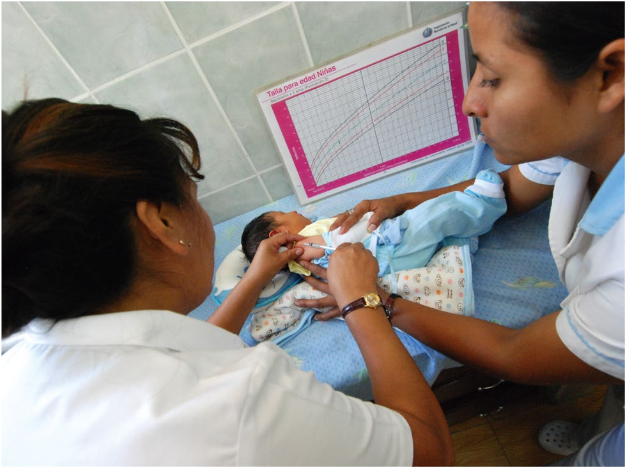
"Civil society organizations [CSOs] were specifically invited to submit reports focusing on their efforts to improve community participation and demand for immunization..."
The Global Vaccine Action Plan (GVAP), endorsed by the 194 Member States of the World Health Assembly in May 2012, is a framework to prevent deaths by 2020 through more equitable access to existing vaccines. A yearly report (see Related Summaries, below) is prepared by the Secretariat for the Decade of Vaccines (DoV), which is made up of: the Bill & Melinda Gates Foundation; Gavi, the Vaccine Alliance; the United Nations Children's Fund (UNICEF); the US [United States] National Institute of Allergy and Infectious Diseases; and the World Health Organization (WHO). This report serves as the basis for the independent review of the Strategic Advisory Group of Experts on immunization (SAGE). It reviews progress against each of the indicators in the Monitoring and Evaluation/Accountability Framework of the GVAP. In addition, it contains a narrative report on trends in vaccine prices, updates on tracking resources and commitments to immunisation, and independent voluntary submissions from various partners on the activities they conducted under the GVAP umbrella.
There are several goals/strategic objectives and corresponding indicators that guide the GVAP, such as: ensuring country ownership of immunisation, which is gauged by indicators including presence of an independent technical advisory group, and demand for immunisation, which is measured by indicators such as the percentage of countries that have assessed the level of hesitancy in vaccination at a national or subnational level. To facilitate the exploration of the data, for several indicators, some data visualisations that measure progress against the goals and strategic objectives of the GVAP have been made available in an interactive format on the TechNet-21 website. You can share your opinions or ask questions about these visualisations on the TechNet-21.org forum.
The GVAP Secretariat report covers various goals in detail (with bibliographies sharing materials that supported the description of each goal, such as: Achieve a world free of poliomyelitis (indicators G1.1 and G1.2). A sample of this section of the paper: "In 2014 and 2015, a midterm review was conducted by the GPEI [Global Polio Eradication Initiative] to review progress to date, recommend appropriate changes to the goals, strategies, activities, and timeline, and to align stakeholders and donors around a shared set of lessons learnt, risks, and priorities that will impact the remainder of the eradication effort. Recommendations regarding activities for interruption of transmission were given top priority and include: increasing surveillance capacity and quality, improving supplementary immunization activity (SIA) quality with a focus on missed children and intensified social mobilization, increasing global and national capacity for outbreak preparation and aggressive response to cVDPV [circulating vaccine-derived poliovirus type 2] and WPV [wild poliovirus], and rapidly accelerating support for Global Action Plan (GAPIII) implementation. Recommendations were also made regarding activities for the switch from OPV [oral polio vaccine (OPV)] to IPV [inactivated polio vaccine] including: prioritizing strategic IPV use, and focusing on tOPV [trivalent OPV] to bOPV [bivalent OPV] contingency planning. The review also provided a number of recommendations regarding enabling activities. These include: strengthening collaboration and joint accountability between polio and the broader routine immunization community, strengthening management capacity and accountability, increasing advocacy at the subnational level and improving communication with external and internal stakeholders, increasing data standardization, monitoring capacity and analysis, and updating resource mobilization and allocation strategy."
Communication strategies also come into play in the section of the report on "Indicator SO1.2: Presence of an independent technical advisory group that meets the defined criteria". Definitions of indicators for a functional National Immunization Technical Advisory Group (NITAG), as agreed upon in 2010 by the WHO and its partners in this effort are provided - as are data sources and the target (functional NITAGs in all Member States by 2020). Here is an excerpt from this portion of the report: "Various NITAG-related tools, including training and assessment material, continue to be developed and are accessible on the NITAG Resource Centre (NRC) website, which aims to be a one-stop-shop towards an information and collaborative platform for NITAGs. The new NRC platform was launched on 18 March 2015 and it offers NITAG members and secretariats centralized access to NITAG recommendations from around the world, the background documents used to issue them, systematic reviews, scientific publications, technical reports, updates from partners, and details of upcoming immunization events. A dedicated network manager, backed up by a strong network of regional and national focal points, will proactively update all content. Information is shared through services such as technical newsletters and emails highlighting relevant new recommendations....Exploring potential transitions from polio or other vaccine-preventable disease (VPD)-specific TAGs [technical advisory groups], where they exist, to NITAGs has started and is of particular relevance in the context of the polio endgame strategy, with emphasis on strengthening routine immunization and integration. In some regions, in particular the African Region, the multiplicity of existing vertical committees hinders the establishment of NITAGs."
Much concrete data is included in the report, such as findings from a study on main themes indicated as top 3 reasons for vaccine hesitancy for all WHO regions. The WHO-UNICEF Joint Reporting Form (JRF) revealed that: "The most frequently mentioned reasons were related to: risk/benefit, such as vaccine safety issues or low perceived risk of vaccine-preventable diseases; knowledge/awareness, such as limited information on the importance of immunization; [and] religious, cultural, gender and socioeconomic factors, such as lack of halal certification [made permissible by Islamic law] of vaccines or anthroposophical beliefs. Specifically mentioned issues included fear of side-effects of the vaccination, lack of knowledge of vaccination programmes, low percieved risk of vaccine-preventable disease, religious reasons and the influence of anti-vaccination reports. These results indicate a possible disconnect between the medical or scientific community and the general public regarding the safety and benefits of vaccines. This can pose significant problems especially in low-income settings where lack of reliable programmes, or geographical barriers, may also contribute to under-vaccination....Interestingly, four countries reported Ebola as a major barrier to vaccination in 2015. Ebola has contributed to a disruption in health services and many immunization managers reported that people were afraid to access health-care centres where they were at risk of Ebola....[I]n the Region of the Americas and the Eastern Mediterranean Region, communication and media environment, as well as influential leaders and anti-vaccination lobbies, were often cited. Many immunization managers specifically pointed out the influence of increasing anti-vaccination lobbies and misinformation quoted in the media as a driving influence for vaccine hesitancy."
Various case studies submitted by the Gavi CSOs Constituency are provided as part of Strategic Objective 2: Individuals and Communities Understand the Values of Vaccines and Demand Immunization both as a Right and a Responsibility. To cite only two of the many examples, one case study from the Network of Civil Society Organizations Involved in Immunization Promotion and Health System Strengthening in Cameroon - PROVARESSC by its French acronym - operates in rural Cameroon, where deeply rutted roads, a growing refugee population from neighbouring countries, and active attacks by armed groups challenge those trying to reach the nation's children with vaccinations. In response, PROVARESSC, which is a network of 300 CSOs mostly working at the district level, has developed a 4-step approach that involves:
- Organising capacity-building trainings for its members at the regional level using government staff with the national Expanded Program on Immunization (EPI) as trainers to ensure accurate information and consistency in messaging. These members then conduct trainings at the community level two times a year on awareness raising strategies and approaches. PROVARESSC has trained at least one CSO in each of the country's 189 health districts on how to deliver accurate information on immunisation and vaccines.
- PROVARESSC establishes a core group of grassroots volunteers in each district who help raise awareness about immunisation campaigns. Before any campaign, these volunteers develop a joint action plan with district health officials, spread out into the community to inform families about the benefits of vaccines, and provide details on the upcoming immunisation drive. "In most places, joint cooperation between the government and civil society organizations did not exist before, but this is changing as these combined efforts have demonstrated success in increasing the number of children being vaccinated, in some cases by 100%."
- PROVARESSC is working to close the equity gap, especially in areas where the government system does not reach or where communities are cut off due to high insecurity. In these cases, CSOs educate communities through sensitisation campaigns and also take steps to ensure that every child gets immunised.
- The Sabin Vaccine Institute organised meetings with parliamentarians and provided opportunities to PROVARESSC to share the success of its efforts and to articulate the necessity of a specific budget line for immunization. In November 2015, a draft budget will be sent to the Ministry of Public Health for approval before going to the National Assembly.
Another case study from the Alliance for Immunization in India (AII), supported by the Gavi CSO country platform project, notes that, in 2014, AII launched an effort to bring together health-focused CSOs in a single, coordinated network. With input from the government, AII's 180 local-level organizations and partners members surveyed underserved communities in 4 poorly performing (in terms of vaccination) states in the northern part of the country. Equipped with survey results, AII trained volunteer members to mobilise communities to utilise immunisation services. "Because volunteers are from the communities in which they work, they understand the communities' needs and challenges. Volunteers fanned out into communities with street performances, media campaigns and films promoting immunization. Through thousands of hours in the field, the civil society organizations worked to overcome the misinformation, ignorance, and cultural practices that hindered immunization efforts across northern India. Overall, AII has seen an increase in community awareness of immunization....The capacity of member organizations has increased and improved, and they no longer feel they were working in isolation, but in a united effort towards a single goal."
Global Immunization News (GIN), October 2015; WHO website, accessed November 12 2015; and TechNet-21 website, accessed November 12 2015. Image credit: © Pan American Health Organization (PAHO)
- Log in to post comments