










































A Cross-Sectional Survey of Parental Attitudes towards Human Papillomavirus Vaccination Exclusion Categories in Brazil
Emory University, Rollins School of Public Health (Gattegno, Bednarczyk, Evans); Faculdade de Medicina do ABC (Vertamatti)
In 1988, Brazil established a constitutional right to health and universal access to health care for all Brazilians through the creation of the Unified Health System (SUS). As part of its efforts to fulfill this right, the quadrivalent Human papillomavirus (HPV) vaccine was introduced into the Programa Nacional de Imunização (National Immunization Program, or PNI) in 2014. The non-discriminatory provision of healthcare goods, facilities, and services is a fundamental part of the right to health. Yet HPV vaccination (delivered at schools at no cost to the individual) was limited to females aged 9-13, despite the universal nature of SUS and scientific support for the vaccination of males and females up to age 26. The purpose of this study was to describe parental attitudes regarding age- and gender-based HPV vaccination exclusions, as well as parental knowledge of HPV and the HPV vaccine.
Brazil's HPV vaccination campaign has already been successful, as figures shared in this article illustrate. Prior to 2014, the prevalence of HPV infection was between 24.8 and 35.0%. As of 2016, over 13 million Brazilian females are protected against the 4 types of HPV responsible for 90% of genital warts and 70% of cervical cancers. In the municipality of Mauá, 85% of the eligible population received the first and second dose of the HPV vaccine in 2014. Vaccination rates have remained high in these communities, and if expanded to the excluded populations, population-level protection would be expected to increase. In addition to preventing the spread of HPV to female partners, vaccination against HPV can prevent negative sexual health outcomes for males.
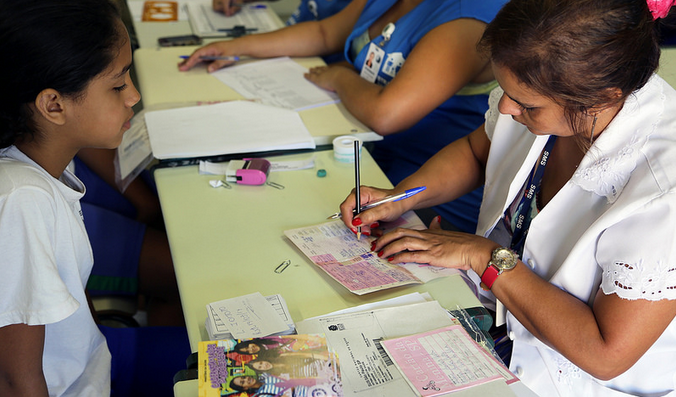
Between June and August 2015, the researchers conducted an interviewer-administered cross-sectional survey with 219 (mostly low-income) parents with children aged 9-17 in a health post located in the municipality of Mauá (São Paulo, Brazil). For analysis, parents were divided into 2 categories: "HPV vaccine eligible" and "HPV vaccine ineligible", with the former group including those with one or more female children aged 9-15 eligible for HPV vaccination during the course of the study. The researchers analysed attitudes regarding HPV vaccination and its eligibility guidelines by comparing parents of HPV vaccine eligible and ineligible children.
Overall, parents had positive attitudes regarding the HPV vaccine and its provision to excluded populations (males and older females). Ninety-four percent of parents said they would pay to have their children vaccinated if the child did not qualify for vaccination through SUS; however, parents stipulated that they would do so only if they could afford the vaccine. Approximately 89% of parents also said that they would have all their children - regardless of gender and age - vaccinated against HPV if the cost of the vaccine was covered through SUS. Over 86% of parents expressed that they had no hesitation in regards to the HPV vaccine. Across the 2 parent groups, there were no statistically significant differences about the provision of the HPV vaccine to currently excluded populations (p>0.05).
In addition, both parent groups agreed that it is important to vaccinate adolescents in general, as well as vaccinate against HPV infection (over 96% agreement for both questions). Furthermore, both groups agreed that HPV vaccination is beneficial for females aged 9-13 (approximately 94% agreement), as well as beneficial for females over 13 years (approximately 83% agreement).
Approximately 82% of parents knew that HPV is transmitted through sexual contact, and the majority of parents (71.4%) knew that both males and females should be vaccinated against HPV. These results show that the low-income populations are receiving and synthesising the information being provided to them and are able to make informed decisions about the HPV vaccine. The researchers point out that SUS, as the universal health system responsible for fulfillment of the right to health in Brazil, includes education to inform health decision-making. Informed populations may be more likely to participate in public health programming and make demands related to the right to health.
In August 2017, after this study was conducted, the Brazilian government announced that it would begin expanding HPV vaccination to include males aged 11-15 and HIV-positive persons up to age 26. The plan to remove age- and gender-based exclusions on the HPV vaccine reiterates Brazil's commitment to the principle of non-discrimination and is in keeping with the findings of this study: Nearly universally, parents demonstrated support for the HPV vaccine outside of the current criteria.
The results of this study could be instructive for policymakers as they consider the perspectives of community members in future decisions. Governments may consider the commission of population-based attitudinal studies for generalisable and participatory inputs on health policies, programmes, and strategies. According to the researchers, going forward, gender-based eligibility for vaccination, informed decision-making, and the importance of community participation in health policy development and implementation should be carefully considered. These lessons, gleaned from the case of Brazil, are relevant not only for existing health threats such as HPV-related cancers but for emerging issues such as Zika virus as well.
BMC International Health and Human Rights 2019 19:6. https://doi.org/10.1186/s12914-019-0195-5. Image credit: Pan American Health Organization (PAHO)