










































Global Vaccine Action Plan 2011-2020
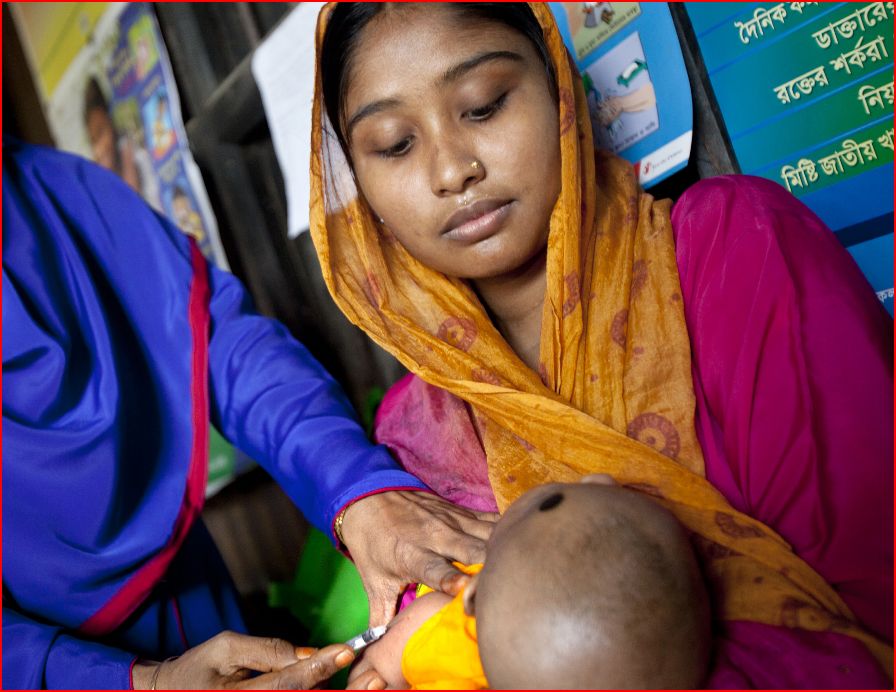
"Developing the plan has brought together multiple stakeholders involved in immunization, including governments and elected officials, health professionals, academia, manufacturers, global agencies, development partners, civil society, media and the private sector, to define collectively what the immunization community wants to achieve over the next decade."
Endorsed by the 194 Member States of the World Health Assembly in May 2012, the Global Vaccine Action Plan (GVAP) is a framework to achieve the Decade of Vaccines (DoV) vision by delivering universal access to immunisation prior to 2020 and beyond. GVAP was the product of the DoV Collaboration, which brought together more than 1,100 individuals in 140 countries representing 290 distinct organisations. It was led by the Bill & Melinda Gates Foundation, GAVI Alliance (formerly the "Global Alliance for Vaccines and Immunisation"), the United Nations Children's Fund (UNICEF), the United States National Institute of Allergies and Infectious Diseases, and the World Health Organization (WHO), along with all partners - governments and elected officials, health professionals, academia, manufacturers, global agencies, development partners, civil society, media, and the private sector.
The report opens with a description of the immunisation landscape today. In addition to much data, the reader learns that: "The immunization community can take advantage of social networks and electronic media to more effectively allay fears, increase awareness and build trust." The report proceeds to outline the GVAP guiding principles, measures of success, and goals of the DoV. The goals include:
- Achieve a world free of poliomyelitis.
- Meet vaccination coverage targets in every region, country, and community.
- Exceed the Millennium Development Goal (MDG) #4 target for reducing child mortality.
- Meet global and regional elimination targets.
- Develop and introduce new and improved vaccines and technologies.
Six strategic objectives are articulated. Selected communication elements of each that are described in the report include:
- All countries commit to immunisation as a priority: Key actions here involve: (i) establishing and sustaining commitment to immunisation (e.g., by supporting local civil society organisations and professional associations to contribute to national discussions on immunisation and health); (ii) informing and engaging opinion leaders on the value of immunisation (e.g., by exploring models to promote collaboration between the stakeholders that generate evidence on immunisation and those who use it in order to set priorities and formulate policies); and (iii) strengthening national capacity to formulate evidence-based policies (e.g., by creating expanded and more transparent mechanisms for aggregating, sharing, and using information to monitor commitments). Key indicators to monitor progress towards this strategic objective at the country level include the presence of a legal framework or legislation that guarantees financing for immunisation and the presence of an independent technical advisory group that meets the criteria defined in the report.
- Individuals and communities understand the value of vaccines and demand immunisation as both their right and responsibility: Sample suggestion: "Bringing about change will require the participation of individuals, households and communities in the development and implementation of all demand-generation strategies. It will also require new and stronger community-based advocates with local knowledge, credibility and the front-line experience necessary to drive change. The participation of in-country civil society organizations will be crucial to develop strong advocacy efforts and should be supported by capacity building. Here again, an effort that promotes collaboration between evidence generators and evidence users could provide training for champions and link with local social and professional networks, which are an important source of grass-roots immunization champions. This will especially be required as country programmes embrace a life-course approach to immunization. Current advocates must recruit new voices - potentially including educators, religious leaders, traditional and social media personalities, family physicians, community health workers and immunization champions. Researchers and technical experts will also have an important role in creating greater community awareness and providing credible responses to misinformation regarding immunization." Progress towards increased understanding and demand can be evaluated by monitoring the level of public trust in immunisation, measured by surveys on knowledge, attitudes, beliefs, and practices.
- The benefits of immunisation are equitably extended to all people: One excerpt of this section of the report: "Drawing on the experiences of successful poliomyelitis vaccination campaigns, decentralized planning and outreach should be used to reach populations that are remote or nomadic or that have been historically marginalized. New strategies for reaching the urban poor and urban migrants will also be necessary. Given the tenuous and evolving community structures and the inadequate security involved, new approaches to community outreach will be especially critical for reaching these groups. This is all the more true in view of the fact that sometimes the most unifying force in these urban and peri-urban areas is a shared and deep-seated mistrust of outsiders, especially governments." Progress towards greater equity can be evaluated by monitoring the percentage of districts with less than 80% coverage with 3 doses of diphtheria-tetanus-pertussis-containing vaccine and coverage gaps between lowest and highest wealth quintile (or another appropriate equity indicator).
- Strong immunisation systems are an integral part of a well-functioning health system: One lesson highlighted here is that coordinating immunisation with integrated primary health-care programmes may facilitate social mobilisation efforts. The need for partnership and coordination is again emphasised here; for example, ensure that "global vaccine programmes focusing on eradication and elimination goals (for example, poliomyelitis and measles campaigns) are incorporated into national immunization programmes and do not operate independently." The strength of health systems can be evaluated based on dropout rates between the first dose of diphtheria-tetanus- pertussis-containing vaccine and the first dose of measles-containing vaccine.
- Immunisation Programmes have sustainable access to predictable funding, quality supply, and innovative technologies: "Countries need a forum where they can more clearly communicate expected demand for new vaccines and provide guidance on desired product profiles. This first-hand information would enable suppliers to make more informed product development and capacity planning decisions, thereby mitigating product development and supply risk." Key indicators to monitor progress towards this strategic objective include: the percentage of routine immunisation (RI) costs financed through government budgets and globally installed capacity for production of universally recommended vaccines within five years of licensure/potential demand.
- Country, regional, and global research and development innovations maximise the benefits of immunisation: This will involve, for example, promoting collaboration between traditional research disciplines and scientists from disciplines not previously engaged in vaccine research. Key indicators of progress towards this strategic objective include proof of concept for a vaccine that shows greater or equal to 75% efficacy for HIV/AIDS, tuberculosis, or malaria and the initiation of phase III trials for a first-generation universal influenza vaccine. In addition, country research and development capacity can be measured by the institutional and technical capacity to manufacture vaccines and/or carry out related clinical trials and operational and organisational research.
The report continues by outlining health returns on investment in immunisation, including analysis of efforts focused on measles, meningococcus A meningitis, poliomyelitis, rubella, tetanus, and yellow fever. It is projected that 24-26 million future deaths could be adverted.
Looking forward, per GVAP, 4 sets of activities (described in detail in the report) will be required in order to translate the action plan into actions and results: (i) development of tools for translation of the plan; (ii) development of a complete accountability framework; (iii) securing commitments from the stakeholder community; and (iv) communicating DoV opportunities and challenges.
Several annexes conclude the report, such as those outlining goal-level indicators and targets, strategic-objective-level indicators, stakeholder responsibilities (e.g., health professionals should engage in dialogue with communities and the media and use effective communications techniques to convey messages about vaccines and to address safety concerns), costing and funding methodology and assumptions, and health impact methodology and assumptions.
Click here for the 77-page report in English in PDF format.
Click here for the 77-page report in French in PDF format.
Click here for the 77-page report in Spanish in PDF format.
WHO website, April 17 2014. Image credit: Saiful Huq Omi, GAVI Alliance
- Log in to post comments