










































National Emergency Action Plan for Polio Eradication 2016/17 [Pakistan]
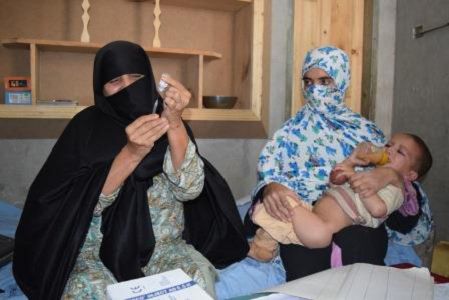
"Our communications strategy was very effective in building community acceptance and demand for vaccination and in particular has positioned our brave 'Frontline Workers' as the true heroes of polio eradication working tirelessly for and within their communities to rid Pakistan and the world of the scourge of polio."
Produced by the National Polio Emergency Operations Centre (EOC), Islamabad, Pakistan, this document represents an update of the National Emergency Action Plan (NEAP) as developed and continually revised by the Pakistan Polio Eradication Initiative (PEI). Pakistan and Afghanistan remain the last 2 nations in the world harbouring the wild poliovirus (WPV). The number of confirmed wild poliovirus (WPV) in Pakistan declined by 82% from the 306 confirmed cases seen during the outbreak of 2014 to 54 cases in 2015, and continues to decline in 2016. The 12 confirmed cases reported as of June 2016 represents a 59% decline in case count compared to a similar period in 2015. The EOC attributes this progress in part to "dogged pursuit" of a 1-month, 1 bivalent oral polio vaccine (bOPV) campaign strategy throughout the low season. The polio programme has recognised the importance of reaching and vaccinating children in transit during supplementary immunisation activities (SIAs) as well as reaching and vaccinating children in highly mobile migratory, nomadic, or internally displaced populations. At the heart of the progress has been a dedicated focus on improved microplanning and aggressive same-day follow-up of recorded missed children. Improving the performance of frontline workers (FLWs) has been a cornerstone of the performance improvement plan.
Underpinning all programmatic activity has been sustained Government commitment and oversight at every level. The Prime Minister's continued direct oversight and active involvement through the National Task Force (NTF) and the Prime Minister's Focus Group (PMFG) allowed the polio programme to heighten oversight and accountability everywhere. Key oversight bodies are functioning well with strong leadership from senior Government Officials and Ministers. Divisional Task Forces have emerged as crucial for oversight in key areas. Through the implementation of an Accountability and Performance Management Framework, the government and partnership have ensured that "accountability at all levels" becomes a guiding principle, which has resulted in the rewarding of good performance and where necessary the active removal of underperforming senior governmental or partnership staff from positions of authority. Furthermore, "[t]he resolve and commitment shown by senior government officials in the face of tragedy targeting police officers and other security personnel has been inspiring."
The EOC notes that a strong and well supported communication strategy called Sehat Muhafiz (or Guardians of Health) was very effective in building community acceptance and demand for vaccination. The 2-pronged communication approach introduced in the 2015/16 NEAP was designed to support the operations strategy by promoting all vaccination, including polio, as a social norm that everyone adheres to and to build trust and goodwill for health workers by humanising them in all communication. The vaccinator- and community-norm-focused Sehat Muhafiz shifted from the polio programme's traditional reliance on communication based on risk and awareness of polio. It also reflected the programme's overall missed children strategy by moving from broad, national tactics, to targeted communication designed for the priority 10% in the Tier 1 and 2 districts. Knowledge, attitudes, and practice (KAP) surveys were conducted by the Harvard School of Public Health towards the end of 2013, early 2014, and again between February and April 2016. The survey revealed that 100% of households were aware of polio, with 97% saying they intended to give polio vaccine drops to their children. The proportion of households reporting the vaccinator visit as pleasant was 97%. The poll also revealed areas of focus for the 2016/17 communication and community engagement strategy. For example, more needs to be done to improve acceptance in small population pockets where community acceptance is suboptimal. "The eradication of polio continues to depend on the success of our health workers, and their success in the field revolves around the short, interpersonal interaction between health workers and caregivers. This cannot be done without an enabling and supportive environment for our Sehat Muhafiz including effective training, social mobilization and community engagement, actionable data, providing appropriate tools and maintaining morale and motivation."
The EOC notes that the mass media, as with all the enabling communication tactics, is fully integrated with the operational strategy. Phased campaigns that respond to and reflect the operational reality honestly is critical. The Sehat Muhafiz approach in 2015/16 had 2 key mass media stages. The first, "We are all intertwined", was designed to present vaccination as a social norm amid the backdrop of the interconnectedness of family, children, and the traditions that define a place and culture. The second phase, Strangers No More, was timed with broader efforts to improve training and resolve delayed payment and morale issues. Building on the social norms approach of "Intertwined", Strangers No More seeks to directly support building trust for the Sehat Muhafiz. Vaccinators are presented as fathers, mothers, and members of the community with lives and contributions, not limited to their role in the polio programme. In the 2016/17 NEAP, these themes will continue and with greater intensity. As progress in virus interruption continues, the strategy will be prepared to shift to a more celebratory tone, recognising the contribution of health workers and their role in the community. Depending on the epidemiology, more routine immunisation (RI) and broader health messages can be included. Any transition of this type would depend on confidence in the interruption of transmission and reflect the situation on the ground. Regardless of programme scenario, the adapted and localised approach will continue, with targeted channel selection and messaging, with the majority focus on the Tier-1 and Tier-2 districts.
According to the EOC, "[c]ommunity engagement in the Pakistan polio programme is a 'tipping point' contribution to increasing local trust and reducing numbers of missed children. Whilst household acceptance of OPV in Pakistan is the highest in the world, quantitative and qualitative data from Tier 1 and Tier 2 districts show that parents who accept OPV nearly always believe that someone close to them is unsupportive of polio vaccination. This dynamic demonstrates near-universal compliance with OPV, but little demand. In this context, compliance - although high - is fragile. In the face of negative media, a negative experience with a health-worker, circulating rumours or disapproving social pressure, individual compliance is easily put at risk without a consistently supportive social environment that reinforces vaccination. Community engagement, then, can serve as a key enabler of demand-driven vaccination, opening doors to the most difficult to reach children and keeping them vaccinated until they reach 5 years old." To that end, the Final Communique of the 13th Islamic Summit of The Heads Of State/Government Of The OIC Member States, April 15 2016, "reaffirmed that preserving the wellbeing and physical health of children is a duty of every parent and society as prescribed by Islam. It, therefore, appealed to the religious scholars and leaders to support the polio eradication campaign and encourage people to respond positively to it."
The community engagement strategy, introduced in the Tier-1 districts in the first half of 2016, will be fully implemented as part of NEAP 2016/17, and will include these priorities:
- Provide social support for the health workers and vaccinators (Sehat Muhafiz) in the local areas;
- Provide social support for the importance of repeated vaccination;
- Improve the relationship between the vaccinator (the face of the programme), the programme (people's experience with polio eradication), and the community;
- Ensure vaccination is delivered in a manner that is reflective and respectful of community preferences; and
- Facilitate access to areas and households to reduce still-missed children, with particular emphasis on those that may cluster geographically or socially.
The national programme will continue sharing with Afghanistan the communications materials and media mapping relevant for common reservoirs. The EOC states that ad-hoc engagement around particular communication issues should continue with focus (e.g, engaging influencers to resolve a communication issue).
Reaching and vaccinating persistently missed children and detecting and responding rapidly to the presence of poliovirus are the keys to success of NEAP 2016/17, according to the report. In order to achieve this, the EOC is guided by 11 principles:
- "Effective Collaboration - we operate and communicate as one team under one roof.
- Reaffirm Open Communication - we promote honest, open communication and easy access to information.
- Active & Continuous Improvement - we surface big and small challenges to actively learn lessons and pursue creative approaches, leading to continuous improvement in our work.
- Dedication - we are proudly committed to providing outstanding quality in everything we do to reach every child.
- Integrity - we operate openly and hold the highest ethical standards, investigating all data discrepancies.
- Commitment - our frontline workers are our most valuable asset, and we are dedicated to attracting, retaining and supporting the highest quality work force.
- Agility - we constantly innovate to find fast, effective and sustainable solutions to real time field problems.
- Tenacity & Boldness - we resolutely focus on results to ensure a healthy future for all of Pakistan's children.
- Individual and Team Recognition - we have a performance and learning culture that promotes listening to field teams and recognition of performance.
- Organisational and Individual Responsibility - we are all accountable to the highest personal and professional standards and ensure responsible practices that will ensure short and long-term success.
- National & Organisational oversight on Accountability - we provide fair and robust oversight, checks and balances to deliver quality services, of the best value, to effectively meet the needs of the communities and children we serve."
There have been some weaknesses in the NEAP 2015/16 that could shape strategies looking forward. For example, in the high-risk union councils (UCs), more than 3,550 UC-level workers were deployed as part of the surge by the Global Polio Eradication Initiative (GPEI) partnership in the form of Union Council Polio Officers (UCPOs) and Union Council Communication Officers (UCCOs). In many instances, the EOC observes, the staff at UC level have not come together to work as "one team" with clear responsibilities, regular meetings, and joint implementation of the key task at UC level: SIA planning and implementation. While Community Based Vaccination (CBV) addresses many of the management shortcomings in targeted areas, it is not a feasible solution for the majority of UCs. The programme is therefore still heavily reliant on "mobile teams" and on the quality of the "basics" at this level.
Specific deliverables and targets for the NEAP 2016/17 are outlined beginning on page 16 of the document.
Image caption/credit: "A local healthcare worker prepares a dose of IPV during the combined OPV/IPV immunization activities in Pakistan. Pakistan is using a combination of both IPV and OPV in campaigns to boost immunity against polio. WHO/S.Mughal"
- Log in to post comments