










































Exploring the Muslim-Focused Cultural Sensitivity in Polio Vaccination Communication Campaign in Northern Nigeria
Kaduna Polytechnic (G.I. Ahmad); Universiti Utara Malaysia (M.K. Ahmad, Lynn-Sze)
"...the religious beliefs of Muslim parents play an important role in their perceptions and acceptance of health behaviour change communication..."
The Polio Eradication Initiative (PEI) was launched in Nigeria in 1988 with the aim of interrupting the spread of poliomyelitis and finally eradicating it in the country. However, rumours and misconceptions about the safety of the oral polio vaccine (OPV) led to non-compliance, which became serious in most states of northern Nigeria. As a result, their Islamic clerics rejected OPV, leading to the suspension of the programmes from 2003-2004 in the polio-endemic Muslim populated Kano state and 5 other states of northern Nigeria. Drawing on qualitative research, this paper argues that Islamic cultural values and sensitivities should be the guide when producing messages and programmes that are intended for a Muslim audience.
A literature review provides context for the study. As explained here, culture can be seen as the attitudes and behaviours that distinguish a specific community or social group or its organisation. Cultural norms, mores, and values are derived from the set traditions and religion of the identified community and its people. Thus, the health communication strategy of reaching out to people for health behavioural change should be derived from the culturally accepted norms and values of the intended audience. Furthermore, the inadvertent oversight of not involving the traditional leaders and the Islamic clerics in the polio communication campaign at the initial stage impeded the effort to address the challenges of non-compliance among Muslim parents of northern Nigeria. The PEI failed to connect with these community stakeholders, who are revered, respected, and considered as guardians of the religion and cultural heritage of the society. This missing link resulted in the peddling of rumours and misconceptions about the polio vaccine safety and efficacy.
The data were collected through one-on-one interviews between the researcher and 12 (male) key informants, comprising physicians, traditional leaders, and Islamic clerics in northern Nigeria's states of Kaduna, Kano, and Plateau. The idea of adopting a phenomenological approach is to understand the lived experiences of the informants and give them ample opportunity to articulate ideas and express them freely, comfortably, and in depth during the interview.
Four themes emerged, which included the following:
- Use of Qur'an and hadith in message design - According to cardinal Islamic beliefs, values and practice are derived from: the Qur'an, which contains the words of God; the hadith, which consists of the sayings and practices of the Prophet; and the opinion of early Islamic scholars, who founded their interpretations and understandings of the religion from the verses of the Qur'an and the hadith of the Prophet. The Qur'an, for example, regards human lives as sacrosanct and enjoins Muslims to save life regardless of tribe, religion, creed, or social class. Situating this within the context of this study and the data collected, the Muslims in northern Nigeria are likely to feel more comfortable with and accepting of polio messages if verses of the Qur'an and portions of the hadith of the Prophet are included in polio vaccination message design and communication to the parents.
- Education of Muslims - The interviews revealed that Muslim communities need to be prioritised for intensive education on the polio vaccination campaign through deliberate and conscious efforts by health communication experts. The native languages that are mostly spoken and understood in the area should be used in designing polio key messages and reaching out to the communities with information. Both mass media and interpersonal communication can be used simultaneously to create awareness about diseases and preventive measures. One informant pointed to "the prevailing misconception that the polio vaccine is contaminated with HIV/AIDS virus, cancerous agents and family planning substances to prevent Muslims from giving birth. It is long-held superstitious beliefs that despite the persistent efforts to dispel them, they still remain in the minds of the Muslims particularly parents. The Muslim should be educated to know the benefits of child immunisation and this can be achieved with the production of plans and activities that are Muslims-focused and culturally sensitive to Islamic beliefs and values. The Islamic clerics should be involved in this education campaign."
- Islamic information, education, and communication (IEC) materials for behaviour change - Most parents in northern Nigeria can read and write in Ajami because of the Qur'an education they have participated in since childhood. Thus, a Muslim-focused polio vaccination communication programme should use customised materials with Arabic inscriptions but in Ajami (using Arabic letters to write in local language) for people to read and understand the campaign. The IEC materials can also include films in the native Hausa language on poliomyelitis, drama productions on the disease (both audio and video), and posters. The Islamic IEC materials can be produced in graphic and pictorial forms to serve as aids by health communication officers and other health workers during sensitisation meetings. This will help to illustrate points or issues they want people to understand.
- Clerics as community mobilisers - Informants confirmed that the contribution of the Islamic clerics in creating awareness about poliomyelitis will build credibility and trust in the programme. This is so because the clerics are immensely respected bu members of the Muslim communities. The messages on polio vaccination that come through the Islamic clerics will have a positive impact to the parents due to the longstanding belief among the Muslims that they are representatives of Allah SWT and His prophet on earth. One informant suggested that "the best way to tackle the issue of polio rejection in Muslims communities is by involving all these four categories of Islamic clerics, (that is, those who support the polio programmes, those who oppose it, those who remain neutral and those who always participate or pro-OPV) as community mobilisers for polio vaccine acceptance." Another argued, "The Islamic clerics should be involved in the programme but first they must be trained in workshops, in-house seminars, conferences and public lectures to grasp the concepts and philosophy of the polio vaccination campaign adequately."
Thus, the findings revealed that Muslim-focused cultural sensitivity in polio vaccination messages and communication campaign will help remove misconceptions and rumours about polio vaccination safety and efficacy in northern Nigeria. The study also established that involvement of the Islamic clerics in the polio campaign will help educate the Muslim parents and motivate them to accept the polio vaccine for their children. The researchers conclude that there is a need to employ Islamic clerics as community mobilisers for polio vaccination campaign to reach out to communities and settlements for the sensitisation of the parents using Muslim-focused polio messages in interpersonal communication.
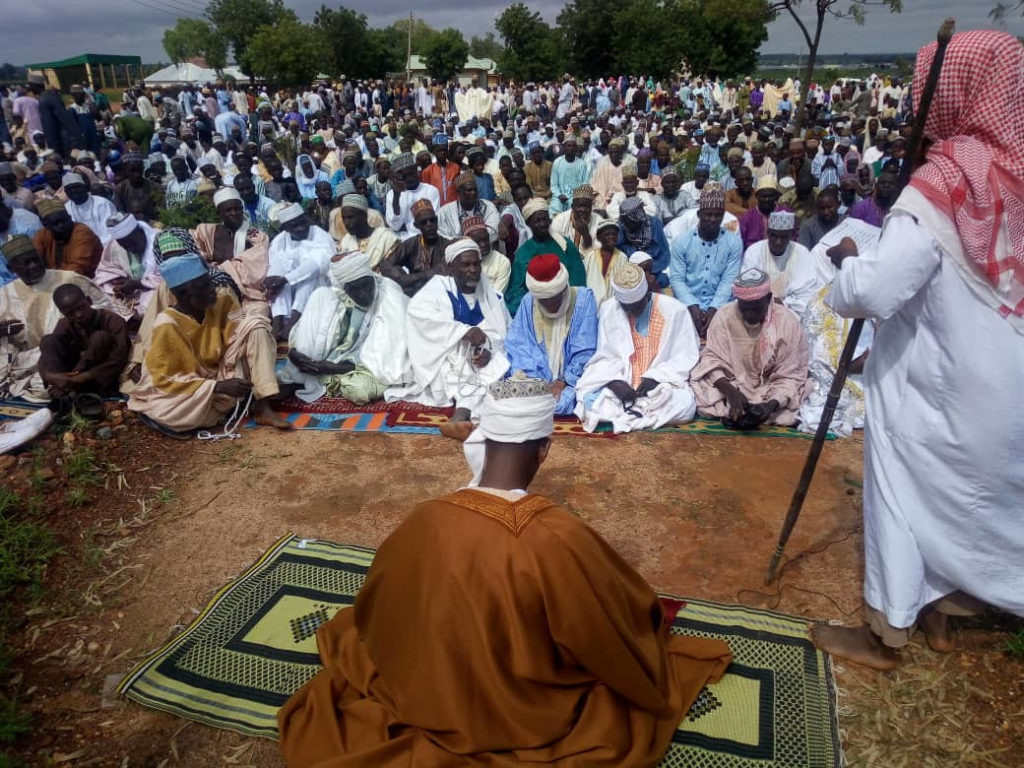
Saudi Journal of Humanities and Social Sciences, 2019; 4(5): 342-50 DOI:10.21276/sjhss.2019.4.5.6. Image caption/credit: Chief Imman of Dutsen wai Sheck Zakaria Mohammed Sani sending message on routine immunisation (RI) and antenatal care (ANC) during Eld-Kabir Prayer. Photo: United Nations Children's Fund (UNICEF) Nigeria
- Log in to post comments