










































Global Polio Surveillance Action Plan, 2018-2020
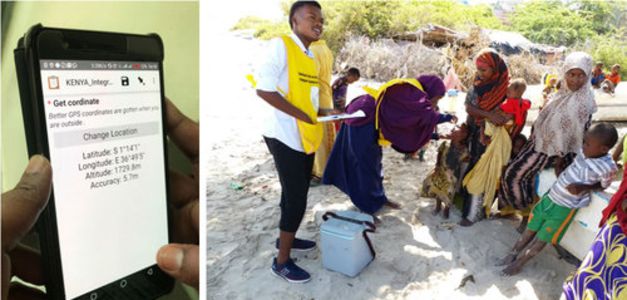
Anchored within the broader strategic framework of the Global Polio Eradication Initiative (GPEI), the Global Polio Surveillance Action Plan (GPSAP) outlines activities and indicators at the global, regional, and country levels for all priority countries, centred around 6 core objectives to strengthen surveillance systems. The GPSAP provides strategies that may be useful in improving detection of polioviruses, and it is designed to increase coordination across field team, laboratory, and information management staff.
The GPEI explains that there are 2 approaches to finding polio: passive and active surveillance. Passive surveillance involves health workers routinely reporting cases of acute flaccid paralysis (AFP) as they find them in health facilities. Active surveillance, which takes place where there is a higher level of concern that polio might be present, involves experts going to hospitals, clinics, and even community healers to search out cases of AFP.
Those working on the frontlines of the quest to eradicate wild poliovirus (WPV) globally have faced a number of challenges, including lack of access in conflict-affected or security-compromised areas, in hard-to-reach geographies, or in other areas where a lack of community acceptance due to cultural, social, or religious norms has rendered some populations inaccessible to the programme. As the GPEI adjusts to meet these challenges in the field, it faces the operational challenge of synthesising and analysing an increasing amount of data across different sources (e.g., collected through mobile data collection tools and through community-based surveillance (CBS) methods), which, if they are not fully interoperable and shareable through Polio Information Systems (POLIS), can lead to missed opportunities for action. The Global Polio Laboratory Network (GPLN) also faces challenges, as the expansion of environmental surveillance (ES) and the introduction of supplemental strategies such as AFP contact sampling have increased the volume of stool and sewage samples in need of testing. Overall, a lack of supportive supervision and effective monitoring can contribute to these difficulties in the field and in laboratories. In addition, the GPEI faces distinct operational challenges that arise as multi-disciplinary, multi-agency, in-country, and remote teams come together to coordinate and collaborate as one team.
Developed in the context of these challenges, the GPSAP is organised into 6 mutually supportive objectives:
- Attain or maintain AFP surveillance systems sensitive enough to detect all WPV transmission and to provide evidence supporting the interruption of transmission;
- Implement a global ES network expansive enough to contribute to the timely detection of polioviruses;
- Establish a surveillance system to detect polioviruses among patients with primary immunodeficiency disorders (PIDs);
- Ensure the GPLN maintains flexibility and capacity to accommodate evolving programme needs;
- Increase efficiency in collecting, managing, validating, and using data for action; and
- Enhance effectiveness of surveillance programme operations, management, and budget processes.
The GPSAP outlines activities and indicators for each objective that will be conducted at the global, regional, and country levels for all priority countries. For instance, within Objective 1 (enhancing AFP surveillance), one activity to be focused on is: Increase AFP awareness. As the GPEI stresses, the ability to detect poliovirus transmission hinges on the awareness of healthcare providers, reporting sites, and the community of the signs and symptoms of AFP. Even simple ongoing measures such as supportive supervision and distribution of job aids can help maintain high awareness. Furthermore, periodic feedback to reporting sites on the status of AFP surveillance in country can help staff stay engaged by seeing their contribution to the larger eradication effort.
As noted here, for a holistic approach, efforts to increase AFP awareness among healthcare providers and reporting networks should be pursued in parallel with activities designed to reach communities. Many communication tools from the United Nations Children's Fund (UNICEF) and World Health Organization (WHO) country offices and other GPEI partners are already available. The GPEI asserts that the creation of a Communication for Polio Surveillance toolkit would help to make messaging consistents, which is especially important for populations that are ethnic, linguistic, or religious minorities within the larger community. This toolkit could be made available in multiple languages on the GPEI website.
To look at another, related example, in the area of Objective 5 (increasing efficiency of polio information systems), from 2018 to 2020, the programme will focus on the following (further details of tasks are available in referenced annexes):
- Activity 1: Convene a regular coordination forum on knowledge of and best practices in polio information technology - This entails establishing a forum for experience-sharing and coordination among POLIS specialists with representation from each region with the purpose of: exchanging and learning from each other; discussing the main issues each region is facing in term of new technologies and information systems; and harmonising the guidance offered by regional offices to countries.
- Activity 2. Integrate polio information systems - For example, train all WHO regional offices and WHO Regional Office for Africa (AFRO) Intercountry Support Team (IST) offices on the key features of POLIS.
- Activity 3. Expand the systematic documentation and validation of data on active surveillance visits and location of AFP cases.
Among the GPSAP's annexes is one focused on CBS, which is facilitated by engaging local actors and partners and, more generally, by building community trust through engagement in the volunteer selection process, recognition and motivation of volunteers, provision of feedback, and respect for local social/cultural norms. Messaging through popular local media (radio, mobile messaging) is another enabling factor. A definition of CBS, rationale for it, procedure, challenges and anticipated issues, and monitoring and evaluation (M&E) guidelines are also offered in this annex (as in others).
GPEI website, February 19 2019. Image caption/credit: "With the Integrated Surveillance and Routine Immunization Supervision system, surveillance officers use an app on their mobile phones to document active case searching as it happens, by tagging the location of every healthcare facility they visit and check." ©WHO EMRO/Sara Williams
- Log in to post comments